AI MOCK INTERVIEWS

Practice the interview,
not just the problem.

An AI interviewer runs a real round with you. It asks questions and follows up, runs your code against hidden tests, and ends with a scorecard that tells you what to work on next.

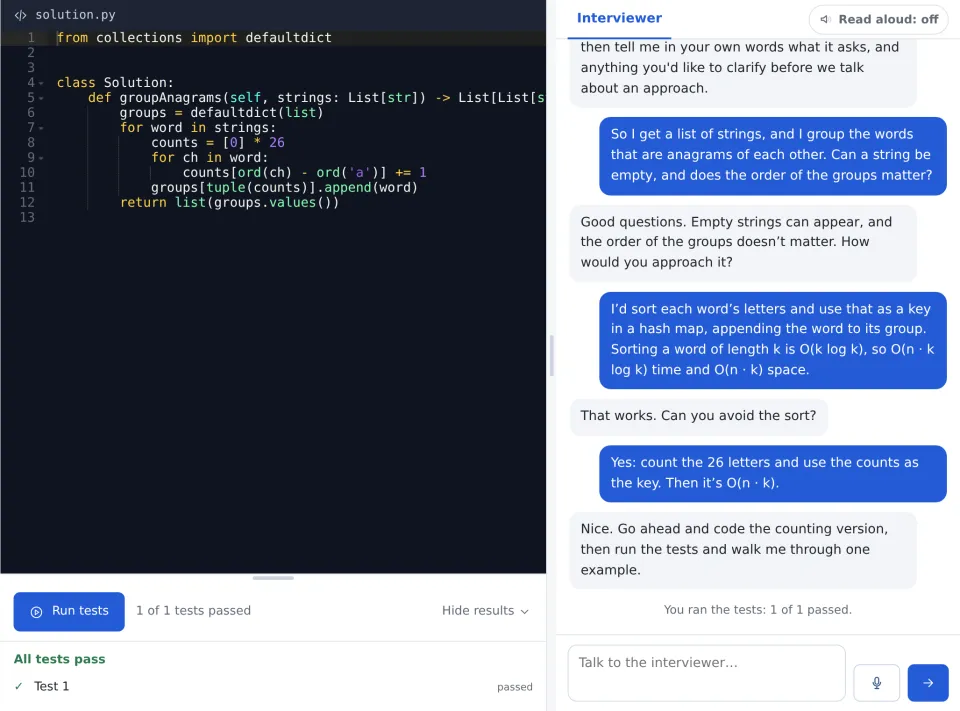
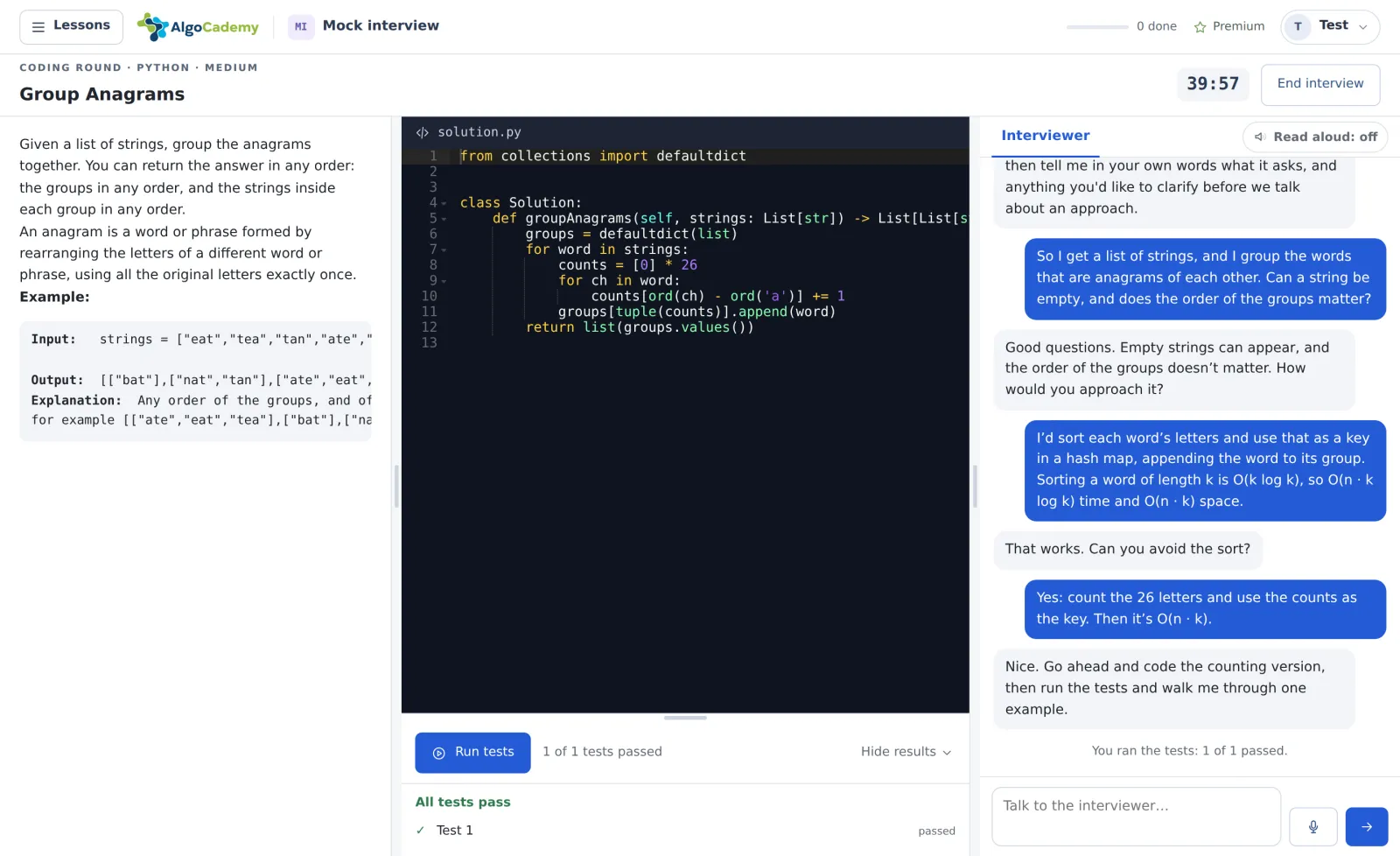
A coding round in the AlgoCademy mock interview room: the Group Anagrams problem on the left, the candidate’s Python code in the editor with all tests passing, and the conversation with the interviewer on the right.
A coding round: the problem, your code and its tests, and the interviewer. The conversation is an example.

THREE KINDS OF ROUND.

The rounds tech
companies run.

Each round is the length of a real one, with a timer, or untimed if you’d rather take it slowly. Pick a problem, or let it surprise you with one you haven’t had.

CODING

Coding interview

A problem from the course’s interview part, at Easy, Medium or Hard. Clarify it, explain your approach and its complexity, code it, and run it against hidden tests, while the interviewer asks what a real one would.

194 problems · 11 languages · 30 to 45 minutes

SYSTEM DESIGN

System design interview

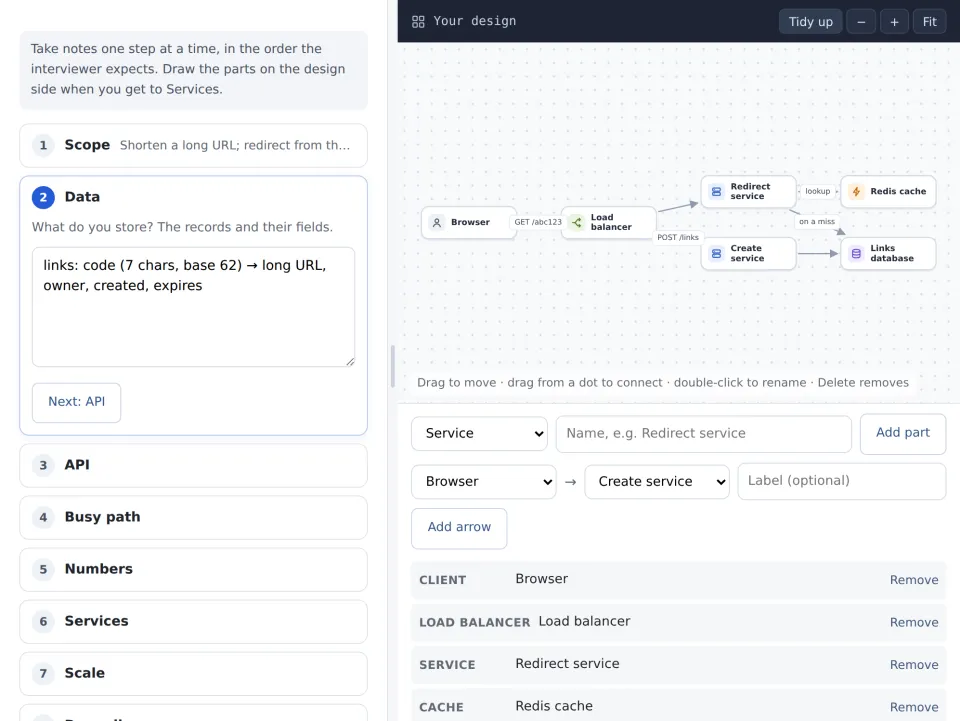
Design a real system: scope, data, API, the busy path and the numbers, then scale, failures and trade-offs. Take notes one step at a time and draw the parts on a board as you go.

100+ problems, from a URL shortener to Uber · 45 minutes

NEW · AI ASSISTANT ON

Code comprehension

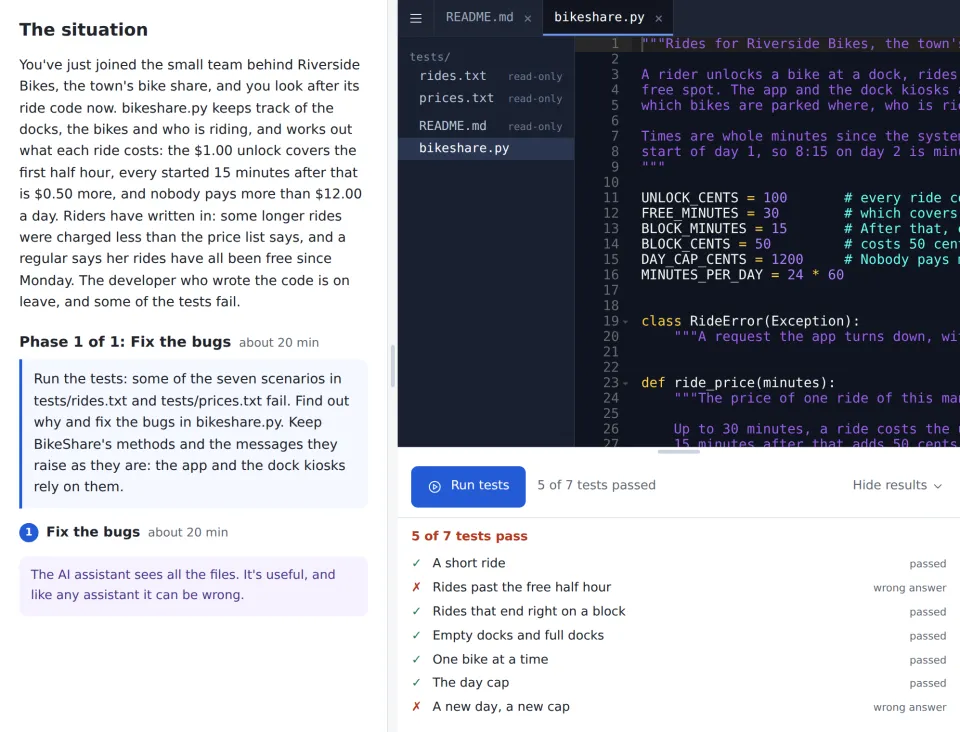
A codebase you didn’t write, failing tests, and an AI assistant in the editor. Explain how it works, find and fix the bugs, then add a feature or make it fast, and check what the AI tells you before you trust it.

Easy, Medium and Hard rounds · Python · 20 to 45 minutes

HOW A ROUND WORKS.

Like the real thing,
with feedback after.

Practice it as a mock interview, which ends with a verdict, or as coached practice, where the coach gives hints and explains as you go.

  1. Choose a roundCoding, system design or code comprehension. Timed or not. A mock interview or coached practice.
  2. Talk it throughType, or speak and have it written out. Turn on read aloud to hear the interviewer.
  3. Write and run the codeYour code runs against hidden tests, the way it would in the interview.
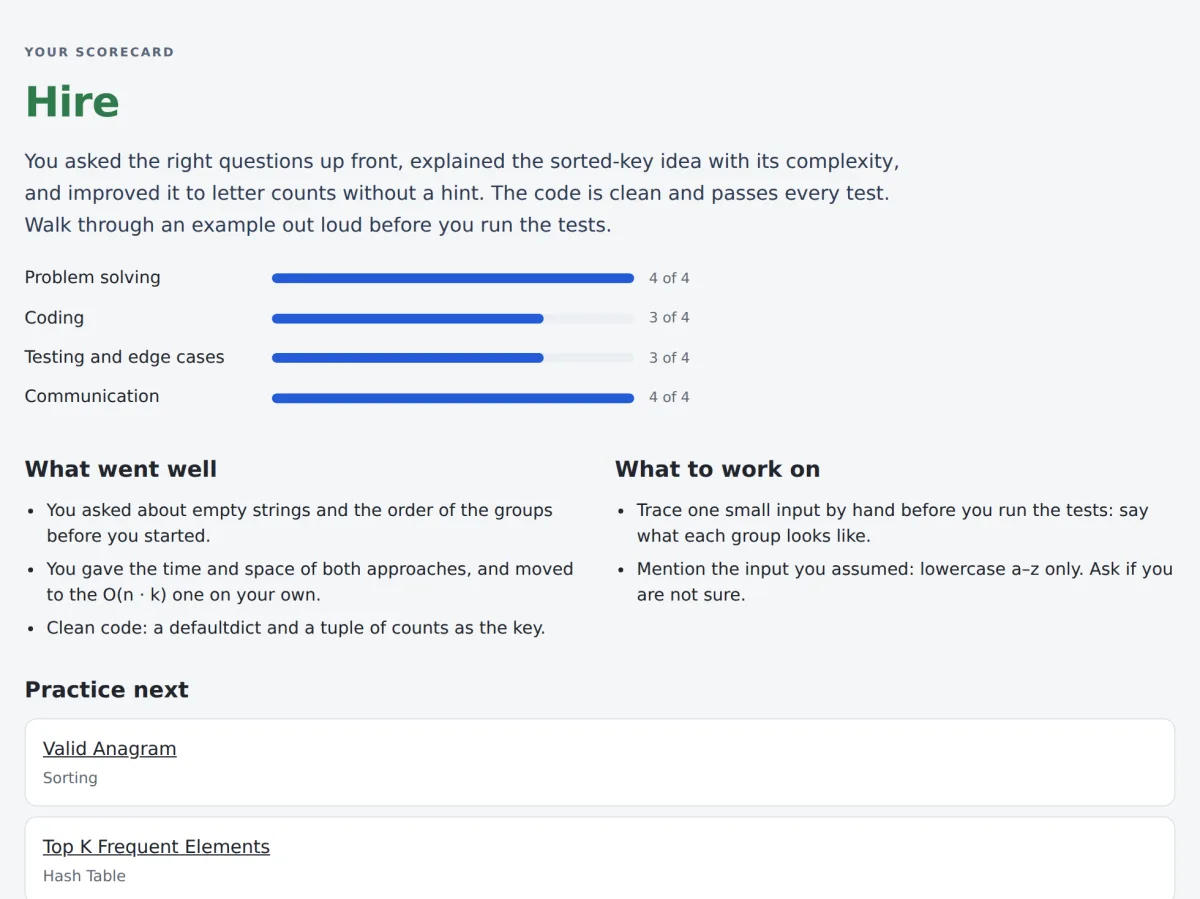
  4. Get your scorecardA verdict, a score for each skill, what went well, what to work on, and lessons to practice next. Every past interview stays in your list.
An example scorecard: the verdict Hire, scores for problem solving, coding, testing and edge cases, and communication, then what went well and what to work on.
An example scorecard after a coding round.

CHECK THE AI.

Some of the assistant’s answers are wrong on purpose.

More interviews now let you use AI, and what they test is whether you can tell when it’s wrong. In the code comprehension round, the AI assistant sees all the files and is genuinely useful, but a few of its answers are planted mistakes that sound right. Your scorecard says which ones you caught.

WHAT’S INCLUDED.

Your first one
is free.

Every account gets one free mock interview, any kind. PRO includes more, and packs are there for the weeks before an onsite.

FREE ACCOUNT

1mock interview, any round

PRO YEARLY

12a year, to use whenever you like. The 7-day free trial includes one of each kind.

PRO MONTHLY

1a month

PRO LIFETIME

30in all

Need more? Packs for anyone: 5 mock interviews for $19.99 or 15 for $49.99. They never expire, and they’re used after the ones your plan includes.

See PRO plans

GOOD TO KNOW.

Questions about
mock interviews.

Something else?
team@algocademy.com

Is the interviewer a person?

No, it’s an AI. It runs the round the way an interviewer at a top tech company would: it asks you to clarify the problem and explain your approach, follows up on what you say, and pushes on complexity, edge cases and trade-offs. Then it scores the whole round against the same rubric every time.

What’s the difference between a mock interview and coached practice?

A mock interview is like the real thing: the interviewer assesses, doesn’t help much, and you get a scorecard with a verdict. In coached practice a coach thinks along with you, gives hints when you ask, and explains as you go; you get feedback instead of a verdict. Both count as one interview.

Which languages can I use?

Coding rounds work in all 11 of the course’s languages: Python, JavaScript, Java, C++, C#, TypeScript, Kotlin, Scala, Go, Swift and Rust. The code comprehension rounds are in Python. System design rounds have no code: you take notes and draw the design.

Can I do it on my phone?

Yes, though a computer is easier. Code comprehension rounds have several files to read, so they’re best on a bigger screen. To speak instead of typing, allow the microphone when your browser asks.

How is a round scored?

At the end, the whole conversation, your code and its test results are scored on the skills that round tests, for example problem solving, coding, testing and communication in a coding round. You get a verdict (from no hire to strong hire), a score for each skill, what went well, what to work on, and the lessons to practice next.

What counts as one interview?

Each round you start, mock interview or coached practice. If you end it within the first 2 minutes, it doesn’t count.

Do packs expire?

No. A pack is a one-time payment, and its interviews stay on your account until you use them. They’re used after the ones your plan includes.
NO CARD NEEDED.

Your first mock
interview is free.

Pick a round, talk it through, and see your scorecard.

Coding · System design · Code comprehension