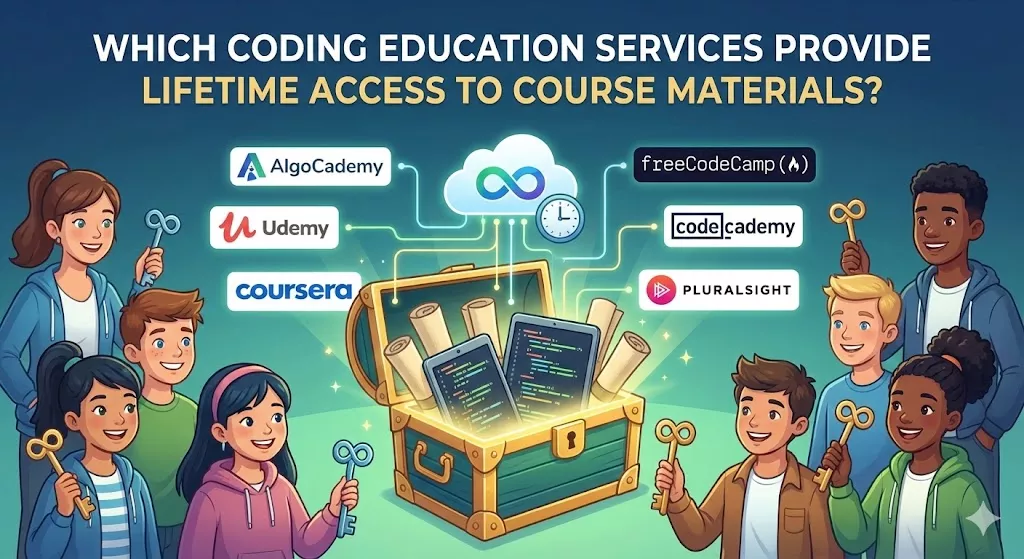
Here’s a truth that will save you from buyer’s remorse: “lifetime access” usually doesn’t mean what you think it means.
A common pattern with “lifetime” coding courses: someone pays $200 for “lifetime access” to a course. Two years later, the content is outdated, the platform shut down, or “lifetime” turned out to mean “as long as we feel like maintaining this.” They paid premium prices for access that wasn’t actually permanent.
Real lifetime access to quality, maintained content is rare and valuable. But most platforms either don’t offer it, offer it with caveats that make it meaningless, or charge so much upfront that you’d be better off with monthly subscriptions.
Let me show you which platforms actually provide genuine lifetime access, what “lifetime” really means in practice, and how to evaluate whether lifetime deals make financial sense versus ongoing subscriptions.
What “Lifetime Access” Actually Means (And The Fine Print)
Before we examine specific platforms, let’s understand what lifetime access claims actually mean:
What “Lifetime Access” Should Mean:
One-time payment: Pay once, access forever. No additional fees, no subscriptions.
Content updates included: As technology changes, course content gets updated. You get those updates without paying more.
Platform longevity: The platform continues operating and maintaining content for years, ideally decades.
Download options: Ideally, you can download materials so you have them even if the platform disappears.
No expiration: Access truly never expires as long as you have your account.
What “Lifetime Access” Often Actually Means:
“Lifetime of the course”: Access lasts as long as the course exists, which might be discontinued next year.
“Lifetime of the platform”: Access ends when the platform shuts down or gets acquired. Your “lifetime” depends on a company’s business survival.
No updates after purchase: You get lifetime access to the version that existed when you bought it. New content, major updates, or refreshes cost extra.
“Active account required”: If you don’t log in for X months/years, your account gets deactivated. Access isn’t truly permanent.
Platform changes terms: Some platforms reserve the right to change access terms, converting “lifetime” to subscription or shutting down without refunds.
Understanding these distinctions protects you from disappointed expectations.
The Platforms With Genuine Lifetime Access
Udemy: True Lifetime Access (With Caveats)
Udemy is the most well-known platform offering lifetime access to individual courses.
How it works:
When you purchase a Udemy course, you get lifetime access to that specific course. Pay once, access forever.
What “lifetime” actually means:
According to Udemy’s help center, you keep access as long as your account is in good standing and Udemy still has a license to the course. Access doesn’t depend on the price you paid, and it ends if Udemy shuts down or stops carrying the course.
You get updates if the instructor updates the course. If they abandon it, the content becomes outdated but you still have access to the original version.
The pricing model:
Udemy sets list prices per course, and courses are often discounted. Check the price on the course page, and don’t pay full price if a sale is likely.
The quality problem:
Anyone can publish on Udemy. Lifetime access to a terrible course is still terrible. You must vet quality before purchasing.
Check ratings (look for 4.5+ with thousands of reviews). Watch preview videos. Read recent reviews to see if content is current.
Download options:
Udemy allows downloading course videos for offline viewing in their mobile app. You can’t download and keep files independently of Udemy’s ecosystem.
Best for:
Buying highly-rated courses on specific topics at sale prices. Lifetime access is genuine, but you’re betting on course quality and instructor maintaining it.
Avoid:
Paying full price. Buying courses without thorough review research. Assuming “lifetime” means the instructor will maintain content forever.
AlgoCademy: Lifetime Deal at $799.99
AlgoCademy offers a lifetime access option as an alternative to its monthly and yearly PRO subscriptions.
The pricing models:
As of October 2026, in the US and most high-income countries, PRO costs $69.99 per month or $249.99 per year (cancel anytime from Billing and keep access until the end of the paid period). Lifetime access is a one-time payment of $799.99. Prices are lower in many countries.
What lifetime access includes:
Access to everything in PRO: 500+ step-by-step lessons and 350+ coding challenges, from programming fundamentals through Big O and 20+ interview chapters, plus all 100+ hours of video, hints and the solution view.
The AI tutor is included, with unlimited messages. You’re not just getting static content: the tutor sees your code and explains your mistakes when you’re stuck.
The math on lifetime access:
The lifetime price equals about 11 months of the monthly plan ($69.99 x 11.4) or about 3.2 years of the yearly plan ($249.99 x 3.2).
If you’re planning to use AlgoCademy for multiple years (common for people preparing for interviews, career changers, or computer science students), lifetime access becomes cost-effective.
If you only need it for 3-6 months of focused learning, monthly subscription makes more sense.
Why this model works:
AlgoCademy’s content has longer shelf life than framework-specific courses. Algorithms and data structures fundamentals don’t become outdated the way “React 2023” courses do.
The step-by-step instructional approach and AI tutor provide value that lasts beyond initial learning. People return to review concepts, prepare for new interviews, or refresh knowledge years later.
The considerations:
Like all lifetime deals, you’re betting on the platform’s longevity. If AlgoCademy shuts down, your lifetime access ends. Also, AlgoCademy does not give refunds.
Best for:
People committed to long-term learning who will use the platform for years (career changers, CS students, developers regularly interviewing).
Those who prefer one-time payments over ongoing subscriptions.
Learners who want to revisit algorithm concepts throughout their careers without worrying about active subscriptions.
Monthly subscription makes more sense if:
You only need 3-6 months of focused interview prep (the yearly plan may cost less than lifetime, and new members get a 7-day free trial on PRO yearly).
You’re unsure if the platform’s teaching style works for you (use the free lessons and the 7-day trial first, and upgrade to lifetime if it clicks).
You prefer lower upfront cost even if lifetime would be cheaper over several years.
Manning Publications: Books With Lifetime Digital Access
Manning sells programming books with lifetime access to digital versions.
How it works:
Manning’s FAQ says a purchased eBook includes all electronic formats available for that book (check the book’s page for which ones) and that you own it for life, with downloads available from your Manning account.
The value:
Each book has its own price, usually well below a course subscription. For reference materials you’ll consult over years, this can be good value.
Many classic programming books (design patterns, algorithms, specific language deep-dives) remain relevant for decades.
The limitation:
Books are static content. No interactive exercises, no video explanations, no hands-on practice environments.
Good for learning theory and reference, not for interactive skill-building.
Best for:
Building a reference library of fundamental programming concepts that don’t change rapidly.
People who learn well from reading and prefer books to video courses.
Skillshare: Not Lifetime, Don’t Be Confused
Skillshare markets heavily but does NOT offer lifetime access despite what some promotional language implies.
The reality:
Skillshare is subscription-only, with monthly and annual memberships. Cancel your subscription and you lose access to the classes.
“Unlimited access” means unlimited while subscribed, not unlimited in time.
Why the confusion:
Marketing language like “unlimited access to thousands of courses” creates impression of permanent access.
Best for:
Monthly learning if you’ll actively use it. Not for lifetime access – that’s not available here.
Platforms That Don’t Offer Lifetime Access (But People Ask About)
Codecademy: Subscription Only
Codecademy’s paid plans are subscriptions, billed monthly or yearly. Its pricing page lists no lifetime option.
Cancel your subscription and you lose access to Pro content.
Free tier remains accessible but is very limited compared to Pro.
Pluralsight: Subscription Only
Pluralsight sells subscription plans for individuals, with a free trial. I found no lifetime option.
The business model is designed around annual renewals, not one-time payments.
LinkedIn Learning: Subscription Only
LinkedIn Learning is sold as a monthly or annual subscription, and is included in some LinkedIn Premium packages. Prices vary by region and plan, so check LinkedIn’s page.
No lifetime access. Cancel subscription, lose access.
Educative: Subscription Only
Educative sells subscriptions. Its FAQ says access ends when the paid subscription period ends, and cancellations aren’t refunded.
I found no lifetime option on its site as of October 2026. Some older articles mention buying single courses outright, so check the current course page before you buy.
Coursera: Complicated Access Models
Coursera has multiple access models depending on course type:
Individual courses: Many can be audited for free (no certificate or graded assignments), and some can be bought individually for the certificate.
Specializations and Coursera Plus: Sold as subscriptions, so access depends on staying subscribed.
Degrees: Tuition-based programs with their own access rules.
The confusion:
Different courses have different models, and they change over time. Read the course’s access policy on Coursera before assuming lifetime access.
The Financial Analysis: Lifetime vs. Subscription
Let’s do the math on whether lifetime access makes sense:
Scenario 1: AlgoCademy
Monthly: $69.99/month Yearly: $249.99 Lifetime: $799.99
Break-even: about 11 months against the monthly plan, about 3.2 years against the yearly plan
Lifetime makes sense if:
- You’re a CS student who’ll use it for 4 years
- You’re a developer who’ll revisit for interview prep multiple times across career
- You prefer one-time payments for budgeting
Subscription makes sense if:
- You need focused 3-6 month interview prep
- You’re testing if the platform works for you
- You have cash flow preferences for smaller recurring payments
Scenario 2: Udemy Courses
Per course: varies by course, often discounted
Math: If you buy 5 quality courses on different topics, you pay five course prices once and keep all five.
Compare to monthly platforms where you keep paying for access that ends when you cancel.
Udemy makes sense if:
- You know exactly which topics you need
- You’ve vetted course quality
- You want reference materials for years
Subscription platforms make sense if:
- You want to explore many topics
- You need structured learning paths
- You value updated content and platform features
Scenario 3: Book Purchases (Manning)
Per book: a one-time price for lifetime digital access
Books make sense for:
- Reference materials you’ll consult for years
- Fundamental concepts that don’t change
- Building a permanent reference library
Subscriptions make sense for:
- Exploring many books
- Keeping current with latest publications
- Preferring breadth over permanent ownership
The Risks of Lifetime Access Deals
Before buying lifetime access, understand the risks:
Risk 1: Platform Shutdown
“Lifetime” ends when the company shuts down. Tech education platforms go out of business regularly.
Mitigation: Choose established platforms with clear business models. Startups offering lifetime deals might not survive long enough to deliver value.
Platforms that have operated for 5+ years with stable user bases are safer bets.
Risk 2: Content Becomes Outdated
Lifetime access to a 2019 React course is less valuable now that React has changed so much since.
Mitigation: Focus lifetime purchases on fundamental concepts (algorithms, design patterns, CS theory) that don’t change rapidly.
Avoid lifetime deals on rapidly-changing frameworks or libraries unless content is actively maintained.
Risk 3: Platform Degrades Quality
Company might maintain platform but let content quality decline, eliminate features, or stop updates.
Mitigation: Research platform’s track record. Do they maintain courses? Update content? Add value over time?
Newer platforms don’t have this track record. Established platforms show patterns.
Risk 4: Your Needs Change
You pay $800 for lifetime access thinking you’ll use it for years. Your career pivots and you never need it again.
Mitigation: Be honest about how long you’ll actually use the content. If uncertain, start with monthly subscriptions.
Only buy lifetime when you’re confident about long-term value.
Risk 5: Better Alternatives Emerge
You lock into lifetime access. Next year, a better platform launches that becomes industry standard.
Mitigation: This risk is unavoidable. Technology always evolves. Focus on whether current value justifies cost, not whether better options might appear later.
How to Evaluate Lifetime Deals
Before buying lifetime access, ask these questions:
Question 1: What’s the break-even timeline?
Calculate how many months of subscription equals the lifetime cost.
If lifetime costs several years of the yearly plan, will you really use it that long? Be honest.
Question 2: How often does the content update?
Platforms maintaining and updating content provide better lifetime value than static courses.
Check course update history. Courses last updated in 2019 probably aren’t actively maintained.
Question 3: What’s the platform’s longevity?
How long has the company operated? What’s their business model? Are they profitable or burning venture capital?
Bootstrapped, profitable companies are safer bets than VC-funded startups that might pivot or shut down.
Question 4: Can you download content?
If the platform allows downloading, you can keep materials even if the platform disappears.
Platforms that lock content in their ecosystem are riskier for lifetime purchases.
Question 5: What’s the refund policy?
Good platforms offer 30-60 day refunds on lifetime purchases. This lets you verify quality before commitment.
No refund policy on expensive lifetime deals is a red flag. AlgoCademy does not give refunds, so try the free lessons and the 7-day PRO trial before buying lifetime.
Question 6: Does the content have lasting value?
Algorithms and data structures: High lasting value Specific framework version: Low lasting value Programming fundamentals: High lasting value “Top trends this year”: No lasting value
Buy lifetime access for timeless content, not timely content.
My Honest Recommendations
For algorithm and data structure learning:
AlgoCademy’s lifetime deal at $799.99 makes sense if you’re committed to long-term learning (CS students, career changers, developers who interview regularly).
The AI tutor and step-by-step approach provide lasting value. Algorithm fundamentals don’t become outdated.
Start with the free lessons and the 7-day free trial to verify the teaching style works for you. If you’re still using it after a few months and see long-term value, consider lifetime.
For specific topic courses:
Udemy courses, bought on sale. Buy highly-rated courses on specific topics you need.
Lifetime access to individual courses you’ll reference over years is cost-effective.
Vet quality obsessively. Check reviews, watch previews, verify content is current.
For reference materials:
Manning books for a permanent reference library, with lifetime digital access to each eBook you buy.
Focus on fundamental concepts books that remain relevant for decades.
For exploration and breadth:
Monthly subscriptions (Codecademy, Pluralsight, Coursera Plus) let you explore widely without large upfront commitment.
Cancel when you’ve learned what you need. Don’t pay for “lifetime” access to content you’ll use once.
For free lifetime access:
freeCodeCamp provides free lifetime access to comprehensive web development curriculum. You can’t beat free.
The Odin Project similarly offers free access forever.
When Lifetime Access Doesn’t Make Sense
Don’t buy lifetime access if:
You’re exploring whether coding interests you: Start with free resources or monthly subscriptions. Lifetime commitment before you’re sure is premature.
You need current job-specific skills quickly: Monthly subscription to focused content serves better than lifetime access to broad curriculum.
The content will be outdated soon: Framework-specific courses become outdated in 1-2 years. Lifetime access to outdated content is worthless.
You can’t afford the upfront cost comfortably: Don’t strain finances for lifetime deals. Monthly subscriptions provide flexibility.
The platform is new/unproven: Wait until platforms establish track records before betting on their longevity with lifetime purchases.
The Bottom Line
Real lifetime access is valuable but rarer than marketing suggests.
Platforms with genuine lifetime access:
- Udemy (individual courses, often on sale)
- AlgoCademy (lifetime plan $799.99 vs. $69.99/month or $249.99/year)
- Manning Publications (programming books)
Platforms without lifetime access:
- Codecademy (subscription only)
- Pluralsight (subscription only)
- LinkedIn Learning (subscription only)
- Skillshare (subscription only, despite marketing)
- Educative (subscription only)
When lifetime makes sense:
- Long-term learning commitment (3+ years)
- Fundamental content that stays relevant
- Established platforms with track records
- Break-even timeline matches your realistic usage
When subscription makes better sense:
- Short-term focused learning
- Exploring topics before committing
- Rapidly-changing technologies
- Testing platform fit before large investment
The strategic approach:
Start with monthly subscriptions or free resources to verify the platform and content work for you.
Upgrade to lifetime only when you’re confident about long-term value and the platform’s quality.
Calculate break-even honestly. If you won’t use it past break-even point, lifetime is waste of money.
Focus lifetime purchases on fundamentals (algorithms, CS theory, design patterns) that remain relevant across your career.
Use monthly subscriptions for timely, changing content (specific frameworks, current best practices, trending technologies).
The best lifetime deal is free. freeCodeCamp and The Odin Project provide free lifetime access to comprehensive curricula. Start there before paying for anything.
If you do pay for lifetime access, make it a strategic decision based on math and realistic usage projections, not fear of missing out on a “deal” that might not actually be one.