There is a bi-directional graph with
n vertices, where each vertex is labeled from 0 to
n - 1 (inclusive). The edges in the graph are
represented as a 2D integer array edges, where each
edges[i] = [ui, vi] denotes a
bi-directional edge between vertex ui and vertex
vi. Every vertex pair is connected by at most one edge, and
no vertex has an edge to itself.
You want to determine if there is a valid path that exists
from vertex source to vertex destination.
Given edges and the integers n,
source, and destination, return true if there is a valid path from source to destination, or false otherwise.
Example 1:
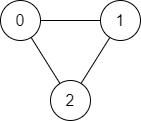
Input: n = 3, edges = [[0,1],[1,2],[2,0]], source = 0, destination = 2
Output: true
Explanation: There are two paths from vertex 0 to vertex 2:
- 0 → 1 → 2
- 0 → 2
Example 2:
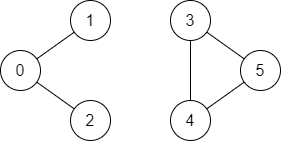
Input: n = 6, edges = [[0,1],[0,2],[3,5],[5,4],[4,3]], source = 0, destination = 5
Output: false
Explanation: There is no path from vertex 0 to vertex 5.
Constraints:
-
1 <= n <= 2 * 105 -
0 <= edges.length <= 2 * 105 edges[i].length == 2-
0 <= ui, vi <= n - 1 -
ui != vi 0 <= source, destination <= n - 1- There are no duplicate edges.
- There are no self edges.
Walkthroughs of the solution. Try the steps first, then watch to compare approaches.
Free plan: 30 tutor messages. Premium is unlimited.