Step-by-Step Guide to Enroll in a Coding Bootcamp Remotely
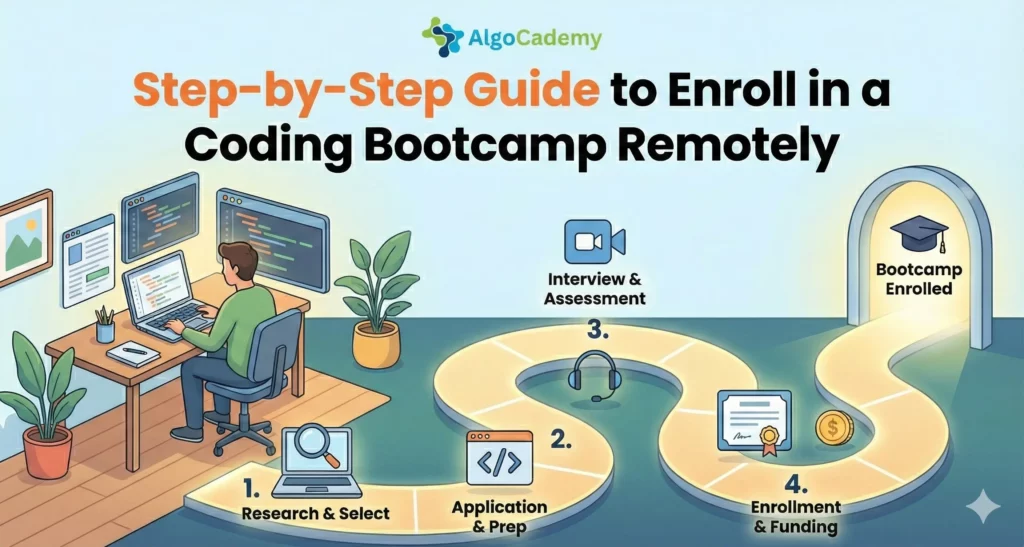
So you’ve decided to make the leap into tech. Maybe you’re switching careers, maybe you’re looking to level up your skills, or maybe you just realized that spending another decade in your current job isn’t going to cut it. Whatever brought you here, enrolling in a remote coding bootcamp is one of the fastest ways to break into the industry.
But here’s the thing: the enrollment process can feel overwhelming if you don’t know what to expect. There are dozens of bootcamps out there, each with different requirements, price points, and teaching styles. I’ve put together this guide to walk you through the entire process from start to finish.
Step 1: Figure Out What You Actually Want to Learn
Before you start comparing bootcamps, you need to get clear on your goals. “Learning to code” is too vague. Ask yourself:
- Do you want to build websites? That’s front-end or full-stack development.
- Interested in working with data? Look into data science or data analytics programs.
- Want to build mobile apps? You’ll need iOS or Android development tracks.
- Curious about the infrastructure side? DevOps or cloud engineering might be your path.
Your answer to this question will narrow down your bootcamp options significantly. Don’t skip this step or you’ll end up enrolled in something that doesn’t align with where you want to end up.
Step 2: Research and Shortlist Bootcamps
Once you know your focus area, start researching programs. Here’s what to look for:
Curriculum depth: Look at the actual syllabus. Does it cover modern technologies that employers are hiring for? A bootcamp teaching outdated frameworks isn’t worth your time or money.
Job placement rates: Reputable bootcamps publish their outcomes. Be skeptical of programs that don’t share this data or seem to inflate their numbers.
Student reviews: Check Course Report, SwitchUp, and Reddit. Current and former students will tell you the real story about the teaching quality, career support, and overall experience.
Schedule flexibility: Remote bootcamps come in different formats. Some are full-time (40+ hours per week), others are part-time and designed for people who are still working. Make sure the schedule actually fits your life.
Cost and financing: Bootcamps range from free (with income share agreements) to $20,000+. Look into payment plans, scholarships, and whether the bootcamp offers financing options.
Create a shortlist of 3 to 5 programs that check your boxes.
Step 3: Prepare Your Foundational Skills
Here’s where a lot of people make a mistake. They apply to bootcamps with zero coding experience and then struggle to keep up once the program starts. Most bootcamps move fast, and if you’re seeing code for the first time on day one, you’re already behind.
Spend a few weeks (or a couple of months if you have the time) building foundational skills before you apply. This serves two purposes: it helps you pass any technical assessments during the application process, and it ensures you’ll actually be able to absorb the material once you’re enrolled.
A platform like AlgoCademy is great for this. It offers interactive coding tutorials that teach you programming fundamentals step by step. Unlike passive video courses where you just watch someone else code, you’re actually writing and running code yourself from the start. This hands-on approach is exactly the kind of preparation that will set you up for bootcamp success.
Focus on the basics: variables, data types, loops, conditionals, functions, and basic problem-solving. If you’re going into web development, add some HTML and CSS to the mix. You don’t need to be an expert, but you should be comfortable enough that the syntax doesn’t look like hieroglyphics.
Step 4: Complete the Application
Most bootcamp applications have several components:
Basic information: Your background, education, work experience, and why you want to attend. Be honest and specific about your motivations. Admissions teams read hundreds of these, so generic answers won’t stand out.
Technical assessment: Many bootcamps require you to complete a coding challenge or assessment. This might be a timed test, a take-home project, or a series of problems on a platform. This is where your preparation from Step 3 pays off.
Interview: Some programs include a video interview with an admissions counselor or instructor. They want to assess your communication skills, your commitment level, and whether you’ll be a good fit for the cohort. Treat this like a job interview: be professional, ask thoughtful questions, and demonstrate that you’ve done your homework on the program.
Submit your application before the deadline and make sure you’ve completed every required section. Incomplete applications often get rejected automatically.
Step 5: Prepare for the Technical Interview (If Required)
Some bootcamps, especially the more competitive ones, include a technical interview as part of the admissions process. This is usually a live coding session where you’ll solve problems while an interviewer watches.
Don’t panic. These assessments are typically beginner-level. They want to see that you can think logically, break down problems, and write basic code. They’re not expecting you to build a full application on the spot.
Practice explaining your thought process out loud as you code. Interviewers care as much about how you approach problems as whether you get the right answer. If you get stuck, talk through what you’re thinking. Saying “I’m not sure how to do this part, but I think I need to loop through the array and check each element” is much better than sitting in silence.
Step 6: Review Your Acceptance and Financial Aid
Congratulations, you got in! But before you sign anything, carefully review all the documents:
- What’s the total cost, including any fees that aren’t included in the tuition number?
- What’s the refund policy if you need to drop out?
- What exactly is included (career coaching, job guarantee, ongoing access to materials)?
- If you’re using an income share agreement, what are the terms? What percentage of your salary will you pay, for how long, and is there a cap?
If anything is unclear, ask. A legitimate bootcamp will be transparent about their terms. If they’re evasive or pushy about getting you to sign quickly, that’s a red flag.
Step 7: Set Up Your Remote Learning Environment
Before your start date, get your workspace ready. Remote learning requires discipline, and having the right setup makes a big difference.
Hardware: Make sure your computer meets the bootcamp’s requirements. You’ll need reliable internet, a webcam for video calls, and ideally a second monitor (it makes coding and following along with lessons much easier).
Software: Install everything the bootcamp requires ahead of time. This usually includes a code editor like VS Code, version control tools like Git, and whatever programming language or frameworks you’ll be using.
Workspace: Find a quiet spot where you can focus for extended periods. Let the people you live with know your schedule so they don’t interrupt during live sessions.
Mindset: Clear your calendar as much as possible. Even part-time bootcamps require significant time investment. Side projects, social commitments, and other distractions will need to take a backseat for the duration of the program.
Step 8: Start Strong and Stay Consistent
The first few weeks of a bootcamp set the tone for the entire experience. Show up to every session, complete every assignment on time, and don’t let yourself fall behind. The curriculum builds on itself, so gaps in your understanding early on will compound over time.
Take advantage of office hours, study groups, and any community spaces the bootcamp offers. Remote learning can feel isolating, but most programs have Slack channels, Discord servers, or forums where you can connect with classmates. Use them. The people in your cohort are going through the same challenges you are, and many bootcamp graduates say their cohort connections were one of the most valuable parts of the experience.
Final Thoughts
Enrolling in a remote coding bootcamp is a significant commitment, but for many people, it’s the fastest path to a new career in tech. The key is doing your research upfront, preparing before you start, and staying committed once you’re in.
Take it one step at a time. A year from now, you could be working as a developer, and you’ll look back on this decision as one of the best you ever made.