How to Access Coding Tutorials for Free on Streaming Services
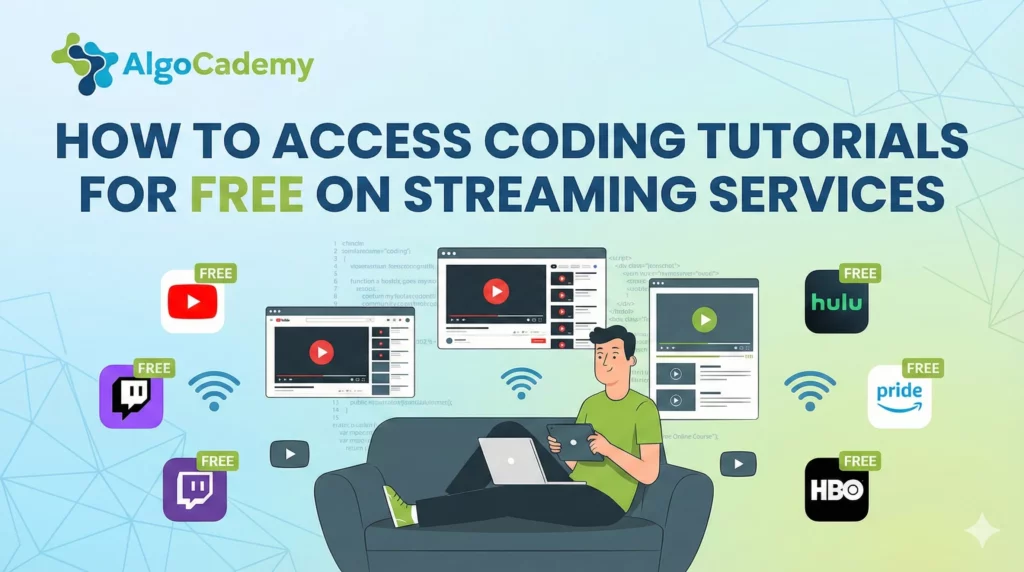
Here’s something that would have seemed impossible twenty years ago: you can learn to code entirely for free using streaming services. The same devices you use to watch movies and TV shows can deliver world-class programming education without spending a dollar.
But finding quality content among the endless options takes some knowledge. Not all free resources are worth your time, and some “free” platforms have catches you should know about. Plus, there’s a right way and a wrong way to learn from video content that dramatically affects whether you actually develop skills or just feel like you’re learning.
In this guide, I’ll show you exactly where to find free coding tutorials on streaming platforms, how to evaluate quality, and how to turn passive watching into actual programming ability.
The Truth About Learning to Code from Videos
Before diving into platforms, let’s address something important: watching coding tutorials is not the same as learning to code. This distinction trips up countless beginners who consume hours of video content, feel like they’re making progress, and then discover they can’t actually write code on their own.
Videos excel at explaining concepts, demonstrating workflows, and exposing you to new ideas. They’re terrible at building the hands-on skills that programming requires. You wouldn’t learn to play guitar by watching YouTube videos without ever touching an instrument. Coding works the same way.
The most effective approach combines video learning with active practice. Watch a tutorial to understand a concept, then immediately practice that concept yourself. Platforms like AlgoCademy complement video learning perfectly because they provide the interactive, hands-on practice that videos can’t offer. While streaming services show you how things work, interactive platforms help you develop the problem-solving abilities to apply that knowledge.
With that foundation in mind, let’s explore the best free streaming options available.
YouTube: The Largest Free Coding Library
YouTube remains the undisputed champion of free coding content. Thousands of channels cover every programming language, framework, and concept imaginable. The challenge isn’t finding content but filtering quality from noise.
Channels Worth Following
freeCodeCamp’s YouTube channel offers incredibly comprehensive tutorials, often running 4 to 12 hours for complete courses. These aren’t quick overviews but genuine full courses covering Python, JavaScript, machine learning, web development, and dozens of other topics. The production quality is consistently high, and the instructors know their material.
Traversy Media by Brad Traversy provides practical, project-based tutorials focused on web development. The crash course format works well for learning new technologies quickly, and Brad’s teaching style is clear and beginner-friendly. The channel covers HTML, CSS, JavaScript, React, Node, and most other web technologies.
The Coding Train by Daniel Shiffman takes a uniquely energetic approach to programming education. The focus on creative coding and visual projects makes programming feel playful rather than dry. If traditional tutorials bore you, Daniel’s enthusiasm might be exactly what you need.
Fireship delivers fast-paced, information-dense videos that cover concepts in minutes rather than hours. The “100 seconds” series explains technologies quickly, while longer tutorials dive deeper. The editing style keeps things engaging, though complete beginners might find the pace challenging.
CS Dojo by YK Sugi focuses on data structures, algorithms, and technical interview preparation. The explanations are clear and methodical, making complex topics accessible. Career switchers preparing for interviews will find this channel particularly valuable.
Tech With Tim covers Python extensively, from basics through advanced topics like machine learning and game development. The project-based approach helps you build things while learning, and Tim’s explanations suit beginners well.
Ben Awad offers more advanced content focused on modern web development, particularly React and GraphQL. The content assumes some existing knowledge, making it better for intermediate learners than complete beginners.
Corey Schafer provides thorough Python tutorials that cover both fundamentals and practical applications. The videos are well-organized and detailed without being unnecessarily long.
Making YouTube Learning Effective
YouTube’s algorithm can work against you if you’re not careful. It optimizes for watch time, not learning outcomes, which means it’ll happily serve you endless tutorials without pushing you to actually practice.
Set specific learning goals before opening YouTube. Decide what concept you want to understand, find a video covering it, watch actively while taking notes, then close YouTube and practice. Resist the temptation to queue up “just one more video” before applying what you’ve learned.
Create playlists organizing content by topic rather than relying on recommendations. This gives you control over your curriculum instead of letting the algorithm decide what you learn next.
Adjust playback speed based on content complexity. Simple concepts might work fine at 1.5x or 2x speed, while complex explanations benefit from normal or slower playback. Don’t waste time watching slowly when you could move faster.
LinkedIn Learning: Free Through Your Library
LinkedIn Learning (formerly Lynda.com) offers thousands of professional courses covering programming, design, business, and more. The subscription normally costs around $30 per month, but here’s something many people don’t know: you can likely access it completely free through your local library.
Getting Free Access
Most public library systems in the United States, Canada, UK, and Australia provide free LinkedIn Learning access to cardholders. The process typically works like this:
- Get a library card if you don’t have one (usually free with proof of address)
- Visit your library’s website and look for “digital resources” or “online learning”
- Find LinkedIn Learning in the list of available services
- Log in with your library card number
- Access the full LinkedIn Learning catalog at no cost
Some libraries provide access through other portals, so you might need to search for “Lynda” as well since some systems haven’t updated their naming.
What You’ll Find
LinkedIn Learning’s programming courses tend toward practical, professional application. The production quality is consistently high, with professional instructors and well-structured curricula.
The learning paths organize courses into sequences for specific goals like “Become a Web Developer” or “Become a Data Analyst.” These curated paths save you from figuring out what to learn next.
Completed courses appear on your LinkedIn profile, adding visible credentials that potential employers might notice. This integration makes LinkedIn Learning particularly valuable for career-focused learners.
Coursera: Auditing University Courses
Coursera partners with universities and companies to offer courses, specializations, and degrees. While certificates and full programs cost money, you can audit most individual courses for free.
How Auditing Works
When you enroll in a course, look for the “Audit” option (sometimes hidden behind “Financial Aid” or listed as “Audit Only”). Auditing gives you access to video lectures and readings without graded assignments or certificates.
For learning purposes, auditing provides almost everything you need. You watch the same lectures as paying students and access the same materials. You just can’t submit assignments for grading or earn a certificate.
Some courses restrict certain content from auditors, particularly peer-reviewed assignments or capstone projects. But the core educational content is typically available.
Notable Free Courses on Coursera
CS50’s Introduction to Computer Science from Harvard is widely considered one of the best introductory programming courses available. David Malan’s lectures are engaging and thorough, covering fundamental concepts that apply across languages and careers.
Python for Everybody from the University of Michigan provides a gentle introduction to programming using Python. The specialization spans multiple courses taking you from absolute beginner through web development and databases.
Algorithms Specialization from Stanford covers fundamental algorithms and data structures at a rigorous academic level. The content is challenging but provides deep understanding that surface-level tutorials don’t offer.
Machine Learning by Andrew Ng remains the most popular introduction to machine learning despite being years old. The explanations build intuition for how algorithms work rather than just showing you how to call library functions.
edX: More University Content
edX operates similarly to Coursera, offering university courses with free audit options. The platform was founded by Harvard and MIT, and their courses remain highlights of the catalog.
Standout Free Content
MIT’s Introduction to Computer Science and Programming Using Python provides rigorous foundational education. The course is challenging, expecting significant time investment, but builds genuine computer science understanding.
Harvard’s CS50 series extends beyond the introduction to cover web programming, AI, game development, and mobile apps. Each course maintains the high quality that made CS50 famous.
Linux Foundation courses cover open-source technologies, DevOps, and cloud computing. These practical skills appear constantly in job requirements.
Like Coursera, edX charges for certificates but lets you access course content through auditing. The academic rigor tends to be higher than casual YouTube tutorials, which is valuable for building deep understanding but requires more commitment.
Khan Academy: Completely Free, No Catches
Khan Academy offers genuinely free education with no premium tiers, no certificates to purchase, and no content hidden behind paywalls. The nonprofit mission keeps everything accessible.
What’s Available
The computing section covers introductory programming through JavaScript with visual, interactive exercises. You write code that immediately produces visual output, making abstract concepts concrete and providing instant feedback.
The approach works particularly well for visual learners and younger students, though adult beginners also benefit from the friendly, low-pressure environment. Creating drawings and animations feels more rewarding than printing text to a console.
Beyond programming basics, Khan Academy covers computer science concepts, algorithms, and even advanced topics like cryptography. The quality remains consistent throughout.
The SQL course provides practical database skills that many jobs require. The interactive exercises let you write queries against real datasets, building hands-on experience.
Limitations
Khan Academy’s programming content focuses primarily on JavaScript and SQL, with less coverage of other languages. If you want to learn Python, Java, or other languages, you’ll need additional resources.
The content also stops short of job-ready depth in most areas. Khan Academy provides excellent foundations but isn’t sufficient as your only learning resource if you’re targeting professional development.
Twitch: Live Coding Streams
Twitch isn’t just for gaming. The “Science & Technology” category hosts hundreds of programmers streaming live coding sessions. Watching experienced developers work through problems in real-time teaches things that polished tutorials can’t.
What You’ll Learn from Live Streams
Polished tutorials show you the clean path to a solution. Live streams show you the messy reality of programming: the debugging, the Stack Overflow searches, the “wait, why isn’t this working?” moments that every programmer experiences.
This exposure to authentic programming work helps beginners understand that struggling is normal. When you see experienced developers make mistakes and work through them, you realize your own struggles don’t mean you’re not cut out for coding.
Live interaction lets you ask questions and get immediate answers. Many coding streamers actively engage with chat, explaining their decisions and responding to viewer questions.
Finding Good Coding Streams
Browse the Science & Technology category and look for streams with “programming,” “coding,” or specific language names in their titles. Following streamers whose style and focus match your interests builds a personalized learning feed.
Some notable coding streamers include ThePrimeagen (entertaining, focused on performance), Theo (web development and tech commentary), and various streamers doing “advent of code” challenges during December.
The inconsistent scheduling and variable quality of live content makes Twitch better as a supplement than a primary learning resource. But for exposure to real programming workflows, nothing else quite matches it.
MIT OpenCourseWare: University Content Without Enrollment
MIT OpenCourseWare publishes actual MIT course materials for free public access. This includes lecture videos, assignments, exams, and readings from real MIT classes.
Notable Computer Science Offerings
Introduction to Algorithms provides rigorous algorithmic education at the level MIT students receive. The content is challenging but builds deep understanding that interviews and professional work require.
Structure and Interpretation of Computer Programs teaches fundamental programming concepts through Scheme (a Lisp dialect). The ideas transfer to any language and will change how you think about programming.
Introduction to Electrical Engineering and Computer Science series covers foundational topics with the rigor you’d expect from MIT.
The materials are genuinely free with no registration required. You can download videos, view lecture notes, and work through problem sets at your own pace.
The Tradeoff
MIT courses assume strong students willing to work hard. The content is dense, the pace is fast, and nobody holds your hand through difficult material. If you’re looking for gentle introductions, MIT OpenCourseWare isn’t the right fit. But if you want world-class technical education for free, it delivers.
Free Trials and Periodic Free Access
Several paid platforms periodically offer free access that’s worth knowing about.
Pluralsight Free Weekends
Pluralsight occasionally opens their entire library for free weekends or during specific events. Following them on social media alerts you to these opportunities. When free access opens, the technical depth of Pluralsight content makes it worth dedicating a weekend to intensive learning.
Skillshare Free Trials
Skillshare offers free trials that give full library access. The programming content is less comprehensive than dedicated coding platforms, but creative coding and design-focused development courses can be valuable. Just remember to cancel before the trial ends if you don’t want to continue.
Udemy Sales
While not streaming in the traditional sense, Udemy runs frequent sales dropping course prices to $10 to $15. Courses from top instructors like Colt Steele, Angela Yu, and Maximilian Schwarzmuller provide comprehensive education at minimal cost. The “free” threshold is subjective, but $10 for 40+ hours of professional instruction approaches free territory.
Amazon Prime Video
Amazon Prime Video occasionally includes programming content, though it’s limited. Some tech documentaries and courses appear for Prime members, but this shouldn’t be your primary learning resource.
Building an Effective Free Learning System
With all these free resources available, the challenge becomes using them effectively. Here’s how to structure your learning:
Combine Passive and Active Learning
Watch videos to understand concepts, then immediately practice with interactive platforms. AlgoCademy works particularly well as the active complement to passive video watching because it focuses on building problem-solving skills rather than just presenting information.
The pattern should be: watch, practice, build. Watch a tutorial on arrays, practice array problems interactively, then build something using arrays. Only then move to the next topic.
Create Your Own Curriculum
Don’t let algorithms determine what you learn. Map out the skills you need, find resources covering each one, and progress systematically. A scattered approach watching whatever YouTube recommends produces scattered knowledge.
Write down your learning path and check things off as you complete them. This simple tracking provides accountability that wandering through recommended videos lacks.
Set Time Limits on Watching
It’s easy to spend hours watching tutorials while accomplishing little real learning. Set a rule: no more than 30 minutes of video content without practicing what you’ve watched. This constraint forces the active engagement that builds skills.
Some learners find the Pomodoro technique helpful: 25 minutes of focused video watching, then 25 minutes of practice, with short breaks between.
Take Notes Actively
Don’t just watch passively. Pause videos, write down key concepts, and try to predict what comes next. Active engagement dramatically improves retention compared to passive viewing.
Some learners benefit from coding along with tutorials. Others find it more effective to watch first, then attempt to recreate what they saw from memory. Experiment to find what works for you.
Build Projects Between Courses
After completing a video course or tutorial series, build something using what you learned before starting the next course. This project phase cements knowledge and reveals gaps in your understanding that more tutorials won’t fix.
The project doesn’t need to be impressive. A simple application using the concepts you learned is enough. The act of creating something without following along transforms passive knowledge into active skill.
Common Mistakes When Learning from Free Content
Tutorial Hell
The most common trap is endless tutorial consumption without ever building independently. You watch course after course, feeling productive, while never developing real skills. The solution is forcing yourself to build projects even when you don’t feel ready.
Jumping Between Topics
Free content makes it easy to jump to new topics whenever current material gets difficult. Resist this temptation. Difficulty means you’re at the edge of your abilities, which is exactly where learning happens. Push through rather than retreating to easier content.
Ignoring Fundamentals
Shiny frameworks and tools are more exciting than fundamentals like data structures and algorithms. But fundamentals make you effective across all technologies, while framework knowledge becomes obsolete when the next framework emerges.
Dedicate time to foundational content even when it’s less immediately gratifying than building flashy projects. The investment pays dividends throughout your career.
Passive Consumption
Watching videos while tired, distracted, or doing other things wastes time without building knowledge. If you’re not engaged enough to take notes and think actively, you’re better off doing something else until you can focus properly.
Making the Transition to Paid Resources
Free resources can take you surprisingly far, but many learners eventually benefit from paid options. Here’s when investing money makes sense:
When you need structure: Free content requires you to build your own curriculum. If you’re struggling with self-direction, paid programs with structured paths might be worth the cost.
When you need accountability: Paying money creates commitment. If you’re having trouble following through on free courses, the investment of paid content might motivate consistency.
When you need feedback: Videos can’t evaluate your code or answer questions about your specific situation. Paid platforms often provide feedback mechanisms that accelerate learning beyond what pure video consumption offers.
When time matters more than money: If you’re transitioning careers and every month of delayed income costs thousands in opportunity cost, paying to accelerate learning might be economically rational.
When you’re ready for interactive practice that builds real problem-solving skills, AlgoCademy provides the hands-on experience that videos can’t deliver. The step-by-step approach to developing programming logic complements the conceptual understanding you’ll gain from free video content.
Conclusion
You can absolutely learn to code for free using streaming services. YouTube offers more quality content than you could watch in a lifetime. Library access unlocks premium platforms like LinkedIn Learning. Coursera and edX provide university education for the cost of auditing. Khan Academy, MIT OpenCourseWare, and Twitch add additional dimensions to free learning.
The key is using these resources actively rather than passively. Watch with intention, practice immediately, and build projects that apply your knowledge. Supplement video learning with interactive practice on platforms like AlgoCademy to develop the hands-on skills that watching alone won’t build.
The barriers to learning programming have never been lower. World-class education is available on the same devices you use for entertainment. The only remaining requirement is your commitment to learning.
Pick one resource from this guide and start today. Watch one tutorial, practice the concepts, and build something small. Tomorrow, do it again. Consistent effort with free resources produces remarkable results over time.
Your programming education is waiting in your pocket, on your laptop, and on your TV. All you have to do is press play, and then get to work.