Coding Courses with Certification Recognised in Sweden: The Complete Guide
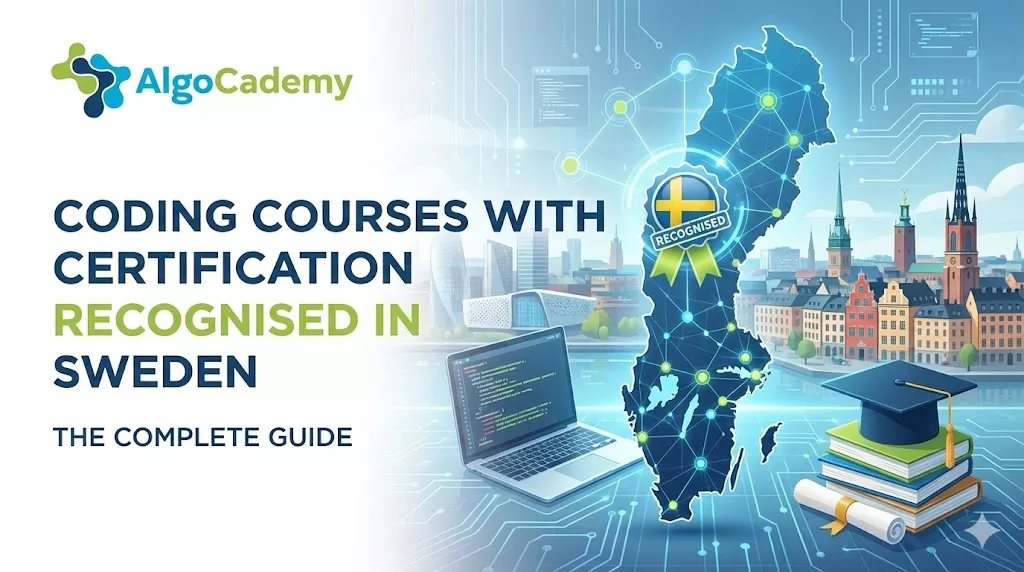
Sweden has established itself as one of Europe’s most remarkable technology success stories. This Nordic nation of just 10 million people has produced an extraordinary number of global tech companies—Spotify, Klarna, King, Mojang (Minecraft), iZettle, and countless others. Stockholm regularly ranks among the world’s top startup ecosystems, second only to Silicon Valley in unicorns per capita. Beyond the capital, Gothenburg and Malmö have developed thriving tech scenes of their own.
The Swedish approach to technology and education reflects the country’s broader social values: accessible, high-quality education largely free of charge, strong work-life balance, and a culture that values innovation and collaboration. The tech sector benefits from excellent infrastructure, a highly educated population with near-universal English fluency, and a tradition of engineering excellence dating back to companies like Ericsson and Volvo.
For anyone seeking to enter or advance in Swedish tech, understanding which credentials carry weight is essential. The landscape includes world-class universities offering free education to EU students, an innovative vocational higher education system (Yrkeshögskola) designed with direct industry input, government-funded retraining programmes, and a growing bootcamp scene. Swedish employers value both formal qualifications and demonstrated practical skills, with the tech sector particularly focused on what you can actually do.
This guide navigates Sweden’s certification landscape comprehensively, explaining which credentials employers recognise, how the education system works, what government support is available, and how to build a strategic path into one of Europe’s most innovative and liveable tech markets.
Understanding Sweden’s Education System
Sweden’s education system is characterised by accessibility, quality, and strong connections between education and industry. Understanding this structure is essential for navigating credential choices.
The Swedish Qualifications Framework (SeQF)
The Swedish Qualifications Framework (SeQF) aligns Swedish qualifications with the European Qualifications Framework (EQF):
| SeQF/EQF Level | Swedish Qualification | Description |
|---|---|---|
| 1-2 | Grundskola | Compulsory education |
| 3 | Gymnasieexamen | Upper secondary |
| 4 | Gymnasieexamen (extended) | Extended upper secondary |
| 5 | Yrkeshögskoleexamen, Kvalificerad yrkeshögskoleexamen | Vocational higher education |
| 6 | Högskoleexamen, Kandidatexamen (Bachelor’s) | Higher education |
| 7 | Magisterexamen, Masterexamen | Master’s level |
| 8 | Doktorsexamen | Doctoral level |
The Higher Education System
Swedish higher education follows the Bologna Process:
Högskoleexamen (Higher Education Diploma):
- Duration: 2 years (120 credits)
- Foundation higher education
Kandidatexamen (Bachelor’s Degree):
- Duration: 3 years (180 credits)
- First full academic degree
- Required for many professional roles
Magisterexamen (One-year Master’s):
- Duration: 1 year (60 credits)
- Specialisation focus
Masterexamen (Two-year Master’s):
- Duration: 2 years (120 credits)
- Full master’s qualification
- Often required for advanced positions
Doktorsexamen (PhD):
- Duration: 4 years
- Research degree
- Paid position in Sweden
Note on Swedish credits: Swedish higher education uses ECTS-compatible credits where 1.5 Swedish credits = 1 ECTS credit. A full-time year is 60 credits (40 Swedish credits in the old system).
Universities vs. University Colleges
Sweden distinguishes between:
Universitet (Universities):
- Full research mandate
- Can award doctorates in all fields
- Generally higher prestige
- Broader programme offerings
Högskolor (University Colleges):
- May have limited doctoral rights
- Often more professionally oriented
- Can be excellent in specific areas
- Some have gained university status
Both types award recognised degrees. The distinction is less important for employment than programme quality and relevance.
Yrkeshögskola (YH): Sweden’s Vocational Higher Education
Yrkeshögskola (YH) is Sweden’s innovative vocational higher education system.
Key characteristics:
Industry-driven design:
- Programmes developed with direct employer input
- Curriculum reflects actual industry needs
- High employment relevance
Practical orientation:
- Substantial workplace learning (LIA – Lärande i Arbete)
- Real projects and industry connections
- Job-ready graduates
Duration:
- Typically 1-2 years
- Full-time or part-time options
Qualifications:
- Yrkeshögskoleexamen (1-2 years)
- Kvalificerad yrkeshögskoleexamen (2+ years, SeQF Level 6)
Free for students:
- No tuition fees
- CSN eligible
IT-related YH programmes include:
- Systemutvecklare (Systems Developer)
- Webbutvecklare (Web Developer)
- IT-säkerhetsspecialist (IT Security Specialist)
- Dataanalytiker (Data Analyst)
- DevOps Engineer
- Cloud Engineer
- UX Designer
- Various specialisations
Why YH is valuable:
YH programmes have exceptional employment outcomes because:
- Employers help design curricula
- Substantial practical training (LIA)
- Industry connections built in
- Graduates meet actual market needs
Many Swedish tech employers highly value YH graduates for their practical skills and job-readiness.
Komvux (Municipal Adult Education)
Komvux provides adult education:
Characteristics:
- Second-chance education
- Free for Swedish residents
- Gymnasial (upper secondary) level
- Can qualify for higher education access
IT-related offerings:
- Programming courses
- Web development
- IT fundamentals
- Preparation for YH or university
Folkhögskolor (Folk High Schools)
Traditional Scandinavian adult education institutions:
Characteristics:
- Alternative pathway to higher education
- Various programmes including IT
- May provide högskolebehörighet (university eligibility)
- Often residential
Some folkhögskolor offer IT and programming programmes that can provide pathways to further education.
Arbetsförmedlingen Training
Arbetsförmedlingen (Swedish Public Employment Service) provides training for job seekers:
Arbetsmarknadsutbildning:
- Vocational training for unemployed
- IT programmes often available
- Free with activity support
Etableringsprogrammet:
- For newly arrived immigrants
- May include IT training options
Swedish Universities for Computer Science
Sweden has excellent computer science education across its university system.
KTH Royal Institute of Technology
KTH is Sweden’s largest and most prestigious technical university.
School of Electrical Engineering and Computer Science:
Civilingenjör Datateknik (MSc Computer Science and Engineering):
- Duration: 5 years (300 credits)
- Integrated bachelor’s + master’s
- Sweden’s premier CS programme
- Highly competitive admission
Kandidatprogram Informations- och kommunikationsteknik:
- Duration: 3 years
- Bachelor’s level
Master’s programmes (English-taught):
- Computer Science
- Machine Learning
- Cyber Security
- Software Engineering of Distributed Systems
- ICT Innovation
- Various specialisations
Tuition:
- EU/EEA students: Free
- Non-EU students: ~SEK 155,000-180,000/year
Reputation: Exceptional. KTH is Sweden’s MIT. Graduates are highly sought after by Swedish and international tech companies. Strong alumni network in Stockholm tech scene.
Chalmers University of Technology
Chalmers is Sweden’s other premier technical university, located in Gothenburg.
Department of Computer Science and Engineering:
Civilingenjör Datateknik:
- Duration: 5 years
- Integrated programme
- Excellent reputation
Master’s programmes (English-taught):
- Computer Science – Algorithms, Languages and Logic
- Software Engineering and Technology
- Data Science and AI
- Various tracks
Tuition:
- EU/EEA students: Free
- Non-EU students: ~SEK 140,000-160,000/year
Reputation: Excellent. Chalmers rivals KTH for technical education. Strong industry connections in Gothenburg’s tech and automotive sector.
Uppsala University
Uppsala University is Sweden’s oldest university with strong computer science programmes.
Department of Information Technology:
Kandidatprogram i datavetenskap:
- Duration: 3 years
- Bachelor’s programme
Master’s programmes:
- Computer Science
- Data Science
- Various specialisations
Reputation: Excellent. Uppsala has strong research and good industry connections.
Lund University
Lund University is one of Scandinavia’s largest universities.
Department of Computer Science:
Various programmes:
- Bachelor’s and master’s options
- Strong research
Reputation: Excellent. Lund is a top-tier Swedish university with strong CS programmes.
Stockholm University (SU)
Stockholm University offers computer science in the capital.
Department of Computer and Systems Sciences (DSV):
Various programmes:
- Bachelor’s and master’s options
- Information systems focus
- Data science programmes
Reputation: Good. Located in Stockholm with access to the tech ecosystem.
Linköping University (LiU)
Linköping University has strong technical programmes.
Department of Computer and Information Science:
Civilingenjör Mjukvaruteknik:
- Software engineering focus
- 5-year programme
Various master’s programmes:
- Computer Science
- Statistics and Machine Learning
Reputation: Very good. Strong in software engineering.
Gothenburg University
University of Gothenburg complements Chalmers in the city.
Department of Computer Science and Engineering (joint with Chalmers):
Various programmes:
- Shared resources with Chalmers
- Good options
Malmö University
Malmö University serves southern Sweden.
Department of Computer Science:
Various programmes:
- Bachelor’s and master’s options
- Growing tech scene in Malmö
Reputation: Good. Malmö’s tech ecosystem is developing.
Umeå University
Umeå University serves northern Sweden.
Department of Computing Science:
Various programmes:
- Good CS programmes
- Research strengths
Reputation: Good. Northern Sweden location.
Other Notable Institutions
Blekinge Institute of Technology (BTH):
- Strong in software engineering
- Game development programmes
- Located in Karlskrona
Mälardalen University:
- Good technical programmes
- Västerås/Eskilstuna
Jönköping University:
- International orientation
- Good programmes
English-Taught Programmes
Sweden offers extensive English-taught programmes:
Most master’s programmes are in English
Some bachelor’s programmes in English:
- Limited but growing
- KTH, Chalmers, others offer options
Advantage for international students:
- Can study without Swedish
- Access to Swedish tech market
- Swedish language valuable but not always required for tech jobs
University Comparison
| University | Location | Type | Prestige | Industry Connection |
|---|---|---|---|---|
| KTH | Stockholm | Technical | Highest | Exceptional |
| Chalmers | Gothenburg | Technical | Highest | Excellent |
| Uppsala | Uppsala | Traditional | Very High | Very Good |
| Lund | Lund | Traditional | Very High | Very Good |
| Stockholm | Stockholm | Traditional | High | Good |
| Linköping | Linköping | Technical | High | Very Good |
| Malmö | Malmö | Newer | Good | Growing |
Yrkeshögskola (YH): Vocational Higher Education Excellence
The YH system deserves detailed attention as it represents one of Sweden’s most innovative and effective pathways into tech careers.
How YH Works
Programme development:
- Employers identify skills needs
- Education providers propose programmes
- Myndigheten för yrkeshögskolan (MYH) evaluates and approves
- Programmes run with ongoing employer involvement
This employer-driven model ensures:
- Curricula match actual job requirements
- Graduates have relevant skills
- High employment rates
- Industry connections built in
IT-Related YH Programmes
Systemutvecklare Java/Javautvecklare:
- Duration: 2 years
- Java development focus
- Backend emphasis
- Strong enterprise demand
Systemutvecklare .NET:
- Duration: 2 years
- Microsoft stack
- Enterprise applications
- Strong demand in corporate Sweden
Webbutvecklare/Frontendutvecklare:
- Duration: 1-2 years
- Frontend development
- JavaScript ecosystem
- React, Vue, Angular
Fullstackutvecklare:
- Duration: 2 years
- Both frontend and backend
- Complete web application development
DevOps Engineer:
- Duration: 2 years
- CI/CD, infrastructure
- Cloud platforms
- Growing demand
Cloud Engineer/Molnarkitekt:
- Duration: 1-2 years
- AWS, Azure, GCP
- Cloud infrastructure
- High demand area
IT-säkerhetsspecialist:
- Duration: 2 years
- Cybersecurity focus
- Growing importance
Dataanalytiker/Data Scientist:
- Duration: 1-2 years
- Data analysis
- Business intelligence
- Growing field
UX Designer:
- Duration: 2 years
- User experience
- Design and research
LIA (Lärande i Arbete)
A crucial component of YH is workplace learning:
What LIA provides:
- Real work experience during studies
- Industry connections
- Portfolio projects
- Often leads to employment
- Typically 20-25% of programme
Benefits:
- Graduates have work experience at graduation
- Employers can evaluate potential hires
- Practical skills verified
- Network building
Finding YH Programmes
Official portal: yrkeshogskolan.se
Search by:
- Subject area (IT/Data)
- Location
- Start date
- Full-time/part-time
Application:
- Through yrkeshogskolan.se
- Various deadlines
- Selection process varies by programme
Notable YH Providers
Nackademin:
- Multiple IT programmes
- Stockholm focus
- Good reputation
Handelsakademin/Yrkeshögskolan:
- Various IT programmes
- Multiple locations
EC Utbildning:
- National presence
- Various tech programmes
Changemaker Educations:
- Data and tech focus
- Multiple locations
Chas Academy:
- Web development focus
- Stockholm
Lexicon:
- Various IT programmes
- Multiple locations
Jensen Education:
- IT programmes
- Multiple locations
YH vs. University
Choose YH if:
- You want practical, job-ready skills quickly
- You prefer learning by doing
- You want guaranteed industry exposure (LIA)
- You’re targeting practical development roles
- You want free education with strong employment outcomes
Choose university if:
- You want deeper theoretical foundations
- You’re targeting research or academia
- You want broader career optionality
- You prefer academic environment
- You want the most prestigious credential
The practical reality:
Many Swedish tech employers value YH graduates highly. The practical skills and work experience (LIA) often compensate for shorter education. For development and operations roles, YH can be an excellent choice.
Government-Funded Training and Support
Sweden offers substantial support for education and career development.
CSN (Centrala Studiestödsnämnden)
CSN provides student finance.
Studiemedel (Student Finance):
For higher education students:
Components:
- Studiebidrag (grant): ~SEK 3,572/month (2024)
- Studielån (loan): Up to ~SEK 8,106/month additional
- Total: Up to ~SEK 11,678/month
Eligibility:
- Swedish citizens
- EU/EEA citizens with certain connections to Sweden
- Some permanent residents
- Enrolled in approved programme
Repayment:
- Loan repayment begins after studies
- Income-contingent repayment
- Relatively low interest rates
Arbetsförmedlingen (Public Employment Service)
Arbetsförmedlingen supports job seekers.
Arbetsmarknadsutbildning (Labour Market Training):
- Vocational training for unemployed
- IT programmes often available
- Free with activity support (aktivitetsstöd)
Eligibility:
- Registered job seekers
- Assessment of training need
- Various criteria apply
IT training options:
- Programming courses
- System administration
- Various technical skills
Etableringsprogrammet:
- For newly arrived refugees/immigrants
- May include IT training options
- Integration support
Omställningsfonden/Trygghetsråden
For those being made redundant:
TSL (Trygghetsrådet):
- For collectively agreed workers
- Transition support
- May fund retraining
TRR (Trygghetsrådet):
- For white-collar workers
- Career transition support
- Training funding possible
Omställningsstudiestöd (Transition Study Support):
- New programme for mid-career transitions
- Funding for studies while working or unemployed
- Significant financial support
Tax Deductions for Education
Utbildning:
- Employer-funded education often tax-advantaged
- Individual deductions limited
- Consult tax advisor for specifics
Employer-Funded Training
Swedish employers commonly invest in training:
Common practices:
- Training budgets for employees
- Certification funding
- Conference attendance
- Study leave (sometimes)
For tech:
- Certification exam funding common
- Learning platforms access
- Professional development expected
Coding Bootcamps in Sweden
Sweden has developed a bootcamp ecosystem, particularly in Stockholm.
Technigo
Technigo is one of Sweden’s most established bootcamps.
Frontend Development Bootcamp:
- Duration: 6 months (part-time) or 3 months (full-time)
- Covers: JavaScript, React, Node.js
- Swedish company
- Strong alumni network
Characteristics:
- Focus on women in tech (but open to all)
- Strong community
- Career support
- Remote-friendly
Cost: ~SEK 60,000-80,000
Reputation: Good. Established Swedish bootcamp with strong community.
</salt>
</salt> (School of Applied Technology) is a Swedish bootcamp.
Programmes:
- JavaScript Fullstack
- Java Fullstack
- Data Engineering
Model:
- Free for participants
- Company-sponsored
- Guaranteed interview with hiring partners
- 13-week intensive + company placement
Characteristics:
- No upfront cost
- Strong hiring partner network
- Intensive programme
- High employment focus
Reputation: Good. Novel model with employer partnerships.
Hyper Island
Hyper Island is a Swedish digital creative school.
Programmes:
- Various digital programmes
- Not pure coding but relevant
- Design, digital business, etc.
- Recognised worldwide
Characteristics:
- Swedish-founded
- International presence
- Innovation focus
- Experiential learning
Cost: Varies (some programmes free for Swedish residents through YH)
Reputation: Good for digital skills, less focused on pure development.
Chas Academy (YH)
Chas Academy operates as a YH provider but with bootcamp-style intensity.
Programmes:
- Fullstack Developer (YH)
- Various tech programmes
Advantage: YH qualification (official recognition) with intensive format.
Nackademin (YH)
Nackademin offers intensive YH programmes.
Programmes:
- Various IT programmes
- Stockholm focus
Advantage: YH qualification with good industry connections.
Le Wagon Stockholm
Le Wagon operates in Stockholm.
Web Development Bootcamp:
- Duration: 9 weeks full-time or 24 weeks part-time
- Covers: Ruby on Rails, JavaScript
- Cost: ~SEK 75,000-85,000
Data Science Bootcamp:
- Duration: 9 weeks full-time
- Cost: ~SEK 75,000-85,000
Reputation: Good global brand with Stockholm presence.
Ironhack (Remote/Europe)
Ironhack offers remote programmes accessible from Sweden.
Bootcamp Recognition in Sweden
The Swedish context:
Sweden has a pragmatic hiring culture in tech. While formal qualifications are valued, demonstrated skills matter significantly. The tech sector, particularly startups, focuses on capability.
Bootcamp certificates are NOT:
- YH qualifications
- University degrees
- Formally recognised in Swedish qualification framework
- CSN eligible (usually)
Bootcamp certificates CAN:
- Demonstrate practical skills
- Provide portfolio projects
- Connect you to hiring networks
- Lead to employment, especially at startups
Best approach in Sweden:
Consider YH first—it’s free, officially recognised, includes work experience (LIA), and has excellent outcomes. Bootcamps can supplement or provide faster paths for those with existing credentials.
The honest assessment:
Swedish employers in tech are increasingly pragmatic. Demonstrated skills through portfolio and interview performance often matter more than credential type. However, YH offers comparable outcomes to bootcamps with official recognition and no cost.
Vendor Certifications
International vendor certifications are recognised in Sweden, complementing formal qualifications.
Amazon Web Services (AWS)
AWS certifications are highly valued in Sweden.
AWS Certified Cloud Practitioner
- Entry-level certification
- Foundation for cloud careers
- Cost: ~SEK 1,000-1,500
AWS Certified Solutions Architect – Associate
- Most popular certification
- Strong demand in Swedish market
- Cost: ~SEK 1,500-2,000
Professional and Specialty certifications
- Advanced credentials
- Higher value for specialist roles
Swedish market value: Strong. AWS is widely used in Swedish tech. Many Swedish companies, especially startups, build on AWS.
Microsoft Azure
Microsoft certifications are relevant, particularly in enterprise.
Azure Fundamentals (AZ-900)
- Entry certification
- Good starting point
Azure Developer Associate (AZ-204)
- Developer focus
Azure Solutions Architect Expert
- Senior credential
Swedish market value: Good in enterprise. Many Swedish corporations use Microsoft. Government sector also significant.
Google Cloud Platform (GCP)
Google Cloud certifications are growing.
Professional certifications:
- Cloud Architect
- Data Engineer
- ML Engineer
Swedish market value: Growing. GCP expanding in Sweden. Valued at data-focused companies.
Kubernetes and Cloud Native
CKA (Certified Kubernetes Administrator)
- Container orchestration
- High DevOps demand
CKAD (Certified Kubernetes Application Developer)
- Developer Kubernetes skills
Swedish market value: Excellent. Kubernetes widely adopted in Swedish tech.
Cisco
CCNA and higher:
- Networking certifications
- Infrastructure roles
Swedish market value: Good for networking and infrastructure positions.
Cybersecurity Certifications
CISSP:
- Senior security certification
- Valued in Sweden
CEH (Certified Ethical Hacker):
- Penetration testing
CompTIA Security+:
- Entry-level security
Swedish market value: Growing with cybersecurity focus. Ericsson and telecom sector particularly relevant.
Agile/Scrum
Scrum certifications (PSM, CSM):
- Agile methodology
- Widely used in Swedish tech
SAFe certifications:
- Scaled agile
- Enterprise environments
Swedish market value: Good. Agile widely adopted in Swedish companies.
Certification Funding
Through employers: Many Swedish employers fund certifications. Ask about professional development budgets.
Tax treatment: Employer-funded certifications are typically tax-advantaged.
Immigration and Work Permits
Sweden offers various pathways for tech professionals.
EU/EEA Citizens
No work permit required:
- Freedom of movement
- Right to work
- Register with Skatteverket (Tax Authority)
- Get personnummer (personal identity number)
EU/EEA citizens can:
- Work freely
- Access CSN after establishing connection
- Eventually qualify for permanent residence
Non-EU Work Permits
Work Permit (Arbetstillstånd):
Standard work permit for non-EU citizens:
Requirements:
- Job offer from Swedish employer
- Terms meeting Swedish collective agreement standards
- Salary meeting threshold (~SEK 27,360/month minimum, but effectively higher for IT)
- Employer advertises position in EU (some exceptions)
Process:
- Employer applies through Migrationsverket
- Processing time: 1-4+ months
- Valid for up to 2 years, renewable
For tech professionals:
- Generally straightforward with job offer
- Salary requirement usually easily met
- Strong demand facilitates applications
EU Blue Card (EU-blåkort)
For highly qualified workers:
Requirements:
- Higher education qualification (3+ years)
- Work contract of at least 1 year
- Salary at least 1.5x average (~SEK 60,000+/month)
Benefits:
- EU-wide recognition
- Pathway to permanent residence
- Family reunification
For senior tech roles:
- Salary threshold often met
- Alternative to standard work permit
Self-Employment and Startup Visa
For entrepreneurs:
Self-employment permit:
- Viable business plan
- Sufficient funds
- Experience in the field
Considerations:
- More complex than employment permits
- Capital requirements
- Consult immigration lawyer
Job Seeker Visa
Sweden currently does not have a dedicated job seeker visa for non-EU citizens. You typically need a job offer before obtaining a work permit.
Alternatives:
- Student visa → job search after graduation
- Visit visa for initial networking (limited duration)
Student Pathway
For those wanting to study then work:
Student permit:
- For enrolled students
- Can work alongside studies (no time limit)
- Can seek employment before graduation
Post-study:
- Can apply for work permit from within Sweden
- 6-month extension possible for job search
Permanent Residence
After 4 years of work permit:
- Can apply for permanent residence (permanent uppehållstillstånd)
- Or continue renewing work permit
Swedish Citizenship
After 5 years of residence (with some time with permanent permit):
- Can apply for citizenship
- Dual citizenship allowed
Credential Recognition for Immigration
For work permits:
- Employer assesses credentials
- No formal equivalency required for most tech roles
- Qualifications support application
For regulated professions:
- Most tech roles are not regulated
- No formal recognition process needed
The Skills Gap: What Certifications Miss
Here’s the critical insight that applies across Sweden’s tech market: credentials demonstrate education, but employers need capability.
Sweden’s tech culture is pragmatic and skills-focused. While formal qualifications are valued, Swedish employers—particularly in the startup ecosystem—focus heavily on demonstrated ability.
Technical Interviews in Sweden
Swedish tech companies use various assessment methods:
Major tech companies (Spotify, Klarna, etc.):
- Rigorous technical interviews
- Algorithm and data structure problems
- System design questions
- Coding challenges
- Often multiple rounds
Startups:
- Technical interviews
- Practical assessments
- Portfolio reviews
- Cultural fit important
Established Swedish companies:
- Technical assessments
- May weight credentials somewhat more
- Still focus on capability
These interviews test abilities that credentials don’t develop:
- Breaking down unfamiliar problems
- Thinking algorithmically
- Implementing solutions under pressure
- Communicating technical concepts
- Debugging and troubleshooting
Where AlgoCademy Fills the Gap
AlgoCademy addresses exactly this gap between credentials and interview-ready capability.
What makes it different:
AlgoCademy’s AI-powered tutoring develops problem-solving ability, not just knowledge. When you’re stuck, the AI doesn’t just give you the answer. It asks guiding questions. It helps you break down problems. It builds the thinking patterns that transfer to any coding challenge.
Why this matters in Sweden:
Technical interviews are the standard. Swedish tech companies, especially the globally competitive ones like Spotify and Klarna, use rigorous technical interviews. Credentials get you in the door; problem-solving ability gets you offers.
Competition includes KTH and Chalmers graduates. You’re competing against graduates from excellent Swedish technical universities. Problem-solving skills differentiate candidates.
Swedish tech salaries justify preparation. Junior developers earn SEK 35,000-45,000/month. Senior engineers at top companies earn SEK 60,000-90,000+ monthly. Improving interview performance significantly impacts career trajectory.
The ecosystem rewards capability. Stockholm’s startup scene particularly values demonstrated skills over credentials alone.
How to use AlgoCademy:
AlgoCademy offers a 7-day free trial on their annual plan. Here’s how to integrate it with your Swedish credential journey:
During formal education: Spend 20-30 minutes daily on AlgoCademy alongside your university, YH, or bootcamp studies. Build problem-solving skills while earning credentials.
After earning credentials: Use AlgoCademy intensively during job search. Your credentials got you in the door. Problem-solving skills close the deal.
For career changers: Start AlgoCademy early in your transition. The problem-solving foundation accelerates everything else.
The combination of recognised Swedish credentials plus demonstrated problem-solving ability is far more powerful than either alone.
Cost Comparison (SEK)
Understanding the full financial picture helps make informed decisions.
Free and Very Low Cost Options
| Option | Cost | Time | Notes |
|---|---|---|---|
| freeCodeCamp | SEK 0 | Self-paced | Online curriculum |
| CS50 (Harvard via edX) | SEK 0 (audit) | 10-20 hrs/week | World-class intro |
| University (EU/EEA) | SEK 0 | 3-5 years | Tuition free |
| YH programmes | SEK 0 | 1-2 years | Tuition free |
| Komvux | SEK 0 | Varies | Adult education |
| </salt> | SEK 0 | 13 weeks | Company-sponsored |
| Arbetsförmedlingen training | SEK 0 | Varies | For job seekers |
Low to Mid Cost Options
| Option | Cost | Time | Notes |
|---|---|---|---|
| AWS certifications | SEK 1,000-3,000 | 1-3 months | Per certification |
| Azure certifications | SEK 1,000-2,500 | 1-3 months | Per certification |
| Online courses | SEK 500-5,000 | Varies | Platforms |
| Technical books/resources | SEK 500-2,000 | Ongoing | Self-study |
Mid-Range Options (Bootcamps)
| Option | Cost | Time | Notes |
|---|---|---|---|
| Technigo | SEK 60,000-80,000 | 3-6 months | Swedish bootcamp |
| Le Wagon | SEK 75,000-85,000 | 9-24 weeks | Global brand |
| Various bootcamps | SEK 50,000-100,000 | Varies | Check options |
Higher Investment (Non-EU Students)
| Option | Cost | Time | Notes |
|---|---|---|---|
| KTH Master’s (non-EU) | SEK 155,000-180,000/year | 2 years | Technical master’s |
| Chalmers (non-EU) | SEK 140,000-160,000/year | 2 years | Technical master’s |
| Other universities (non-EU) | SEK 100,000-180,000/year | Varies | Varies by programme |
Living Costs
Stockholm:
- Accommodation: SEK 8,000-15,000/month (expensive, competitive)
- Living expenses: SEK 6,000-10,000/month
- Total: SEK 14,000-25,000/month
Gothenburg:
- Accommodation: SEK 6,000-12,000/month
- Living expenses: SEK 5,000-8,000/month
- Total: SEK 11,000-20,000/month
Malmö:
- Accommodation: SEK 5,000-10,000/month
- Living expenses: SEK 5,000-8,000/month
- Total: SEK 10,000-18,000/month
Smaller cities (Uppsala, Linköping, Umeå):
- Accommodation: SEK 4,000-8,000/month
- Living expenses: SEK 4,000-7,000/month
- Total: SEK 8,000-15,000/month
Important: Swedish housing market is challenging, especially in Stockholm. Student housing (studentbostad) queues can be years long.
Total Cost Estimates
3-year university (EU/EEA student):
- Tuition: SEK 0
- Living (Stockholm): SEK 500,000-900,000 total
- CSN support helps offset costs
- Net cost after CSN grant: Significantly reduced
2-year YH programme (any resident):
- Tuition: SEK 0
- Living (Gothenburg): SEK 250,000-450,000 total
- CSN eligible
- Net cost after CSN grant: Significantly reduced
3-month bootcamp (Stockholm):
- Tuition: SEK 60,000-85,000
- Living: SEK 45,000-75,000
- Total: SEK 105,000-160,000
ROI Considerations
Highest ROI credentials:
- Free university education (EU/EEA)
- Free YH education (any resident)
- CSN-supported study
- Free employer-sponsored programmes (</salt>)
- Arbetsförmedlingen training (unemployed)
Key insight:
For those eligible, Sweden offers exceptional educational value. Free tuition plus CSN support makes high-quality education remarkably accessible. Consider paid options carefully against free alternatives.
Certification Paths by Career Goal
Different roles value different credentials in the Swedish market.
Full-Stack Web Developer
Strong paths:
- YH Fullstackutvecklare (excellent practical path)
- University degree + practical experience
- Bootcamp + strong portfolio
- Career change with existing degree + bootcamp/self-study
Important skills:
- JavaScript ecosystem (React, Node.js)
- Databases (SQL and NoSQL)
- Git and deployment
- Problem-solving ability
Interview preparation:
- AlgoCademy for technical interviews
- Portfolio projects
Swedish market notes:
- Strong demand in Stockholm
- YH graduates valued for practical skills
- Startups often flexible on credentials
Backend Developer
Strong paths:
- YH Systemutvecklare Java/.NET
- University degree
- Relevant certifications
Swedish market notes:
- Java strong in Swedish enterprise
- .NET significant presence
- Python growing
- Microservices architecture common
DevOps Engineer
Strong paths:
- YH DevOps programme
- Technical background + cloud certifications
- AWS/Azure certifications
- Kubernetes certifications
Swedish market notes:
- Strong demand
- Cloud-native approaches common
- Kubernetes widely used
- CI/CD expertise valued
Data Scientist / Data Engineer
Strong paths:
- University degree in quantitative field
- Master’s in Data Science
- YH Data programmes
- Strong statistics/ML knowledge
Important skills:
- Python
- SQL
- Machine learning
- Statistics
Swedish market notes:
- Growing demand
- Spotify, Klarna hire actively
- Often requires advanced degree for senior roles
Cybersecurity
Strong paths:
- YH IT-säkerhet programmes
- University degree + security focus
- CISSP, CEH certifications
- Practical security experience
Swedish market notes:
- Growing importance
- Ericsson and telecom sector significant
- Financial services hiring
- Government focus on security
Mobile Developer
Strong paths:
- YH programmes with mobile focus
- University degree
- Platform-specific certifications
Swedish market notes:
- iOS and Android both relevant
- King (Candy Crush) is major employer
- Gaming industry presence
Career Changers
Best starting path:
- YH programme (free, recognised, LIA included)
- Arbetsförmedlingen training if unemployed
- Problem-solving skills via AlgoCademy
- Portfolio development
Swedish-specific advice:
- YH is excellent for career change
- Check Arbetsförmedlingen eligibility
- Omställningsstudiestöd for mid-career transitions
- Network in Swedish tech community
Regional Considerations
Sweden’s tech market has distinct regional characteristics.
Stockholm
Characteristics:
- Sweden’s dominant tech hub
- Highest concentration of startups
- Spotify, Klarna, King headquarters
- International environment
- Highest salaries
- Highest living costs
- Competitive housing market
Major presence: Spotify, Klarna, King, iZettle, Northvolt, countless startups, major consulting firms
Credential considerations:
- Most competitive market
- Skills often prioritised over credentials
- International standards
- Bootcamp graduates hired regularly
Salary range (approximate):
- Junior: SEK 35,000-45,000/month
- Senior: SEK 55,000-85,000+/month
Gothenburg
Characteristics:
- Second-largest tech hub
- Volvo, automotive tech
- Chalmers University influence
- More affordable than Stockholm
- Strong engineering culture
- Growing startup scene
Major presence: Volvo, Zenseact (autonomous driving), Einride, various tech companies
Credential considerations:
- Strong technical education valued
- Chalmers network significant
- Automotive tech expertise valued
- Good balance of opportunities and costs
Salary range:
- Junior: SEK 33,000-42,000/month
- Senior: SEK 50,000-75,000/month
Malmö / Øresund Region
Characteristics:
- Cross-border region with Copenhagen
- Growing tech scene
- More affordable
- Good quality of life
- Access to Danish market
- Diverse, international
Major presence: Growing startup ecosystem, gaming companies, various tech firms
Credential considerations:
- Growing opportunities
- International orientation
- Good for those wanting lower costs
Salary range:
- Junior: SEK 32,000-40,000/month
- Senior: SEK 48,000-70,000/month
Uppsala
Characteristics:
- University town
- Good tech presence
- Close to Stockholm
- More affordable
- Quality of life
Linköping
Characteristics:
- Strong technical tradition (Saab)
- University presence
- Affordable living
- Aerospace and defence tech
Other Regions
Umeå, Luleå (Northern Sweden):
- Tech presence
- Very affordable
- Facebook (Meta) data centre in Luleå
- Growing remote work options
Remote Work:
Sweden has embraced remote work:
- Many companies offer hybrid or full remote
- Can access Stockholm salaries from elsewhere
- Quality of life benefits
- Growing acceptance
Language Considerations
Sweden has exceptional English proficiency, but Swedish still matters in some contexts.
When English Is Sufficient
- Most tech companies
- International teams
- Startups targeting global markets
- Development and engineering roles
- Many Stockholm companies
When Swedish Is Valuable
- Traditional Swedish companies
- Client-facing roles
- Management positions
- Government and public sector
- Long-term integration
- Smaller companies outside major cities
The Swedish Reality
English prevalence:
- Swedes speak excellent English
- Tech meetings often in English
- Documentation may be in English
- Many teams are international
Swedish benefits:
- Full integration into society
- Some companies prefer Swedish
- Career advancement may be easier
- Social connections
- Understanding culture fully
Recommended Approach
For tech careers:
- English is usually sufficient initially
- Swedish shows commitment and aids integration
- Learning Swedish opens additional doors
- Recommended for long-term residence
Swedish language resources:
- SFI (Swedish for Immigrants) – free for residents
- University Swedish courses
- Duolingo, Babbel (basics)
- Language exchange
Common Mistakes to Avoid
Ignoring YH
Many people, especially internationals, overlook Yrkeshögskola. It’s an excellent pathway—free, officially recognised, includes work experience (LIA), and has exceptional employment outcomes.
Paying When Free Options Exist
With free university (for EU) and free YH (for residents), paying significant amounts for bootcamps requires careful justification. Evaluate free options first.
Underestimating Stockholm Costs
Stockholm is expensive. Housing is particularly challenging. Budget realistically and research housing well in advance.
Not Using CSN
If eligible for CSN, use it. The grant portion is essentially free money, and the loans have favourable terms.
Credential Collection Without Depth
Multiple certifications without depth doesn’t impress Swedish employers. They value people who can demonstrate practical capability.
Underestimating Interview Preparation
Swedish tech interviews, especially at top companies, are rigorous. AlgoCademy preparation is essential.
Assuming All Companies Want Swedish
While Swedish is valuable long-term, many tech roles, especially in Stockholm, can be done in English. Don’t let Swedish language concerns prevent you from applying.
Not Networking
Swedish tech has a strong community. Networking through meetups, events, and LinkedIn is important for opportunities.
Building Your Certification Strategy
Step 1: Define Your Goal
What role? Which city? What timeline?
Research job listings on:
- Indeed Sweden
- Arbetsförmedlingen
- The Hub
- Company career pages
Note:
- Required qualifications
- Preferred skills
- Language requirements
Step 2: Assess Your Starting Point
EU/EEA citizen:
- Free university education available
- Consider YH programmes
- Research CSN eligibility
Non-EU considering Sweden:
- Research visa pathways
- Consider study pathway (student permit)
- Calculate true costs including tuition
Swedish resident (any status):
- YH programmes are free
- CSN may be available
- Check Arbetsförmedlingen options
Career changer:
- YH is excellent option (free, LIA included)
- Check omställningsstudiestöd eligibility
- Arbetsförmedlingen training if unemployed
Step 3: Choose Wisely
Prioritise:
- Free options when available (university, YH)
- Officially recognised qualifications
- Programmes with strong employment outcomes
- CSN-eligible programmes
Be cautious of:
- Expensive options when free alternatives exist
- Programmes without proven outcomes
- Non-recognised credentials when recognised available
Step 4: Prepare Properly
For all paths:
- Develop problem-solving skills with AlgoCademy
- Prepare for technical interviews
- Build portfolio demonstrating capabilities
- Network in Swedish tech community
Step 5: Maintain and Expand
- Keep skills current
- Continue professional development
- Build professional network
- Consider Swedish language learning
Resources for Sweden
Government Resources
- Universityadmissions.se (university applications)
- Yrkeshogskolan.se (YH programmes)
- CSN (student finance)
- Arbetsförmedlingen (employment service)
- Migrationsverket (immigration)
- Skatteverket (tax authority, registration)
Job Search
- Indeed Sweden
- Arbetsförmedlingen Platsbanken
- The Hub (Nordic startup jobs)
- Glassdoor
- [Company career pages]
Tech Community
- Meetup.com Sweden Tech
- STHLM Tech
- SUP46 (Stockholm startup hub)
- Gothenburg Tech
- [Various tech meetups]
Vendor Certification Resources
Learning Platforms
Problem-Solving and Interview Prep
- AlgoCademy (AI-tutored problem-solving)
- LeetCode
- HackerRank
- Codewars
Swedish Language Resources
- SFI (free Swedish for immigrants)
- Folkuniversitetet (Swedish courses)
- Duolingo
- Swedish Institute
Getting Started This Week
If You’re in Sweden Exploring Options
- Research YH programmes at yrkeshogskolan.se. Excellent, free option with work experience included.
- Check CSN eligibility at csn.se if considering longer studies.
- Start free learning. Try freeCodeCamp or CS50 to confirm interest.
- Try AlgoCademy’s free trial. AlgoCademy offers 7 days free on annual plan. Build problem-solving skills from day one.
- Attend local tech meetups to network and understand the market.
If You’re an EU/EEA Citizen Considering Sweden
- Research free education options. University and YH are free for EU citizens.
- Explore CSN eligibility (may require establishing connection to Sweden).
- Research housing early. Swedish housing market is challenging.
- Consider English-taught programmes. Available at master’s level especially.
If You’re Non-EU Considering Sweden
- Consider study pathway. Student permit → education → work permit.
- Research programme costs. Non-EU fees are significant.
- Explore scholarships. SI scholarships and others available.
- Research work permit pathway if you have job offer.
If You’re Unemployed in Sweden
- Register with Arbetsförmedlingen. Access training and support.
- Check Arbetsmarknadsutbildning for IT training options.
- Apply for YH programmes. Free, excellent outcomes.
- Explore omställningsstudiestöd if eligible for transition support.
If You’re a Career Changer in Sweden
- Explore YH programmes. Perfect for career change (free, practical, LIA).
- Check omställningsstudiestöd for mid-career transitions.
- Consider </salt> or similar employer-sponsored programmes.
- Begin problem-solving practice with AlgoCademy.
- Network in tech community. Relationships matter in Swedish job market.
The Bottom Line
Sweden offers exceptional opportunities in technology, with a combination of world-class education, innovative companies, and outstanding quality of life. Stockholm has established itself as one of Europe’s top startup ecosystems, producing unicorns like Spotify, Klarna, and King. Gothenburg’s automotive tech and Malmö’s growing scene provide alternatives to the capital.
The most important insight: Sweden values capability, and credentials are one way to demonstrate it.
Free university education for EU citizens and free YH programmes for residents make high-quality education remarkably accessible. The Yrkeshögskola system, with its employer-driven design and mandatory work experience (LIA), produces graduates with excellent employment outcomes. These free options should be considered carefully before paying for alternatives.
AlgoCademy addresses what credentials miss: the practical problem-solving ability that employers test in interviews and need on the job. Swedish tech companies, especially globally competitive ones like Spotify and Klarna, use rigorous technical interviews. Combined with appropriate Swedish credentials, strong problem-solving skills create a profile that opens doors and succeeds once through them.
Swedish work culture emphasises balance, collaboration, and capability. The flat hierarchies mean your ability to contribute matters more than your title. The tech scene is international, with English widely used, making it accessible to international talent.
The challenges are real: housing is difficult (especially Stockholm), costs are high, and winter is dark and cold. But for those who navigate these challenges, Sweden offers an exceptional combination of career opportunity, quality of life, and innovative environment.
Choose your path wisely, maximise the free and funded options available, and develop the skills that credentials alone don’t provide.
Lycka till! (Good luck!)