Coding Courses with Certification Recognised in South Korea: The Complete Guide
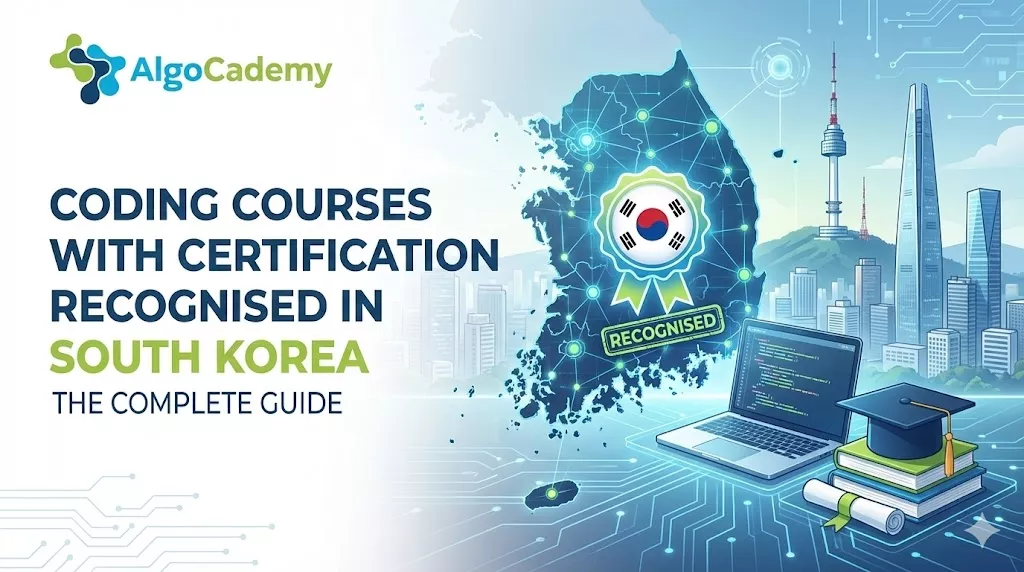
South Korea stands as one of the world’s most technologically advanced nations. From the global dominance of Samsung and LG in hardware to the regional powerhouses Naver and Kakao in software and services, Korea has built a formidable tech ecosystem. The country boasts the world’s fastest average internet speeds, near-universal smartphone penetration, and a population that embraces digital innovation with remarkable speed.
The Korean tech industry operates within a distinctive cultural and economic context. The massive conglomerates known as chaebols—Samsung, LG, SK, Hyundai—employ enormous numbers of developers and engineers. Meanwhile, Pangyo Techno Valley south of Seoul has emerged as Korea’s answer to Silicon Valley, hosting Naver, Kakao, NCSoft, and hundreds of startups. The gaming industry, led by companies like Nexon and Smilegate, represents another major employer of technical talent.
For anyone seeking to enter or advance in Korean tech, understanding which credentials carry weight is essential. Korea’s credential-focused culture means formal qualifications matter significantly—often more than in Western markets. The landscape includes prestigious university degrees (the famous “SKY” universities and elite technical institutions), government-certified vocational qualifications, national technical certifications, and an emerging bootcamp scene supported by ambitious government digital initiatives.
This guide navigates South Korea’s certification landscape comprehensively, explaining which credentials Korean employers recognise, how the national qualification system works, what government funding supports tech education, and how to build a strategic path into one of Asia’s most dynamic—and demanding—tech markets.
Understanding South Korea’s Education and Qualification System
South Korea’s education system is famously rigorous and competitive. Understanding its structure is essential for navigating credential choices.
The Korean Education System
Korea follows a 6-3-3-4 system:
Elementary School (초등학교): 6 years Middle School (중학교): 3 years High School (고등학교): 3 years University (대학교): 4 years (or 2-3 years for junior colleges)
The university entrance exam (수능, Suneung) is one of the world’s most competitive standardised tests, and university prestige significantly impacts career prospects in Korea.
The Korean Qualifications Framework (KQF)
The Korean Qualifications Framework provides a structure for understanding qualification levels:
| KQF Level | Qualification Type | Description |
|---|---|---|
| 1 | Elementary | Basic skills |
| 2 | Lower Secondary | Foundation skills |
| 3 | Upper Secondary | Vocational readiness |
| 4 | Post-secondary (Non-degree) | Technical competence |
| 5 | Associate Degree | Junior college |
| 6 | Bachelor’s Degree | University degree |
| 7 | Master’s Degree | Graduate study |
| 8 | Doctoral Degree | Research degree |
National Technical Qualifications (국가기술자격)
Korea has an extensive system of national technical qualifications administered by the Human Resources Development Service of Korea (HRD Korea).
IT-related national qualifications:
기사 (Engineer) level:
- 정보처리기사 (Information Processing Engineer)
- 정보보안기사 (Information Security Engineer)
- 전자계산기기사 (Computer Engineer)
산업기사 (Industrial Engineer) level:
- 정보처리산업기사 (Information Processing Industrial Engineer)
- 정보보안산업기사 (Information Security Industrial Engineer)
기능사 (Craftsman) level:
- 정보처리기능사 (Information Processing Craftsman)
- 정보기기운용기능사 (Information Equipment Operation Craftsman)
Why national qualifications matter:
These qualifications are deeply embedded in Korean employment culture:
- Many job postings require or prefer them
- Some government positions require specific qualifications
- Chaebols often value them for hiring and promotion
- They demonstrate commitment to the Korean system
- Required for certain licensed activities
The 정보처리기사 (Information Processing Engineer) is particularly important—it’s often considered a baseline credential for Korean developers.
University Prestige: The “SKY” Factor
Korea’s university hierarchy significantly impacts career prospects:
SKY Universities:
- Seoul National University (서울대학교)
- Korea University (고려대학교)
- Yonsei University (연세대학교)
These three universities represent Korea’s Ivy League. Graduating from a SKY university provides significant advantages in the job market.
Elite Technical Universities:
- KAIST (Korea Advanced Institute of Science and Technology)
- POSTECH (Pohang University of Science and Technology)
These are Korea’s MIT equivalents, with exceptional engineering and science programmes.
In-Seoul Universities: Universities located in Seoul generally carry more prestige than those outside the capital.
This hierarchy matters because Korean hiring practices often explicitly or implicitly favour graduates from prestigious institutions.
Vocational Education: 전문대학 (Junior Colleges) and Polytechnics
전문대학 (Junior Colleges):
- 2-3 year programmes
- Vocational/practical focus
- Associate degree level
- Can pathway to university
Korea Polytechnics (한국폴리텍대학):
- Government-operated technical colleges
- Practical skills training
- Various IT programmes
- Strong employment connections
These institutions provide practical pathways into tech careers, though they carry less prestige than four-year universities in Korea’s hierarchical system.
Korean Universities for Computer Science
Korea has strong computer science education at both elite and accessible levels.
Seoul National University (SNU/서울대학교)
Seoul National University is Korea’s most prestigious university.
Department of Computer Science and Engineering:
Bachelor’s in Computer Science and Engineering
- Duration: 4 years
- Extremely competitive admission
- Strong theoretical foundations
- Research opportunities
Master’s and PhD programmes
- World-class research
- Strong AI/ML programmes
- International recognition
Tuition (approximate):
- Korean students: ₩3-4 million/semester (~$2,300-3,000)
- International students: Similar range (Korean universities are affordable)
Reputation: Exceptional. SNU is Korea’s absolute top university. SNU graduates have significant advantages in the job market, particularly at chaebols and prestigious companies.
KAIST (Korea Advanced Institute of Science and Technology)
KAIST is Korea’s premier science and technology university, located in Daejeon.
School of Computing:
Bachelor’s in Computer Science
- Duration: 4 years
- English-taught programmes available
- Research-intensive
- Strong international orientation
Master’s and PhD programmes
- World-renowned research
- AI, systems, security strengths
- Industry partnerships
Tuition:
- Heavily subsidised
- Many students receive full scholarships
- Approximately ₩3-4 million/semester before aid
Reputation: Exceptional for technology. KAIST is Korea’s MIT, with perhaps even stronger tech industry connections. English programmes make it accessible to international students.
POSTECH (Pohang University of Science and Technology)
POSTECH is a private research university known for science and engineering excellence.
Department of Computer Science and Engineering:
Bachelor’s and Graduate programmes
- Small, elite institution
- Excellent student-faculty ratio
- Strong research
- Full scholarships common
Tuition:
- Nominal fees (heavily subsidised)
- Many students receive full support
Reputation: Excellent. POSTECH is extremely selective and produces top-tier graduates.
Korea University (고려대학교)
Korea University is part of the prestigious SKY triumvirate.
Department of Computer Science and Engineering:
Bachelor’s in Computer Science
- Duration: 4 years
- Competitive admission
- Strong programme
- Seoul location
Reputation: Excellent. Korea University graduates have strong career prospects across Korean industry.
Yonsei University (연세대학교)
Yonsei University completes the SKY trio.
Department of Computer Science:
Bachelor’s in Computer Science
- Duration: 4 years
- Strong programme
- Underwood International College offers English tracks
- Seoul location
Reputation: Excellent. Yonsei graduates are highly regarded by Korean employers.
Sungkyunkwan University (SKKU/성균관대학교)
SKKU has strong Samsung connections (Samsung is a major donor).
Department of Computer Science and Engineering:
Bachelor’s and Graduate programmes
- Strong industry connections
- Samsung partnership advantages
- Good facilities
Reputation: Very good, with particular strength for Samsung career paths.
Hanyang University (한양대학교)
Hanyang University is known for engineering strength.
Department of Computer Science and Engineering:
Strong engineering programmes
- Practical orientation
- Good industry connections
Reputation: Very good, particularly for engineering.
Other Notable Universities
Sogang University (서강대학교):
- Strong computer science
- Good reputation
Ewha Womans University (이화여자대학교):
- Top women’s university
- Good CS programme
UNIST (Ulsan National Institute of Science and Technology):
- Newer elite technical university
- Growing reputation
GIST (Gwangju Institute of Science and Technology):
- Science and technology focus
- Strong research
University Comparison
| University | Location | Prestige | Industry Connection |
|---|---|---|---|
| Seoul National | Seoul | Highest | Exceptional |
| KAIST | Daejeon | Highest (Tech) | Exceptional |
| POSTECH | Pohang | Highest (Tech) | Excellent |
| Korea University | Seoul | Very High | Excellent |
| Yonsei University | Seoul | Very High | Excellent |
| SKKU | Seoul/Suwon | High | Excellent (Samsung) |
| Hanyang | Seoul/ERICA | High | Very Good |
| Sogang | Seoul | High | Good |
The Reality of Korean University Hierarchy
Let’s be direct: university prestige matters enormously in Korea. More than in most Western countries, where you studied significantly impacts your career prospects.
What this means:
- SKY/KAIST/POSTECH graduates have clear advantages
- Many chaebols explicitly or implicitly recruit from target universities
- Career trajectories can differ based on alma mater
- This system is slowly changing but remains significant
For international students:
- KAIST offers English programmes and is internationally recognised
- University prestige still matters but may be weighed differently
- Demonstrated skills can somewhat offset credential gaps
- Startup ecosystem is more meritocratic than chaebols
Vocational and Technical Education
Korea offers various vocational pathways into tech careers.
Korea Polytechnics (한국폴리텍대학)
Korea Polytechnics is a government-operated network of technical colleges.
IT-related programmes:
- Software development
- Network administration
- Information security
- Data analysis
Characteristics:
- Practical, job-focused training
- Government operated
- Strong employment connections
- Affordable
Tuition: Highly affordable, often subsidised
Reputation: Good for practical skills. Graduates are valued for job-readiness.
전문대학 (Junior Colleges)
Two to three-year vocational colleges offering IT programmes:
Examples:
- Yeungjin College (영진전문대학)
- Osan University (오산대학교)
- Various regional junior colleges
Programmes:
- Computer science
- Software development
- Information technology
- Game development
Advantages:
- Shorter duration
- Lower cost
- Practical focus
- Employment-oriented
Considerations:
- Lower prestige than 4-year universities
- May limit some career paths
- Can pathway to 4-year degree
Meister High Schools (마이스터고등학교)
Specialised high schools for technical education:
IT-focused Meister schools:
- Software Meister High School (소프트웨어마이스터고)
- Various technical specialisations
Advantages:
- Early specialisation
- Industry connections
- Employment upon graduation
- Can continue to university
National Technical Qualifications: Details
The Korean national qualification system deserves detailed attention.
정보처리기사 (Information Processing Engineer):
This is the most important IT national qualification.
Requirements:
- Education requirements (degree or relevant experience)
- Written exam (필기시험)
- Practical exam (실기시험)
Exam content:
- Software engineering
- Database
- Operating systems
- Data communications
- Information systems
Value:
- Often required or preferred for jobs
- Demonstrates Korean system commitment
- Respected by traditional employers
- May be required for some government positions
Exam schedule: Offered multiple times per year through Q-Net
정보보안기사 (Information Security Engineer):
Growing importance for security roles:
- Security fundamentals
- Network security
- Application security
- Increasingly valued
How to prepare:
- Study guides (수험서) widely available
- Academy programmes (학원)
- Online courses
- Self-study
Government Training Initiatives
The Korean government has made massive investments in digital talent development.
K-Digital Training (K-디지털 트레이닝)
K-Digital Training is a government-funded programme to develop digital talent.
What it provides:
- Funded training programmes
- Various IT tracks (AI, data, software, cloud)
- Partnerships with companies and training providers
- Employment support
Eligibility:
- Korean citizens
- Job seekers
- Some programmes for employed workers seeking skills upgrade
Cost:
- Free or heavily subsidised for eligible participants
- Government covers training costs
Programmes include:
- AI/Machine Learning bootcamps
- Data Science training
- Software development programmes
- Cloud computing courses
How to access:
- Through HRD-Net portal
- Various approved training providers
- Competitive selection for popular programmes
국민내일배움카드 (National Tomorrow Learning Card)
This card provides training subsidies for individuals.
What it provides:
- Up to ₩5 million in training credits over 5 years
- Usable at approved training institutions
- Covers various IT courses
Eligibility:
- Workers, job seekers, self-employed
- Some restrictions apply
How to use:
- Apply through HRD-Net
- Choose approved courses
- Training costs covered up to limit
청년취업아카데미 (Youth Employment Academy)
Government programmes specifically for young job seekers:
Provides:
- IT training programmes
- Employment support
- Industry connections
Software Maestro (소프트웨어 마에스트로)
Software Maestro is an elite government programme for software talent.
Programme:
- Highly selective (few hundred per year)
- Intensive training and mentorship
- Project development
- Stipend provided
- Industry connections
Benefits:
- Prestigious programme recognition
- Strong network
- Mentorship from industry experts
- Employment advantages
Selection:
- Competitive application
- Coding tests
- Interviews
NIPA (National IT Industry Promotion Agency) Programmes
NIPA runs various IT talent development initiatives:
Programmes include:
- AI training
- Software development
- Digital transformation skills
- Various specialised tracks
Regional Digital Training Centres
Various regional centres provide IT training:
Examples:
- Seoul Digital Foundation programmes
- Regional innovation centres
- Local government IT initiatives
Coding Bootcamps in South Korea
Korea’s bootcamp ecosystem has grown significantly, particularly with government support.
삼성 청년 소프트웨어 아카데미 (Samsung Software Academy for Youth/SSAFY)
SSAFY is Samsung’s flagship software training programme.
Programme:
- Duration: 1 year (two 6-month terms)
- Full-time, intensive
- Covers software development comprehensively
- Stipend provided (monthly living allowance)
Curriculum:
- Programming fundamentals
- Web development
- Algorithm training
- Project development
- Employment preparation
Cost: Free (Samsung funded)
Selection:
- Highly competitive
- Aptitude tests
- Interviews
- Open to university graduates and those completing military service
Reputation: Excellent. SSAFY is one of Korea’s most prestigious non-university tech programmes. Graduates are valued by Samsung and other companies. The programme essentially provides Samsung-quality training with strong employment outcomes.
네이버 부스트캠프 (Naver Boostcamp)
Boostcamp is Naver’s intensive training programme.
Programmes:
- Web & Mobile
- AI
- Challenge (introductory)
- Membership (advanced)
Characteristics:
- Naver-affiliated
- Intensive, project-based
- Strong community
- Employment connections to Naver ecosystem
Cost: Often free or low-cost (Naver sponsored)
Reputation: Strong, particularly for Naver career track.
카카오 테크 부트캠프 (Kakao Tech Bootcamp)
Kakao’s training initiatives:
Programmes:
- Various tech tracks
- Kakao employment pathway
- Intensive training
Reputation: Growing, with Kakao employment advantages.
42 Seoul
42 Seoul is the Korean campus of the French 42 network.
Programme:
- Free tuition
- Peer-to-peer learning
- No teachers, no traditional lectures
- Self-paced (typically 2+ years for full curriculum)
- Selection through “La Piscine” (intensive trial period)
Characteristics:
- Innovative pedagogy
- Strong community
- International network
- Alternative to traditional education
Cost: Free
Selection:
- Online tests
- La Piscine (4-week intensive selection)
- Open to anyone 18+
Reputation: Growing. 42 Seoul has gained recognition in Korean tech circles, though it’s still establishing itself against traditional credential expectations.
코드스테이츠 (Codestates)
Codestates is a major Korean bootcamp provider.
Programmes:
- Software Engineering Immersive
- Product Management
- Growth Marketing
- Data Science
Duration: Typically 4-6 months
Model:
- Income Share Agreement (ISA) option available
- Upfront payment option
- K-Digital Training partnership (government funded)
Cost:
- ISA: Pay percentage of salary after employment
- Upfront: ₩10-15 million
- K-Digital: Free/subsidised if eligible
Reputation: Good. Codestates is one of Korea’s largest bootcamps with reasonable employment outcomes.
패스트캠퍼스 (Fast Campus)
Fast Campus offers various tech education programmes.
Programmes:
- Data Science
- Web Development
- AI/ML
- Various specialised courses
Format:
- Online and offline options
- Various durations
- Part-time and full-time
Cost: Varies by programme (₩3-15 million)
Reputation: Established player in Korean tech education market.
멋쟁이사자처럼 (Likelion)
Likelion operates university-based coding education.
Programmes:
- University coding clubs/courses
- Bootcamp-style programmes
- Various tracks
Characteristics:
- University partnerships
- Community-driven
- Various programme types
Reputation: Well-known in Korean tech community.
엘리스 (Elice)
Elice offers online tech education.
Programmes:
- Various CS fundamentals
- AI/Data Science
- Web development
Format:
- Online platform
- Self-paced and cohort options
Bootcamp Recognition in Korea
The Korean context:
Korea’s credential-focused culture means bootcamp certificates don’t carry the same weight as university degrees. However, several factors are shifting this:
Factors improving bootcamp recognition:
- Government backing (K-Digital Training)
- Major company programmes (SSAFY, Boostcamp)
- Skills shortage creating pragmatic hiring
- Startup ecosystem more flexible
- Demonstrated skills in interviews
Bootcamp certificates are NOT:
- Equivalent to university degrees
- Substitutes for national qualifications
- Guaranteed paths to chaebol employment
- Recognised in traditional Korean HR systems
Best bootcamp candidates:
- University graduates adding tech skills
- Career changers with other credentials
- Those targeting startups over chaebols
- Participants in prestigious programmes (SSAFY)
The honest assessment:
Prestigious company-backed programmes like SSAFY carry significant weight. Government-funded K-Digital programmes are increasingly recognised. Pure commercial bootcamps without such affiliations face more skepticism from traditional Korean employers.
Vendor Certifications
International vendor certifications are recognised in Korea, particularly in specific contexts.
Amazon Web Services (AWS)
AWS certifications are valued in Korea.
AWS Certified Cloud Practitioner
- Entry-level certification
- Exam available in Korean
- Growing demand
AWS Certified Solutions Architect – Associate
- Most popular certification
- Strong demand
Korean market value: Good, particularly at companies using AWS. Many Korean companies are cloud-migrating. Government cloud initiatives increase demand.
Microsoft Azure
Microsoft certifications are relevant for enterprise.
Azure certifications:
- Azure Fundamentals
- Azure Developer Associate
- Azure Solutions Architect Expert
Korean market value: Good in enterprise environments. Many large Korean companies use Microsoft.
Google Cloud Platform (GCP)
Google Cloud certifications are growing.
Korean market value: Moderate, growing. Less penetration than AWS/Azure but increasing.
Oracle
Oracle certifications are relevant given Oracle’s enterprise presence in Korea.
Oracle certifications:
- Java certifications
- Database certifications
Korean market value: Good for enterprise and government systems using Oracle.
Cisco
CCNA and higher:
- Networking certifications
- Well-established
Korean market value: Good for networking roles.
Korean-Specific: Samsung Certifications
Samsung has internal certification programmes:
Samsung Software Competency Test:
- Internal Samsung qualification
- Required for some Samsung positions
- Various levels
For Samsung career:
- Often required or valued
- Demonstrates Samsung-specific skills
National Technical Qualifications vs. Vendor Certifications
Korean preference:
Traditional Korean employers often value national qualifications (정보처리기사) over international vendor certifications. The national qualification demonstrates:
- Commitment to Korean system
- Broader theoretical knowledge
- Meeting Korean standards
However:
International companies and tech-forward Korean companies increasingly value vendor certifications for specific skills.
Recommendation:
For Korean market success, consider both:
- National qualification (정보처리기사) for traditional recognition
- Relevant vendor certifications for specific technical skills
Immigration and Work Visas
Korea offers pathways for foreign tech workers, though with challenges.
E-7 Visa (특정활동)
The E-7 visa is the primary skilled worker visa for tech professionals.
Requirements:
- Job offer from Korean employer
- Relevant qualifications (typically bachelor’s degree)
- Employer sponsorship
- Specific occupation eligibility
For IT professionals:
- Software developers eligible
- Various IT occupations covered
- Salary requirements apply
Challenges:
- Employer must sponsor
- Requires meeting qualification standards
- Korean employers may prefer local candidates
- Language barrier considerations
E-7-1 (Point System)
Points-based E-7 variant for highly skilled professionals:
Point factors:
- Age
- Education
- Korean language ability
- Work experience
- Income
- Awards/qualifications
Benefits:
- Potentially easier qualification
- Recognises various strengths
D-10 Visa (Job Seeker)
For those seeking employment in Korea:
Eligibility:
- Recent graduates from Korean universities
- Those with certain qualifications
Duration:
- 6 months to 1 year
- Can job search legally
For tech:
- Useful pathway for international graduates of Korean universities
- Limited options for those without Korean education
F-2 Visa (Resident)
Points-based resident visa:
Point factors:
- Income
- Education
- Age
- Korean language (TOPIK)
- Time in Korea
- Social integration
Benefits:
- More stable residence
- Greater employment flexibility
F-5 (Permanent Residence)
After meeting requirements (typically 5+ years residence plus conditions):
Requirements vary but include:
- Income requirements
- Korean language ability
- Clean record
- Social integration
Credential Recognition for Immigration
For E-7 visa:
- Bachelor’s degree typically required
- Relevant field important
- Well-known universities advantageous
- May need credential verification
Korean degree:
- Having a Korean degree facilitates visa process
- D-10 job seeker visa available
- Better understanding of Korean system
The Language Reality
Korean language for work:
Unlike some other tech markets, Korean language ability is often essential in Korea:
Most Korean companies:
- Internal communication in Korean
- Documentation in Korean
- Meetings in Korean
- Limited English-only environments
Exceptions:
- Some international companies
- English-speaking teams at global firms
- Very specialised technical roles
- Some startup positions
Realistic assessment:
Without Korean language ability, job options are significantly limited. Even in “international” environments, Korean ability greatly expands opportunities.
TOPIK (Test of Proficiency in Korean):
- Standardised Korean proficiency test
- Level 4+ valuable for employment
- Level 6 demonstrates fluency
- Often considered in hiring
The Skills Gap: What Certifications Miss
Here’s the critical insight that applies even in Korea’s credential-focused culture: credentials demonstrate education, but employers ultimately need capability.
Korean tech companies conduct rigorous technical assessments. While credentials get you in the door more than in some Western markets, you still must demonstrate skills.
Technical Interviews in Korea
Korean tech companies use various assessment methods:
Large companies (chaebols):
- Standardised aptitude tests (적성검사)
- Coding tests (코딩테스트)
- Technical interviews
- Personality assessments
- Multiple interview rounds
Tech companies (Naver, Kakao, etc.):
- Rigorous coding tests
- Algorithm assessments
- System design questions
- Technical deep-dives
Startups:
- Technical interviews
- Portfolio reviews
- Practical assessments
The coding test (코딩테스트) has become standard at major Korean tech companies. These test abilities that credentials don’t develop:
- Solving algorithmic problems under time pressure
- Implementing efficient solutions
- Debugging quickly
- Thinking systematically
Where AlgoCademy Fills the Gap
AlgoCademy addresses exactly this gap between credentials and interview-ready capability.
What makes it different:
AlgoCademy’s AI-powered tutoring develops problem-solving ability, not just knowledge. When you’re stuck, the AI doesn’t just give you the answer. It asks guiding questions. It helps you break down problems. It builds the thinking patterns that transfer to any coding challenge.
Why this matters in Korea:
Coding tests are gatekeepers. Major Korean companies use coding tests to filter candidates. Strong credentials get you to the test, but you must pass it. Many well-credentialed candidates fail at this stage.
Competition is intense. Korea’s top universities produce excellent programmers. You’re competing against KAIST and SNU graduates who’ve been coding since high school. Problem-solving skills differentiate candidates.
Korean tech salaries justify preparation. Entry-level developers at major Korean companies can earn ₩50-70 million/year. Senior engineers at Naver or Kakao earn ₩100+ million. Improving your interview performance significantly impacts your career trajectory.
The interview culture is demanding. Korean tech interviews are thorough and challenging. Companies expect strong performance.
How to use AlgoCademy:
AlgoCademy offers a 7-day free trial on their annual plan. Here’s how to integrate it with your Korean credential journey:
During formal education: Spend 20-30 minutes daily on AlgoCademy alongside your university studies or bootcamp. Build problem-solving skills while earning credentials.
Before coding tests: Use AlgoCademy intensively when preparing for company coding tests. Korean companies often use similar problem types.
For career advancement: Continue problem-solving practice to maintain sharp skills for internal promotions or job changes.
The combination of appropriate Korean credentials plus demonstrated problem-solving ability is essential for success in the Korean tech market.
Cost Comparison (KRW)
Understanding the full financial picture helps make informed decisions.
Free and Very Low Cost Options
| Option | Cost | Time | Notes |
|---|---|---|---|
| freeCodeCamp | ₩0 | Self-paced | English, online |
| 42 Seoul | ₩0 | 2+ years | Selective admission |
| SSAFY | ₩0 + stipend | 1 year | Samsung programme |
| K-Digital Training | ₩0 | Varies | Government funded |
| 국민내일배움카드 | Up to ₩5M subsidised | Varies | Training card |
| Naver Boostcamp | ₩0 or low cost | Varies | Naver programme |
Low to Mid Cost Options
| Option | Cost | Time | Notes |
|---|---|---|---|
| Public university | ₩3-5M/semester | 4 years | Affordable |
| Junior college | ₩2-4M/semester | 2-3 years | Vocational |
| 정보처리기사 prep | ₩200-500K | 3-6 months | Academy/self-study |
| AWS certifications | ₩150-400K | 1-3 months | Per certification |
| Polytechnic | ₩1-3M/semester | 2 years | Government operated |
Mid to Higher Cost Options
| Option | Cost | Time | Notes |
|---|---|---|---|
| Private university | ₩4-8M/semester | 4 years | Higher cost |
| Codestates | ₩10-15M or ISA | 4-6 months | ISA option |
| Fast Campus | ₩3-15M | Varies | Various programmes |
| KAIST/POSTECH | ₩3-5M/semester (before scholarships) | 4 years | Scholarships common |
Living Costs
Seoul:
- Accommodation: ₩500,000-1,500,000/month
- Living expenses: ₩700,000-1,000,000/month
- Total: ₩1,200,000-2,500,000/month
Other cities (Daejeon, Busan, etc.):
- Accommodation: ₩300,000-800,000/month
- Living expenses: ₩500,000-800,000/month
- Total: ₩800,000-1,600,000/month
Important: Korean rental typically requires large deposits (전세 or 월세 with 보증금), which can be ₩5-50+ million.
Total Cost Estimates
4-year public university (Korean student):
- Tuition: ₩15-20 million total
- Living (Seoul): ₩60-100 million total
- Total: ₩75-120 million
SSAFY (1 year):
- Tuition: ₩0
- Stipend: ~₩12 million received
- Living (Seoul): ₩15-30 million
- Net cost: ₩3-18 million (significantly subsidised)
Bootcamp (commercial):
- Tuition: ₩10-15 million
- Living (6 months Seoul): ₩8-15 million
- Total: ₩18-30 million
ROI Considerations
Highest ROI credentials:
- Government-funded programmes (SSAFY, K-Digital)
- Public university (affordable, recognised)
- 정보처리기사 (low cost, high recognition)
- Prestigious programme admission (42 Seoul, Boostcamp)
Important factors:
- Korean university credentials highly valued
- Company-sponsored programmes provide stipends
- National qualifications are inexpensive to obtain
- Chaebol starting salaries justify education investment
Certification Paths by Career Goal
Different roles value different credentials in the Korean market.
Software Developer (General)
Strong paths:
- University CS degree (SKY/KAIST best, but any accredited)
- 정보처리기사 certification
- SSAFY or similar prestigious programme
- National qualification + strong coding test performance
Important skills:
- Algorithm and data structure competence
- Coding test preparation
- Practical development ability
Interview preparation:
- AlgoCademy for coding tests
- Practice on Korean coding test platforms (백준, 프로그래머스)
Korean market notes:
- 코딩테스트 (coding test) is critical
- University prestige matters significantly for chaebols
- National qualification valued
Backend Developer
Strong paths:
- University CS degree
- 정보처리기사
- Strong algorithm skills
- Database and system knowledge
Korean market notes:
- Java traditionally strong in Korean enterprise
- Spring framework common
- Python/Go growing in tech companies
Frontend Developer
Strong paths:
- University degree (CS or related)
- Portfolio demonstrating UI/UX skills
- JavaScript/React/Vue expertise
Korean market notes:
- Growing demand
- Portfolio important
- Design sensibility valued in Korean market
Data Scientist / ML Engineer
Strong paths:
- Graduate degree (strong advantage)
- KAIST/SNU/POSTECH preferred for top positions
- Strong mathematics/statistics background
Korean market notes:
- Highly competitive
- Graduate degree often expected
- Samsung, Naver, Kakao hire actively
- SK AI research growing
Game Developer
Strong paths:
- University degree
- Portfolio of game projects
- Relevant engine experience (Unity, Unreal)
Korean market notes:
- Major industry (Nexon, NCSoft, Smilegate, Pearl Abyss)
- Portfolio crucial
- Game-specific academies exist
Cybersecurity
Strong paths:
- 정보보안기사 certification
- University degree + security focus
- CTF competition experience
- Relevant certifications (CISSP, OSCP)
Korean market notes:
- Government focus on cybersecurity
- Financial services need security talent
- Growing demand
Career Changers
Best starting path:
- SSAFY (if eligible, best option)
- K-Digital Training programmes
- 정보처리기사 certification
- Problem-solving skills via AlgoCademy
Korean-specific advice:
- Age discrimination exists (be aware)
- Prior degree valuable
- Government programmes provide legitimacy
- Networking important
- Korean language essential
Regional Considerations
Korea’s tech industry has geographic concentrations.
Seoul
Characteristics:
- Dominant tech hub
- Most job opportunities
- Naver, Kakao headquarters (though moving)
- Startup concentration
- International companies
- Highest competition
- Most expensive living costs
Areas:
- Gangnam/Teheran-ro: Startup street, many tech companies
- Yeouido: Financial tech
- Various areas: Distributed offices
Pangyo (판교/판교테크노밸리)
Characteristics:
- Korea’s “Silicon Valley”
- Naver, Kakao headquarters
- NCSoft, Nexon
- Hundreds of tech companies
- Purpose-built tech hub
- Slightly outside Seoul (Seongnam)
Major presence: Naver, Kakao, NCSoft, Nexon, Krafton, many startups
For tech careers: Pangyo is increasingly THE place for Korean tech. Many top companies have moved here.
Bundang (분당)
Characteristics:
- Adjacent to Pangyo
- Tech company presence
- Samsung connections
Daejeon (대전)
Characteristics:
- KAIST location
- Research institutes (ETRI, etc.)
- Government research
- More affordable than Seoul
- Growing tech presence
Pohang (포항)
Characteristics:
- POSTECH location
- Research-focused
- POSCO connections
Busan (부산)
Characteristics:
- Second-largest city
- Growing tech scene
- More affordable
- Government incentives for regional development
- Centum City tech zone
Other Regions
Jeju (제주):
- Remote work destination
- Some tech companies establishing presence
- Quality of life focus
Regional trends:
- Government encouraging regional tech development
- Some companies offer remote work
- Cost of living significantly lower outside Seoul
- But Seoul/Pangyo dominant for opportunities
Language Considerations
Korean language ability is crucial for most tech careers in Korea.
When Korean Is Essential (Most Cases)
- Korean companies (chaebols, major tech)
- Team communication
- Internal documentation
- Meetings and discussions
- Career advancement
- Most positions
Limited English-Only Opportunities
- International company Korea offices
- Very specialised technical roles
- Research positions (sometimes)
- English teaching/content roles
Realistic Assessment
Without Korean:
- Options are severely limited
- Even “international” environments often require Korean
- Career ceiling is low
- Daily life challenges
With Korean:
- Full range of opportunities
- Career advancement possible
- Better integration
- More job security
Korean Language Investment
TOPIK levels:
- Level 1-2: Basic
- Level 3-4: Intermediate (minimum for most work)
- Level 5-6: Advanced (competitive advantage)
Learning resources:
- Korean language institutes
- University Korean programs
- TOPIK preparation courses
- Self-study (Talk To Me In Korean, etc.)
Timeline:
- Basic proficiency: 6-12 months intensive
- Work proficiency: 1-2 years
- Near fluency: 3+ years
Recommendation:
If you’re serious about a Korean tech career, invest significantly in Korean language. It’s not optional for most paths.
Common Mistakes to Avoid
Underestimating Credential Importance
Korea’s credential-focused culture means formal qualifications matter more than in Western markets. Don’t assume skills alone will open doors.
Ignoring the Coding Test
Major Korean companies use coding tests as gatekeepers. Strong credentials without coding test ability won’t get you hired. Prepare extensively with AlgoCademy and Korean platforms.
Underestimating Korean Language Requirement
Many foreigners assume English is sufficient in tech. It rarely is. Without Korean, your options are extremely limited.
Overlooking National Qualifications
The 정보처리기사 and similar national qualifications are important in Korean hiring. Don’t dismiss them as “just certificates.”
Ignoring University Prestige
University prestige matters enormously in Korea. While it’s not the only factor, pretending it doesn’t exist is unrealistic.
Underestimating Competition
Korea produces excellent technical talent. Competition for good positions is intense. Prepare accordingly.
Not Leveraging Government Programmes
Korea offers exceptional government-funded training (SSAFY, K-Digital). Not taking advantage of these is a missed opportunity.
Cultural Misunderstanding
Korean workplace culture differs from Western norms. Understanding hierarchy, communication styles, and expectations is important for success.
Building Your Certification Strategy
Step 1: Define Your Goal
What role? Which company type (chaebol, tech company, startup, international)? What timeline?
Research job listings on:
- JobKorea (잡코리아)
- Saramin (사람인)
- Wanted (원티드)
- Company career pages
Note:
- Required qualifications
- Preferred certifications
- Experience expectations
- Korean language requirements
Step 2: Assess Your Starting Point
Korean citizen/resident:
- Leverage government programmes (SSAFY, K-Digital)
- Consider national qualifications
- University options available
International with Korean language:
- More options than without
- Consider Korean degree programmes
- Visa pathway important
International without Korean:
- Options limited
- Consider Korean language investment
- Target international companies
- May need to develop Korean ability first
Step 3: Choose Wisely
Prioritise:
- Credentials recognised in Korean system
- Government-backed programmes (SSAFY, K-Digital)
- National qualifications for traditional employers
- Coding test preparation
Be cautious of:
- Expensive programmes without strong outcomes
- Credentials not recognised in Korea
- Ignoring Korean language reality
Step 4: Prepare Properly
For all paths:
- Develop problem-solving skills with AlgoCademy
- Prepare extensively for coding tests
- Build portfolio demonstrating capabilities
- Network in Korean tech community
Step 5: Maintain and Expand
- Keep skills current
- Continue coding practice
- Network actively
- Consider graduate study for advancement
Resources for Korea
Government Resources
- HRD-Net (training programmes)
- Q-Net (national qualifications)
- WorkNet (employment services)
- K-Digital Training
- NIPA (IT promotion)
Job Search
- JobKorea
- Saramin
- Wanted (tech-focused)
- Programmers (developer jobs)
- RocketPunch (startup jobs)
Coding Test Preparation
- AlgoCademy (AI-tutored problem-solving)
- 백준 (Baekjoon) (Korean algorithm judge)
- 프로그래머스 (Programmers) (coding tests)
- LeetCode
- SW Expert Academy (Samsung)
Tech Community
Vendor Certification Resources
Korean Language Resources
- TOPIK (official test)
- Talk To Me In Korean
- Korean language institutes
- University Korean programmes
Getting Started This Week
If You’re in Korea Exploring Options
- Check government programme eligibility. SSAFY, K-Digital Training could be free.
- Research 정보처리기사. Understand the exam and start preparing.
- Start free learning. Try freeCodeCamp or Korean platforms.
- Try AlgoCademy’s free trial. AlgoCademy offers 7 days free. Coding tests are crucial in Korea.
- Practice on 백준 or 프로그래머스. Familiarise yourself with Korean coding test formats.
If You’re International Considering Korea
- Assess your Korean language ability. Be honest—it’s crucial.
- Research visa pathways. E-7 requirements, company sponsorship needs.
- Consider Korean language investment. May need 1-2 years before meaningful job search.
- Research KAIST and other English programmes if pursuing education route.
- Build skills that transfer while developing Korean ability.
If You’re a Korean Student
- Start coding test preparation early. AlgoCademy plus Korean platforms.
- Work toward 정보처리기사. It’s expected by many employers.
- Apply to SSAFY, Boostcamp, or similar programmes. They’re excellent and free.
- Build portfolio projects. Demonstrate practical skills.
- Network. Attend tech meetups, engage with communities.
If You’re a Career Changer in Korea
- Apply to SSAFY if eligible. It’s the best option for career changers.
- Check K-Digital Training programmes. Many are funded and legitimate.
- Begin 정보처리기사 preparation. It provides credential legitimacy.
- Start coding practice on AlgoCademy and Korean platforms.
- Be realistic about timeline. Career change in Korea’s credential-focused culture takes time.
The Bottom Line
South Korea offers exceptional opportunities in technology, with world-class companies, competitive salaries, and a sophisticated tech ecosystem. However, the Korean market has distinctive characteristics that differ significantly from Western tech markets.
The most important insight: Korea is credential-focused, but credentials alone aren’t enough.
University prestige matters—graduating from SKY, KAIST, or POSTECH provides significant advantages. National qualifications like 정보처리기사 are genuinely valued by Korean employers. The system is more hierarchical and formal than Western markets.
But even in credential-focused Korea, you must pass the coding test. Major companies like Samsung, Naver, and Kakao use rigorous technical assessments. AlgoCademy addresses what credentials miss: the problem-solving ability that coding tests evaluate. Combined with appropriate Korean credentials, strong coding test performance creates the profile that succeeds in Korean tech.
For those without Korean language ability, options are severely limited. This isn’t like Singapore or the Netherlands where English can suffice. Korean language investment is essential for most career paths.
Government programmes like SSAFY and K-Digital Training represent exceptional opportunities—free or funded training with strong outcomes. Taking advantage of these should be a priority for eligible individuals.
Korea’s tech industry is dynamic, with companies like Samsung, Naver, and Kakao offering competitive careers. The gaming industry provides additional opportunities. Startups in Pangyo represent a growing alternative to chaebol employment. Multiple paths exist, but all require understanding and navigating Korean credential and cultural expectations.
Choose your path wisely, invest in Korean language if you’re committed to this market, prepare thoroughly for coding tests, and develop the skills that credentials alone don’t provide.
화이팅! (Fighting!/Good luck!)