Coding Courses with Certification Recognised in Germany: The Complete Guide
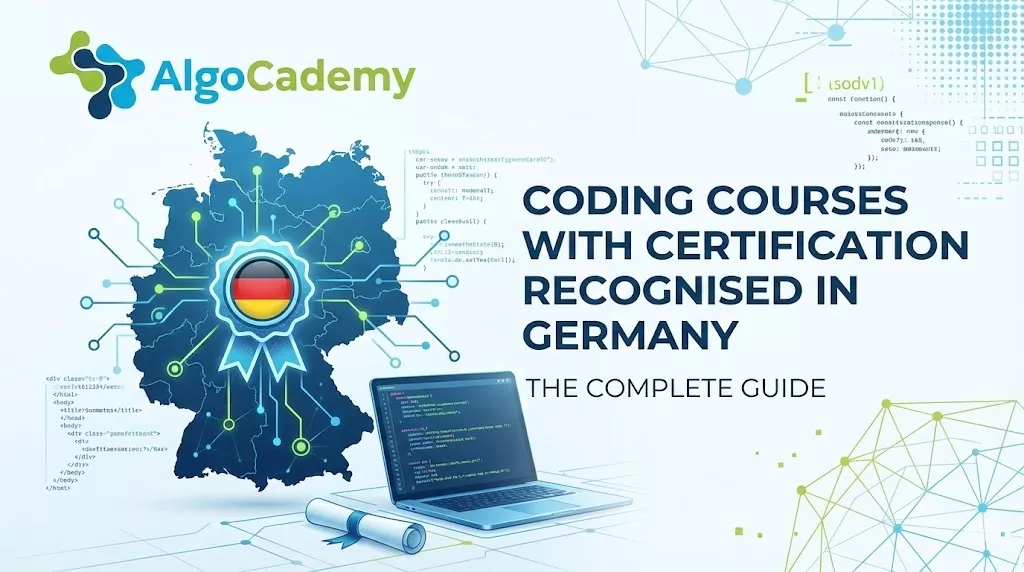
Germany presents a unique landscape for aspiring developers. Europe’s largest economy has a thriving tech sector centred in Berlin, Munich, Hamburg, and Frankfurt, with a distinctive approach to education and professional qualifications that differs markedly from the Anglo-American model.
The German system places exceptional value on formal credentials. The country’s renowned dual education system, its distinction between universities and universities of applied sciences, and the chamber of commerce certification structure create a framework where qualifications carry significant weight. This formality can seem daunting to outsiders, but it also creates clear pathways and employer confidence in credential holders.
For international professionals, Germany offers attractive immigration pathways for tech workers, including the EU Blue Card. For Germans and residents, the system provides multiple routes into tech careers, from traditional apprenticeships to university degrees to newer bootcamp models.
This guide navigates the German certification landscape comprehensively, explaining which credentials employers recognise, how to obtain them, what they cost, and how to build a strategic path into Germany’s tech sector.
Understanding the German Education System
Germany’s education and qualification system has distinctive features that shape how credentials are valued.
The German Qualifications Framework (DQR)
The Deutscher Qualifikationsrahmen (DQR) provides a national framework mapping German qualifications to the European Qualifications Framework (EQF). This creates comparability across Europe.
DQR/EQF Levels relevant to tech:
| Level | German Qualification | Equivalent |
|---|---|---|
| 3 | Ausbildung (2-year) | Skilled worker |
| 4 | Ausbildung (3-3.5 year) | Advanced skilled worker |
| 5 | IT-Spezialist, Meister | Specialist/Master craftsman |
| 6 | Bachelor, Fachwirt | First degree |
| 7 | Master | Advanced degree |
| 8 | Promotion (PhD) | Doctorate |
Understanding these levels helps when comparing qualifications and understanding employer expectations.
The Dual Education System (Duale Ausbildung)
Germany’s apprenticeship system is world-renowned. The “dual system” combines workplace training with vocational school education over two to three and a half years.
How it works:
- Apprentices (Auszubildende or “Azubis”) are employed by companies
- They split time between workplace and Berufsschule (vocational school)
- Training follows nationally standardised curricula
- Examinations are conducted by chambers of commerce (IHK)
- Graduates receive nationally recognised qualifications
For IT, relevant Ausbildungen include:
- Fachinformatiker/in (IT Specialist)
- IT-System-Elektroniker/in (IT Systems Electronics Technician)
- Kaufmann/Kauffrau für IT-System-Management (IT Systems Management Clerk)
- Kaufmann/Kauffrau für Digitalisierungsmanagement (Digitalisation Management Clerk)
These qualifications are highly respected in Germany. A Fachinformatiker with experience is often valued as highly as a university graduate for practical roles.
Universities vs. Fachhochschulen
Germany distinguishes between:
Universitäten (Universities):
- Research-focused
- More theoretical orientation
- Traditional academic pathway
- Offer Bachelor’s, Master’s, and doctoral programmes
Fachhochschulen (Universities of Applied Sciences):
- Practice-oriented
- Stronger industry connections
- Often include mandatory internships
- Offer Bachelor’s and Master’s degrees
Both types of institutions award equivalent degrees (Bachelor’s and Master’s are legally equivalent regardless of institution type), but the focus differs. For many tech careers, Fachhochschule graduates are highly valued for their practical orientation.
The IHK System
The Industrie- und Handelskammer (IHK) – Chamber of Industry and Commerce – plays a central role in German vocational education.
IHK responsibilities:
- Registers apprenticeship contracts
- Conducts final examinations (Abschlussprüfungen)
- Issues certificates
- Provides continuing education programmes
- Certifies IT specialists and professionals
IHK certifications are nationally recognised and well-understood by German employers. They carry significant weight in the job market.
IT-Berufe: Germany’s IT Professions Framework
Germany has formalised IT careers through the IT-Berufe (IT professions) system, reformed and modernised in 2020.
Fachinformatiker/in (IT Specialist)
The most relevant qualification for developers, with two main specialisations:
Fachinformatiker/in Anwendungsentwicklung (Application Development)
Focuses on software development:
- Programming and software engineering
- Database development
- Web and application development
- Testing and quality assurance
- Project work
Duration: 3 years Certification: IHK examination DQR Level: 4
This is the primary apprenticeship pathway for aspiring developers in Germany. Graduates are qualified software developers with practical experience.
Fachinformatiker/in Systemintegration (System Integration)
Focuses on IT infrastructure:
- Network administration
- System configuration
- IT security
- User support
- Cloud services
Duration: 3 years Certification: IHK examination DQR Level: 4
More relevant for DevOps, system administration, and infrastructure roles.
Newer specialisations (since 2020):
- Fachinformatiker/in Daten- und Prozessanalyse (Data and Process Analysis)
- Fachinformatiker/in Digitale Vernetzung (Digital Networking)
These newer tracks reflect evolving industry needs in data analytics and IoT.
Other IT-Berufe
IT-System-Elektroniker/in
Combines electronics with IT, focusing on hardware and infrastructure installation.
Kaufmann/Kauffrau für IT-System-Management
Business-focused IT role covering sales, consulting, and project management.
Kaufmann/Kauffrau für Digitalisierungsmanagement
Focuses on digital transformation and business process optimisation.
Why Ausbildung Matters in Germany
German employers deeply respect the Ausbildung system:
Practical competence: Graduates have three years of real workplace experience, not just theory.
Standardised quality: National curricula and IHK examinations ensure consistent standards.
Industry co-design: Training content is developed with employer input.
Cultural fit: Graduates understand German workplace culture and practices.
Cost-effective hiring: Employers know exactly what competencies an Ausbildung graduate possesses.
For many German companies, a Fachinformatiker with several years of experience is preferred over a university graduate without practical experience. The qualification signals job-readiness in a way degrees sometimes don’t.
Finding an Ausbildung
Where to search:
- Ausbildung.de
- IHK Lehrstellenbörse
- Arbeitsagentur Jobbörse
- Company career pages directly
- Indeed.de, Stepstone.de, LinkedIn
Requirements:
- Generally requires German language proficiency (B1-B2 minimum, often C1)
- Usually requires at least Hauptschulabschluss (basic school certificate), but Realschulabschluss or Abitur preferred
- No strict age limit, but most apprentices are 16-25
- Increasingly open to career changers
Compensation:
- Apprentices receive training salary (Ausbildungsvergütung)
- IT apprenticeships typically pay €800-1,200/month in year one, rising annually
- Full employment after completion with professional salary
University Computing Programmes
German universities offer high-quality computing education, often tuition-free for domestic and EU students.
Types of Degrees
Bachelor’s degrees:
- Duration: 3-3.5 years (6-7 semesters)
- 180-210 ECTS credits
- Entry: Abitur or equivalent
Master’s degrees:
- Duration: 1.5-2 years (3-4 semesters)
- 90-120 ECTS credits
- Entry: Bachelor’s degree
Diplom (phasing out):
- Traditional German degree
- Still held by many working professionals
- Being replaced by Bachelor’s/Master’s
Top Universities for Computer Science
Technical University of Munich (TUM)
TUM is consistently ranked among Europe’s best for computer science.
Bachelor Informatik
- Duration: 6 semesters
- Language: German
- Strong research focus
- Excellent industry connections
Master’s programmes:
- Informatik
- Data Engineering and Analytics
- Robotics, Cognition, Intelligence
- Many taught in English
Fees: No tuition for most programmes (semester fees ~€150)
Reputation: Exceptional. TUM graduates are highly sought after globally.
RWTH Aachen
RWTH Aachen is Germany’s largest technical university with outstanding engineering and CS programmes.
Informatik programmes:
- Strong theoretical foundations
- Research excellence
- Industry partnerships
Fees: No tuition (semester fees ~€300)
Karlsruhe Institute of Technology (KIT)
KIT combines university and research institution.
Informatik:
- Research-intensive
- Strong in security and systems
- Startup ecosystem (including SAP connections)
Fees: €1,500/semester for non-EU students; minimal for EU
Technical University of Berlin (TU Berlin)
TU Berlin is Berlin’s technical university.
Informatik:
- Strong programmes in AI, security, databases
- Berlin’s tech ecosystem access
- International student body
Fees: No tuition (semester fees ~€310)
Ludwig Maximilian University of Munich (LMU)
LMU complements TUM in Munich.
Informatik and Media Informatics:
- Research excellence
- Strong theoretical focus
- Many English Master’s programmes
Humboldt University of Berlin
HU Berlin offers computer science in Berlin’s academic landscape.
Informatik:
- Research focus
- Berlin ecosystem access
- Interdisciplinary options
Fachhochschulen (Universities of Applied Sciences)
For practical, career-oriented education, Fachhochschulen are excellent choices.
HTW Berlin (Hochschule für Technik und Wirtschaft)
HTW Berlin is one of Germany’s largest applied sciences universities.
Angewandte Informatik (Applied Computer Science):
- Practical orientation
- Industry projects
- Mandatory internship semester
International Media Informatics:
- English-taught programme
- Media and technology focus
Hochschule München
HM offers practical tech education in Munich.
Informatik:
- Strong industry connections
- Practical projects
- Munich job market access
Hochschule für Technik Stuttgart
Strong engineering and computing programmes in Baden-Württemberg’s capital.
English-Taught Programmes
For international students, several programmes are taught entirely in English:
TUM:
- Master’s in Data Engineering and Analytics
- Master’s in Robotics, Cognition, Intelligence
RWTH Aachen:
- Master’s in Data Science
- Master’s in Software Systems Engineering
University of Freiburg:
- Master’s in Computer Science
Constructor University (formerly Jacobs University):
- Bachelor’s and Master’s programmes in English
- Private university (has tuition fees)
CODE University of Applied Sciences:
- Practice-oriented programmes
- Project-based learning
- Berlin location
University Costs
Public universities (most):
- No tuition for EU/EEA students
- No tuition for non-EU in most states
- Exception: Baden-Württemberg charges non-EU students ~€1,500/semester
- Semester fees (Semesterbeitrag): €150-400 per semester
- Includes public transport ticket (Semesterticket)
Private universities:
- Tuition fees vary widely: €5,000-20,000+ per year
- Constructor University, CODE University, etc.
Living costs:
- €850-1,200/month depending on city
- Munich and Frankfurt most expensive
- Berlin and eastern cities more affordable
- Required proof for student visa: €11,208/year blocked account
The Degree vs. Ausbildung Decision
In Germany, this isn’t simply “degree is better”:
Degree advantages:
- Required for some roles (research, some large corporations)
- Higher starting salaries on average
- Immigration advantages (Blue Card)
- Academic career pathway
- International recognition
Ausbildung advantages:
- Earn while learning
- Three years practical experience at graduation
- Direct employment pathway
- Highly valued by German employers
- No student debt
- Faster entry to workforce
Many German developers have successful careers with Ausbildung only. The cultural respect for vocational training is genuine, not lip service.
The hybrid path:
Some people do Ausbildung first, then part-time degree while working. This combination is respected and provides both practical credentials and academic qualification.
IHK Continuing Education and IT Certifications
Beyond initial Ausbildung, the IHK offers continuing education certifications.
IT-Spezialist (Certified IT Specialist)
Professional certification for experienced IT practitioners.
Specialisations include:
- IT-Berater/in (IT Consultant)
- IT-Projektleiter/in (IT Project Manager)
- IT-Ökonom/in (IT Business Economist)
- Softwareentwickler/in (Software Developer)
- Netzwerkadministrator/in (Network Administrator)
Requirements:
- Completed IT Ausbildung or equivalent
- Work experience
- Examination
DQR Level: 5
Operative Professional
Higher-level certification for IT management roles.
Options:
- IT-Projektleiter/in (IT Project Manager)
- IT-Berater/in (IT Consultant)
- IT-Ökonom/in (IT Business Manager)
- IT-Entwickler/in (IT Developer)
DQR Level: 6 (equivalent to Bachelor’s)
Strategische Professional
Senior-level certification for strategic IT leadership.
Options:
- Geprüfter Informatiker/in (Certified Computer Scientist)
DQR Level: 7 (equivalent to Master’s)
Value of IHK Certifications
IHK certifications are:
- Nationally recognised
- Legally regulated
- Employer-understood
- Career progression enablers
They provide formal advancement without university attendance, particularly valuable for Ausbildung graduates wanting to progress.
Vendor Certifications in Germany
Global vendor certifications are fully recognised and often required for specific roles.
Amazon Web Services (AWS)
AWS certifications are valuable in Germany, where AWS has significant market presence and data centres in Frankfurt.
AWS Certified Cloud Practitioner
- Entry-level certification
- Exam: ~€100
- Foundation for cloud careers
AWS Certified Solutions Architect – Associate
- Most popular AWS certification
- Exam: ~€150
- High demand in German job market
Professional and Specialty certifications
- Advanced certifications for experienced practitioners
- Higher value for specialist roles
German market value: Strong. Many German companies use AWS, and Frankfurt is a major AWS region. Job listings frequently specify AWS certifications.
Microsoft Azure
Microsoft certifications are particularly valuable given Microsoft’s strong presence in German enterprise.
Azure Fundamentals (AZ-900)
- Entry-level certification
- Exam: ~€100
Azure Developer Associate (AZ-204)
- Developer-focused certification
- Exam: ~€165
Azure Solutions Architect Expert
- Senior architecture certification
- High value in enterprise
German market value: Very strong. Germany’s enterprise sector heavily uses Microsoft. Many DAX companies are Microsoft-based. Government and public sector also significant Microsoft users.
SAP Certifications
SAP, headquartered in Walldorf, Germany, is a major employer and its products are ubiquitous in German enterprise.
SAP certifications include:
- SAP Certified Development Associate
- SAP Certified Application Associate
- SAP Certified Technology Associate
- Various module-specific certifications
Where to obtain:
- SAP Learning Hub
- SAP Education partners
- SAP training centres
German market value: Exceptional for SAP ecosystem roles. SAP skills command premium salaries in Germany. Many consultancies focus on SAP implementation.
Note: SAP certifications are expensive (€500-2,000+ per exam) but valuable for SAP-focused careers.
Google Cloud Platform (GCP)
Google Cloud certifications are growing in importance.
Cloud Digital Leader
- Foundation certification
- Business-focused
Associate Cloud Engineer
- Technical operations certification
Professional certifications
- Architect, Data Engineer, ML Engineer, etc.
German market value: Growing. GCP has smaller market share than AWS/Azure in Germany but is strong in specific sectors (AI/ML, digital-native companies).
Kubernetes and Cloud Native
Certified Kubernetes Administrator (CKA)
- Container orchestration
- High demand for DevOps roles
Certified Kubernetes Application Developer (CKAD)
- Developer-focused Kubernetes skills
German market value: Excellent for DevOps and cloud-native roles. Container skills increasingly required.
CompTIA
CompTIA certifications are vendor-neutral and internationally recognised.
CompTIA A+
- IT support fundamentals
CompTIA Network+
- Networking fundamentals
CompTIA Security+
- Security essentials
- Valued for security-related roles
German market value: Recognised but less emphasised than in Anglo-American markets. German employers often prefer German credentials (Ausbildung, IHK) supplemented with vendor certifications.
Cisco Certifications
CCNA (Cisco Certified Network Associate)
- Networking certification
- Valuable for infrastructure roles
German market value: Strong for networking-focused positions.
Coding Bootcamps in Germany
The bootcamp model is newer to Germany but has gained traction, particularly in Berlin.
Ironhack
Ironhack operates in Berlin and offers intensive programmes.
Web Development Bootcamp
- Duration: 9 weeks full-time or 24 weeks part-time
- Covers: HTML, CSS, JavaScript, React, Node.js
- Cost: ~€8,500
Data Analytics Bootcamp
- Duration: 9 weeks full-time
- Covers: Python, SQL, Tableau, machine learning basics
- Cost: ~€7,500
UX/UI Design Bootcamp
- Design-focused programme
Recognition: Ironhack is well-known in European tech circles. Their career services and hiring partnerships provide value. Not a formal German qualification but recognised by tech employers.
Le Wagon
Le Wagon operates multiple German campuses.
Web Development Bootcamp
- Duration: 9 weeks full-time or 24 weeks part-time
- Covers: Ruby on Rails, JavaScript, SQL, deployment
- Cost: ~€7,500
Data Science Bootcamp
- Duration: 9 weeks full-time
- Covers: Python, machine learning, deep learning
- Cost: ~€7,500
Locations: Berlin, Munich
Recognition: Strong global brand. Alumni network provides connections. Well-regarded in startup ecosystem.
Spiced Academy
Spiced Academy is a Berlin-based bootcamp.
Full Stack Web Development
- Duration: 12 weeks
- Covers: JavaScript, React, Node.js, databases
- Cost: ~€9,500
Data Science
- Duration: 12 weeks
- Covers: Python, machine learning, data engineering
- Cost: ~€9,500
Recognition: Strong Berlin presence. Graduates working at Berlin startups and tech companies.
Neue Fische
Neue Fische is a German bootcamp with multiple locations.
Web Development Bootcamp
- Duration: 12 weeks (540 hours)
- Covers: JavaScript, React, Node.js
- Cost: ~€9,000-10,000
Data Science Bootcamp
- Duration: 12 weeks
- Covers: Python, machine learning, data engineering
Java Development Bootcamp
- Java-focused programme
- Covers: Java, Spring, databases
Cloud & DevOps
- Infrastructure and operations focus
Locations: Hamburg, Cologne, Munich, remote
Recognition: Growing reputation in German market.Bildungsgutschein acceptance (see funding section).
Notable: Neue Fische accepts Bildungsgutschein (education vouchers), making programmes potentially free for eligible job seekers.
WBS Coding School
WBS Coding School is part of WBS Training, a large German education provider.
Full Stack Web Development
- Duration: 15 months part-time or intensive full-time
- Covers: JavaScript, React, Node.js, databases
- Bildungsgutschein accepted
Data Science
- Python, machine learning, analytics
- Bildungsgutschein accepted
Recognition: WBS Training’s established reputation provides credibility. Bildungsgutschein acceptance important for funded participation.
CareerFoundry
CareerFoundry is a Berlin-headquartered online education provider.
Full Stack Web Development Programme
- Duration: 6-10 months (flexible)
- Fully online
- Mentor support included
- Cost: ~€6,900
Data Analytics Programme
- Flexible online learning
- Cost: ~€6,900
UX Design Programme
- Design career pathway
Recognition: Established online provider. Job guarantee for some programmes. Good for remote learners.
Digital Career Institute (DCI)
DCI focuses on digital skills training with strong social mission.
Web Development Course
- Duration: 12 months
- German-language instruction
- Bildungsgutschein accepted
Data Science
- Comprehensive data programme
- Bildungsgutschein accepted
Recognition: DCI specifically targets career changers and job seekers. Their Bildungsgutschein certification means free participation for eligible people.
Bootcamp Reality in Germany
How German employers view bootcamps:
Unlike the Ausbildung system, bootcamp certificates are not formally recognised qualifications. They don’t appear on the DQR framework. They’re not regulated by chambers of commerce.
However:
Tech employers, especially startups and international companies, often care more about demonstrated skills than formal credentials. A bootcamp graduate with a strong portfolio and interview performance can find employment.
The cultural context:
Germany’s strong formal credential culture means bootcamps face more scepticism than in the US or UK. Traditional German employers may prefer Ausbildung or degree holders. But the tech sector, especially in Berlin, has adopted more international hiring practices.
Best candidates for bootcamps:
- Career changers targeting startup/tech sector
- Those with prior degrees wanting to add tech skills
- International workers without German credentials
- People who can’t commit to multi-year programmes
Less suitable:
- Those targeting traditional German employers
- People needing formal credential recognition
- Those eligible for funded Ausbildung
Funding and Financial Support
Germany offers substantial support for education and training.
Bildungsgutschein (Education Voucher)
The Bildungsgutschein is a government voucher covering training costs for job seekers.
Eligibility:
- Registered unemployed (or threatened with unemployment)
- Training must improve employment prospects
- Requires approval from Arbeitsagentur (employment agency)
What it covers:
- Full course fees
- Living expenses during training
- Travel costs
- Childcare costs
Which programmes accept it:
- Many bootcamps (Neue Fische, WBS, DCI)
- Various certified training providers
- Must be AZAV-certified programme
How to obtain:
- Register with Arbeitsagentur
- Discuss training plans with advisor
- Get approval for specific programme
- Receive voucher
- Enroll in certified programme
Value: Bildungsgutschein can cover €10,000+ in training costs. For eligible individuals, this makes bootcamps free.
BAföG (Bundesausbildungsförderungsgesetz)
BAföG is Germany’s student financial aid system.
For higher education:
- Means-tested support
- Part grant, part interest-free loan
- Maximum ~€934/month (2024 rates)
- Available for degree programmes
For Ausbildung:
- Berufsausbildungsbeihilfe (BAB) provides similar support
- Covers living expenses during training
Eligibility:
- German citizens and residents
- EU citizens with right of residence
- Some non-EU citizens depending on status
- Means-tested based on parental income
- Age limits apply (generally under 45)
Aufstiegs-BAföG (Advancement BAföG)
Support for advanced vocational training and IHK certifications.
Covers:
- Course fees (up to €15,000, partially as grant)
- Living expenses during full-time study
- Examination fees
For programmes like:
- IT-Spezialist
- Operative Professional
- Meister-level qualifications
Employer-Funded Training
Many German employers fund employee development:
During Ausbildung:
- Apprentices are paid employees
- Training costs covered by employer
- No student debt
For existing employees:
- Many companies pay for certifications
- Training budgets common in tech
- Study leave (Bildungsurlaub) in some states
Tax Deductions
For working professionals:
Werbungskosten (Income-related expenses):
- Training costs for current job deductible
- Certification exam fees
- Study materials
- Travel to training
Sonderausgaben (Special expenses):
- First degree/training costs (limited deduction)
- Second degree fully deductible
Consult a Steuerberater (tax advisor) for specific situations.
State-Specific Support
Individual German states offer additional programmes:
Weiterbildungsstipendium (Advanced Training Scholarship):
- For talented Ausbildung graduates under 25
- Up to €8,700 over three years
- Competitive selection
Aufstiegsstipendium:
- For professionals pursuing first degree
- Significant monthly support
Immigration and Work Permits
Germany actively recruits tech talent, offering favourable immigration pathways.
EU Blue Card
The EU Blue Card is the premium work permit for qualified professionals.
Requirements:
- University degree (recognised in Germany) OR
- Comparable professional qualification
- Job offer with minimum salary (€45,300 in 2024, €41,042 for shortage occupations including IT)
- IT professionals qualify as shortage occupation
Benefits:
- Fast-track to permanent residence (21-33 months)
- Family reunification rights
- EU mobility options
- No labour market test
For tech workers:
- IT is a shortage occupation, qualifying for lower salary threshold
- University degree requirement often met
- Quick processing times
Skilled Immigration Act (Fachkräfteeinwanderungsgesetz)
Germany liberalised work immigration in 2020, with further reforms in 2023/2024.
Key provisions:
Qualified professionals:
- Recognised degree OR equivalent professional qualification
- Job offer in related field
- No labour market test
IT specialists (special track):
- Minimum 3 years professional experience
- Salary minimum €45,300
- No formal qualification required
- Recognition of practical expertise
Opportunity Card (Chancenkarte):
- Points-based system for job seekers
- Come to Germany to search for work
- IT experience provides points
Qualification Recognition
For non-German qualifications:
University degrees:
- Check recognition via anabin
- Many degrees automatically recognised
- Some may need formal recognition procedure
Professional qualifications:
- Ausbildung equivalence assessment
- Through relevant chamber (IHK for IT)
- May require additional training/exam
For skilled immigration:
- Degree recognition often required
- Professional qualification recognition pathway exists
Student Visa Pathway
For those wanting to study then work:
Student visa:
- For enrolled students
- Can work 140 full days or 280 half days per year
- Path to job seeker visa after graduation
Post-study job seeker visa:
- 18 months to find qualified employment
- Converts to work permit once employed
Language Requirements
For immigration:
- Visa process: Often requires German (A1-B1 depending on pathway)
- Blue Card: German not strictly required for visa
- Work: Depends on employer (many tech roles don’t require German)
Practical reality:
- Berlin tech scene: English often sufficient
- Traditional German companies: German expected
- Career advancement: German increasingly important
- Daily life: German helpful everywhere
Learning German is strongly recommended for long-term success, even if initially working in English.
The Skills Gap: What Certifications Miss
Here’s the critical insight that credential guides often skip: credentials demonstrate knowledge, but employers need capability.
Germany’s emphasis on formal qualifications can obscure this reality. You can hold Ausbildung, degree, and certifications while still struggling in technical interviews or failing to deliver in real projects.
Technical Interviews in Germany
German tech companies, especially well-funded startups and international players, increasingly use technical interviews:
- Algorithm and data structure problems
- System design questions
- Live coding challenges
- Take-home projects
- Technical discussions
These interviews test abilities that credentials don’t develop:
- Breaking down unfamiliar problems
- Choosing appropriate approaches
- Implementing efficient solutions
- Communicating thought processes
- Debugging under pressure
Where AlgoCademy Fills the Gap
AlgoCademy addresses exactly this gap between credentials and interview-ready capability.
What makes it different:
AlgoCademy’s AI-powered tutoring develops problem-solving ability, not just knowledge. When you’re stuck, the AI doesn’t just give you the answer. It asks guiding questions. It helps you break down problems. It builds the thinking patterns that transfer to any coding challenge.
Why this matters for Germany:
Technical interviews are the bottleneck. Your credentials get you interviews. Problem-solving ability gets you offers. Many credential holders fail at this stage because they never developed the skills interviews actually test.
German tech salaries justify preparation. Junior developers in Munich and Berlin can earn €50,000-€65,000. Senior developers earn €80,000-€100,000+. Even modest interview preparation that improves outcomes by one salary band pays for itself many times over.
International competition: Germany’s tech sector attracts global talent. You’re competing with developers from around the world. Problem-solving skills differentiate candidates with similar credentials.
How to use AlgoCademy:
AlgoCademy offers a 7-day free trial on their annual plan. Here’s how to integrate it with your credential journey:
During formal education: Spend 20-30 minutes daily on AlgoCademy alongside your Ausbildung, degree, or bootcamp studies. Build problem-solving skills while learning technical content.
After earning credentials: Use AlgoCademy intensively during job search. Your credentials got you in the door. Problem-solving skills close the deal.
For career changers: Start AlgoCademy early in your transition. The problem-solving foundation makes everything else easier to learn and apply.
The combination of German-recognised credentials plus demonstrated problem-solving ability is far more powerful than either alone.
Cost Comparison (EUR)
Understanding the full financial picture helps make informed decisions.
Free and Very Low Cost Options
| Option | Cost | Time | Notes |
|---|---|---|---|
| Ausbildung | €0 (you earn salary) | 2-3.5 years | Paid employment |
| Public university degree | €150-400/semester | 3-5 years | Semester fees only |
| freeCodeCamp | €0 | Self-paced | Online curriculum |
| CS50 (Harvard via edX) | €0 (audit) | 10-20 hrs/week | World-class intro |
| Bildungsgutschein bootcamp | €0 (if eligible) | 3-15 months | For job seekers |
Budget Options (Under €5,000)
| Option | Cost | Time | Notes |
|---|---|---|---|
| AWS Cloud Practitioner | €150-400 | 1-2 months | Entry certification |
| AWS Solutions Architect | €400-800 | 2-3 months | Including courses |
| Microsoft certifications | €200-600 | 1-3 months | Azure pathway |
| CareerFoundry | €6,900 | 6-10 months | Online, flexible |
Mid-Range Options (€5,000-€15,000)
| Option | Cost | Time | Notes |
|---|---|---|---|
| Ironhack | €7,500-8,500 | 9-24 weeks | Berlin campus |
| Le Wagon | €7,500 | 9-24 weeks | Berlin/Munich |
| Spiced Academy | €9,500 | 12 weeks | Berlin |
| Neue Fische | €9,000-10,000 | 12 weeks | Multiple cities |
| IHK IT-Spezialist | €3,000-6,000 | 6-18 months | Evening/part-time |
Higher Investment (€15,000+)
| Option | Cost | Time | Notes |
|---|---|---|---|
| Private university degree | €20,000-60,000 | 3-4 years | Constructor, CODE |
| Baden-Württemberg (non-EU) | €3,000/year | 3+ years | Tuition for non-EU |
| SAP certifications (multiple) | €5,000-15,000 | Varies | Expensive but valuable |
International Student Costs
Non-EU students face additional costs:
- Baden-Württemberg tuition: €1,500/semester
- Living expenses: €10,000-14,000/year
- Health insurance: €1,200+/year
- Visa and blocked account: €11,208
Total for 3-year degree:
- Other states: €30,000-45,000 (living only)
- Baden-Württemberg: €40,000-55,000+
Still considerably cheaper than US/UK/Australia for international students.
ROI Considerations
Highest ROI credentials:
- Ausbildung (free, with income)
- Bildungsgutschein-funded bootcamps
- Public university degrees (minimal fees)
- Cloud certifications (high demand, low cost)
Variable ROI:
- Private universities (prestige vs. cost)
- Self-funded bootcamps (depends on outcomes)
- Multiple certifications (diminishing returns)
Certification Paths by Career Goal
Different roles value different credentials in the German market.
Software Developer
Traditional German path:
- Ausbildung als Fachinformatiker Anwendungsentwicklung (3 years)
- Or university degree in Informatik
- Supplemented with relevant tech stack experience
Alternative path:
- Bootcamp (especially with prior degree)
- Strong portfolio
- Technical interview performance
Interview preparation:
- AlgoCademy for problem-solving skills
- Portfolio projects to discuss
German market notes:
- Both paths viable, Ausbildung respected
- Berlin startup scene more bootcamp-friendly
- Traditional employers prefer formal credentials
Cloud Engineer / DevOps
Most valuable:
- AWS or Azure certifications
- Kubernetes certifications
- Linux skills
- Programming ability (Python, Go)
German context:
- Fachinformatiker Systemintegration background helpful
- Cloud certifications increasingly required
- Many German enterprises cloud-migrating
Data Scientist / Data Analyst
Most valuable:
- University degree in quantitative field (often required)
- Python and SQL proficiency
- Statistics knowledge
- Cloud data certifications
German market notes:
- Strong demand across sectors
- Automotive industry significant employer
- Financial services in Frankfurt
SAP Professional
Most valuable:
- SAP certifications (required)
- German language (often required)
- Business process understanding
German market notes:
- SAP headquartered in Germany
- Huge ecosystem of consultancies
- Premium salaries for certified consultants
Career Changers
Best starting path:
- Bildungsgutschein-funded bootcamp (if eligible)
- Entry-level cloud certification
- Strong portfolio development
- Problem-solving skills via AlgoCademy
German-specific advice:
- Check Bildungsgutschein eligibility first
- Consider part-time programmes if employed
- German language skills valuable
- Networking in local tech community
Regional Considerations
Germany’s tech market varies by city.
Berlin
Market characteristics:
- Germany’s startup capital
- International and English-friendly
- Lower salaries than Munich but lower costs
- Most bootcamp-friendly market
Valued credentials:
- Portfolios and demonstrated skills valued
- Less formal credential focus than other cities
- International experience appreciated
Notable employers: Delivery Hero, Zalando, N26, SoundCloud, countless startups
Munich
Market characteristics:
- Highest tech salaries in Germany
- Strong automotive and enterprise presence
- More traditional employer expectations
- Very high cost of living
Valued credentials:
- Formal degrees valued
- Traditional German credentials respected
- Technical excellence expected
Notable employers: BMW, Siemens, Allianz, Microsoft, Google, Amazon
Frankfurt
Market characteristics:
- Financial services hub
- Strong demand for FinTech skills
- International banking presence
- High salaries, high costs
Valued credentials:
- Finance + tech combinations valuable
- SAP skills in demand
- Formal credentials expected in banking
Notable employers: Deutsche Bank, Commerzbank, European Central Bank, fintech startups
Hamburg
Market characteristics:
- Strong media and e-commerce presence
- Growing startup scene
- More affordable than Munich/Frankfurt
- Good quality of life
Valued credentials:
- Mix of formal and practical valued
- E-commerce experience valuable
- German skills more important than Berlin
Notable employers: XING, Otto, Airbus, various media companies
Cologne/Düsseldorf
Market characteristics:
- Growing tech hub
- Mix of startups and enterprise
- More affordable than major hubs
- Strong local economy
Stuttgart
Market characteristics:
- Automotive industry centre
- Engineering excellence expected
- Bosch, Daimler, Porsche presence
- Formal credentials valued
Eastern Germany (Leipzig, Dresden)
Market characteristics:
- Growing tech scenes
- Very affordable living
- Strong universities (TU Dresden)
- Emerging startup ecosystems
Language Considerations
German language proficiency significantly impacts career options.
When German Is Essential
- Most Ausbildung positions
- Traditional German employers
- Public sector roles
- Customer-facing positions
- Management track
- Most roles outside Berlin
When English Suffices
- Berlin startup scene
- International tech companies
- Some remote positions
- Highly specialised technical roles
- International teams
Recommended Approach
Even if starting in an English-speaking role:
- Learn German progressively
- B1-B2 level significantly expands options
- Essential for long-term career advancement
- Helps with daily life and integration
- Shows commitment to German employers
Language learning resources:
- VHS (Volkshochschule) courses (subsidised)
- Goethe-Institut (premium quality)
- Online platforms (Babbel, DuoLingo, etc.)
- Integration courses (if eligible)
Common Mistakes to Avoid
Ignoring the Ausbildung Path
Many international and career-changing candidates overlook Ausbildung. This three-year paid training produces respected, job-ready professionals. Don’t dismiss it.
Expecting US/UK Hiring Practices
German employers often value formal credentials more than portfolio alone. The “prove you can code” approach works better in Berlin than in traditional German companies.
Underestimating German Language Importance
Even in “English-friendly” Berlin, German opens doors. For long-term career success, language investment pays off.
Choosing Credentials Based on Immigration Alone
Blue Card requires degree or equivalent. But don’t pursue a degree you hate just for visa purposes. The IT specialist pathway allows experience-based immigration.
Paying for Bootcamps Without Checking Bildungsgutschein
If you’re unemployed or facing unemployment, you might qualify for fully-funded training. Check eligibility before self-funding.
Neglecting Problem-Solving Skills
German credentials prove formal education. Interviews test capability. AlgoCademy develops what credentials don’t.
Ignoring the IHK System
For career progression without university, IHK certifications (IT-Spezialist, Operative Professional) provide formally recognised advancement.
Undervaluing SAP Skills
SAP, headquartered in Germany, offers exceptional career opportunities. SAP skills command premium salaries in the German market.
Building Your Certification Strategy
Step 1: Define Your Goal
What role? Which city? Immigration needs? Language situation?
Research job listings on StepStone, Indeed.de, and LinkedIn. Note:
- Required credentials (Abschluss, Zertifikate)
- Language requirements
- Experience expectations
Step 2: Assess Your Starting Point
Currently in Germany:
- Check Bildungsgutschein eligibility if job seeking
- Consider Ausbildung if young and committed
- University if research/academic interests
Planning to move to Germany:
- Check qualification recognition
- Consider Blue Card requirements
- Plan language learning
Career changer:
- Check funding eligibility
- Consider bootcamp with Bildungsgutschein
- Build portfolio alongside formal training
Step 3: Choose Wisely
Prioritise:
- Credentials required for target roles
- Credentials recognised in German system
- Credentials with strong ROI
Be cautious of:
- Expensive programmes without proven outcomes
- Credentials not recognised in Germany
- Mismatched credentials for target roles
Step 4: Prepare Properly
For German qualifications:
- Understand examination requirements
- Practice thoroughly
- Learn German if needed
For all credentials:
- Develop problem-solving skills with AlgoCademy
- Prepare for interviews, not just exams
- Build portfolio demonstrating capabilities
Step 5: Maintain and Expand
- Keep certifications current
- Continue professional development
- Consider IHK advancement certifications
- Build professional network
Resources for Germany
Official Resources
- Make it in Germany (immigration information)
- Arbeitsagentur (employment agency)
- IHK (Chamber of Commerce)
- BIBB (Federal Institute for Vocational Education)
- Anabin (qualification recognition database)
- Ausbildung.de (apprenticeship search)
Job Search
- StepStone
- Indeed Germany
- Honeypot (tech-focused)
- Berlin Startup Jobs
Vendor Certification Resources
Learning Platforms
Problem-Solving and Interview Prep
- AlgoCademy (AI-tutored problem-solving)
- LeetCode (algorithm practice)
- HackerRank (coding challenges)
German Tech Community
- Meetup.com (local tech meetups)
- Berlin.de Tech Events
- Hamburg Startups
- Munich Startup
Getting Started This Week
If You’re Exploring Options
- Research job listings for target roles in Germany. Note credential requirements.
- Check qualification recognition if you have existing credentials (use Anabin).
- Assess language situation. Plan German learning if needed.
- Start free learning. Try freeCodeCamp or CS50 to confirm interest.
- Try AlgoCademy’s free trial. AlgoCademy offers 7 days free on annual plan. Build problem-solving skills from day one.
If You’re in Germany and Job Seeking
- Check Bildungsgutschein eligibility with Arbeitsagentur immediately. Free training may be available.
- Research Ausbildung options if applicable (age, language, commitment).
- Identify certified bootcamps that accept Bildungsgutschein.
- Begin daily AlgoCademy practice for technical interview preparation.
If You’re Planning to Move to Germany
- Check Blue Card requirements and qualification recognition.
- Begin German language learning (even basic skills help).
- Research target city and job market conditions.
- Build portfolio demonstrating skills.
- Prepare for technical interviews with AlgoCademy.
If You’re a German Resident Career Changer
- Check funding eligibility (Bildungsgutschein, BAföG, etc.).
- Consider part-time options if currently employed.
- Network in local tech community (meetups, events).
- Begin building portfolio alongside formal training.
The Bottom Line
Germany offers exceptional opportunities for tech professionals, with a structured credential system that provides clarity for both job seekers and employers. The country’s dual education system, university excellence, and formal qualification framework create multiple pathways into tech careers.
The most important insight: Germany values credentials, but credentials alone aren’t enough.
Formal qualifications open doors. They satisfy HR requirements. They demonstrate commitment. But in technical interviews and on the job, demonstrated capability matters most.
AlgoCademy addresses what credentials miss: the practical problem-solving ability that employers need and interviews test. Combined with German-recognised credentials, strong problem-solving skills create a profile that opens doors and succeeds once through them.
For those eligible for Bildungsgutschein, Germany offers potentially free bootcamp training. For those pursuing Ausbildung, paid employment while learning is available. For university students, minimal tuition (or none) reduces financial barriers. These funding advantages make Germany’s tech education remarkably accessible.
The German tech sector is growing, salaries are strong, and immigration pathways are favourable. Multiple credential paths can get you there. Choose wisely based on your circumstances, leverage available support, and develop the skills that credentials alone don’t provide.
Your tech career in Germany awaits. Viel Erfolg!