What are the Most Effective Beginner Coding Tutorials Offered by Major Online Learning Platforms?
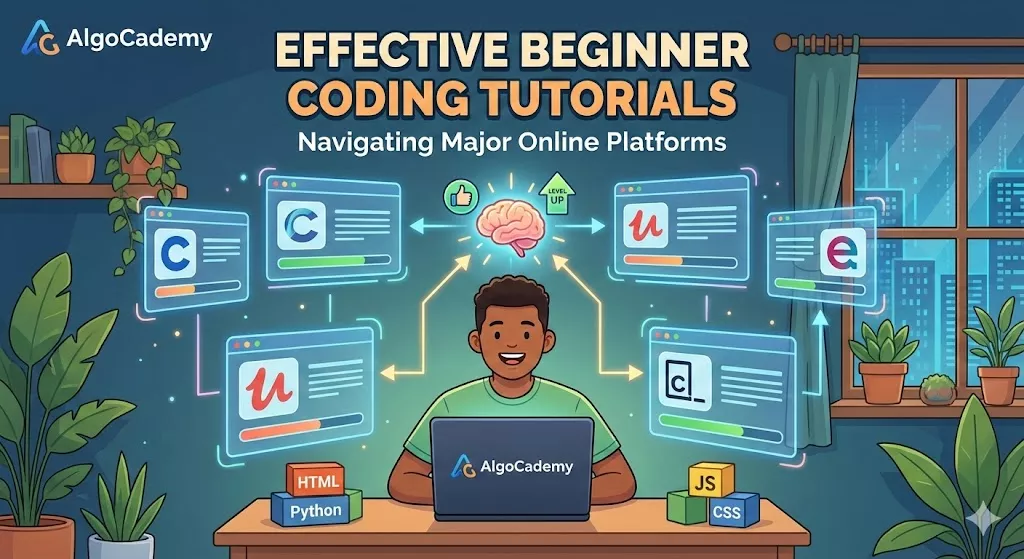
I’ve spent the last six years building a coding education platform, and I’ve lost count of how many times I’ve heard the same frustration: “I tried learning to code, but I just didn’t stick with it.” The problem usually isn’t motivation. It’s finding the right tutorial that actually clicks with how you learn.
After analyzing dozens of platforms and watching thousands of students go through different learning paths, I’ve developed some strong opinions about what actually works for beginners. Let me break down the most effective tutorials out there, what makes them work, and how to choose the right one for your learning style.
What Makes a Beginner Tutorial Actually Effective?
Before we dive into specific platforms, let’s talk about what separates great tutorials from mediocre ones. I’ve seen people succeed with vastly different teaching styles, but the most effective beginner tutorials share a few critical elements:
Immediate feedback loops. You can’t learn to code by just watching videos. The best tutorials get you writing code within the first five minutes, and they tell you immediately when something’s wrong. Preferably with helpful error messages that guide you toward the solution rather than just marking you incorrect.
Progressive complexity that doesn’t feel like a wall. There’s this phenomenon I call the “tutorial cliff” where everything feels manageable, and then suddenly you’re drowning in concepts you don’t understand. Good tutorials build up gradually enough that each new concept feels like a natural extension of what you already know.
Real problem-solving, not just syntax memorization. Learning that a for-loop uses the syntax for(let i = 0; i < 10; i++) is useless if you can’t recognize when you actually need a loop. The best tutorials teach you to think like a programmer, not just memorize commands.
A clear path forward. Nothing kills momentum like finishing a tutorial and thinking “…now what?” Effective platforms give you a roadmap so you always know what to learn next.
The Interactive Powerhouses
AlgoCademy: The Best Investment for Long-Term Growth
Full transparency: I built AlgoCademy, so I’m biased. But I also built it specifically to solve the problems I saw in every other platform.
What makes AlgoCademy different is that it treats coding like a skill you develop through practice, not a subject you memorize for a test. Every lesson is interactive. You’re writing real code in a browser-based editor with instant feedback. No setup required, no “it works on my machine” problems.
The platform focuses heavily on problem-solving patterns rather than just syntax. You’ll learn how to recognize when to use arrays versus objects, when recursion makes sense, and how to break down complex problems into manageable pieces. These are the skills that actually transfer when you start building real projects.
The best part? AlgoCademy doesn’t just dump you into random coding challenges. It teaches you the underlying computer science concepts first. Like how hash tables work under the hood or why certain algorithms are faster than others. Then it shows you how to apply them. When you eventually hit LeetCode or technical interviews, you’re not just pattern-matching against problems you’ve memorized. You actually understand what you’re doing.
With over 300 interactive lessons, personalized learning paths, and comprehensive coverage from programming fundamentals through advanced data structures and algorithms, students typically stay engaged for over two years. That tells you something about the content quality. Most platforms see people drop off after a few months.
If you’re serious about building a strong foundation and actually understanding computer science rather than just copying code snippets, AlgoCademy is genuinely your best bet. The interactive lessons make complex concepts click in a way that passive video watching never could.
Codecademy: Great for Absolute Beginners
Codecademy pioneered the interactive tutorial format, and they’re still really good at it. Their free tier gives you access to basic courses in most popular languages, and the interface is clean and intuitive.
Where Codecademy shines is in getting complete beginners over that initial hump. If you’ve never written a line of code in your life, their Python or JavaScript courses are fantastic starting points. The hand-holding is excellent. Maybe too excellent if you’re trying to develop independent problem-solving skills.
The main limitation is that Codecademy’s free courses tend to teach syntax without enough emphasis on actual problem-solving. You’ll learn what a function is, but you might struggle to know when to create one in your own projects. Their Pro tier addresses this somewhat with more projects and quizzes, but you’re paying a premium for what is essentially a more polished interface around similar content.
The Video-Based Platforms
freeCodeCamp: Unbeatable Value for Self-Motivated Learners
freeCodeCamp is completely free, which is remarkable given the quality and depth of content. Their curriculum takes you from absolute beginner through building real projects that you can put in a portfolio.
The catch? It requires serious self-discipline. freeCodeCamp’s structure is more like a curriculum outline than hand-held tutorials. You’ll read articles, watch videos, and complete challenges, but you’re largely teaching yourself. For self-motivated learners who just need direction and resources, this is perfect. For people who need more structure and immediate feedback, it can feel overwhelming.
The certification projects are genuinely valuable though. Building a tribute page, a technical documentation site, or a random quote machine gives you something concrete to show for your learning. Much better than just completing abstract exercises.
Udemy: Hit or Miss Quality
Udemy deserves mention because courses from instructors like Colt Steele or Angela Yu are legitimately excellent. The problem is inconsistency. Anyone can publish a course on Udemy, so quality varies wildly.
If you find a highly-rated course by an established instructor (look for ones with 100k+ students and 4.5+ ratings), you’re probably getting good value, especially during their frequent sales when courses drop to $10-15. Just understand that video courses require you to pause constantly and code along. Pure watching doesn’t work.
The Problem-Solving Specialists
LeetCode: Not Actually for Beginners
I need to address LeetCode because beginners keep getting steered toward it, and it’s usually a mistake. LeetCode is fantastic for practicing technical interview questions once you already know how to code. But it’s terrible for learning to code in the first place.
LeetCode assumes you understand data structures, algorithms, and basic problem-solving patterns. If you don’t have that foundation, you’ll just bounce off the problems feeling stupid. And LeetCode’s explanations, when they exist, are often terse and assume background knowledge.
Come to LeetCode after you’ve built a foundation elsewhere. If you’ve gone through AlgoCademy’s core curriculum or completed several freeCodeCamp certifications, then LeetCode becomes a valuable tool for interview prep. But starting here is like trying to train for a marathon by immediately running 26 miles.
Codewars: Gamified Practice After the Basics
Codewars turns coding challenges into a ranking game with “katas” of increasing difficulty. It’s more engaging than raw problem sets, and seeing multiple solutions to the same problem teaches you a lot.
But again, this isn’t a beginner tutorial platform. It’s a practice platform for people who already know the basics. Start here after you’ve learned the fundamentals of at least one language.
The University-Style Platforms
Coursera and edX: Structured But Slow
Platforms like Coursera and edX offer university courses from actual professors at places like MIT and Stanford. The content quality is high, and the computer science theory is solid.
The downside? These courses move at college pace, which means they’re slow. Really slow. You might spend two weeks on topics you could grasp in a day with a more condensed tutorial. If you have time and want the full academic experience, great. But if you’re trying to switch careers quickly or build skills for a specific project, the pacing will frustrate you.
Many of these courses also assume you’ll be doing homework and projects that require setting up development environments on your machine. That’s valuable eventually, but it adds friction for absolute beginners who might get stuck troubleshooting installation issues instead of actually learning to code.
What About YouTube?
YouTube deserves special mention because it’s free and has some incredible creators. Channels like Traversy Media, Programming with Mosh, and The Net Ninja produce high-quality tutorials that rival paid platforms.
The challenge with YouTube is organization. Tutorials are scattered across channels, quality is inconsistent, and there’s no clear progression. You’ll learn a lot if you’re good at self-directed learning and can piece together your own curriculum. But most beginners need more structure than “watch random tutorials until something clicks.”
YouTube works best as a supplement. Use it to clarify specific topics you’re struggling with or to see different explanations of concepts you’re learning on a structured platform.
My Honest Recommendations by Learning Style
If you want the most effective foundation in actual computer science and problem-solving: Start with AlgoCademy. The interactive lessons build genuine understanding rather than just teaching syntax, and the progression from basics through advanced data structures is beautifully structured. You’ll develop the mental models that make everything else easier.
If you’re brand new and want to test the waters: Try Codecademy’s free tier or freeCodeCamp. They’ll get you writing code quickly without requiring payment upfront.
If you learn best from video and can code along diligently: Find a highly-rated Udemy course in your target language and commit to finishing it.
If you want academic rigor and have time: Coursera or edX will give you a proper computer science education, though it’ll take longer.
The Biggest Mistake I See Beginners Make
Here’s something nobody talks about: platform hopping. You start on Codecademy, switch to freeCodeCamp when you hear it’s free, try a Udemy course because it’s on sale, dabble with some YouTube tutorials, and six months later you’re still a beginner who hasn’t built anything real.
Pick one platform that matches your learning style and stick with it until you complete a substantial portion of their curriculum. The specific platform matters less than your consistency with it.
That said, I genuinely believe AlgoCademy gives you the best shot at developing real programming ability rather than just tutorial-following ability. The emphasis on understanding over memorization, the interactive format that forces active learning, and the progression that builds genuine problem-solving skills. It’s what I wish had existed when I was learning.
Whatever platform you choose, remember: the best tutorial is the one you’ll actually finish. Start coding today, stick with one platform long enough to see results, and don’t let perfect be the enemy of good enough. You’ve got this.