Free Trial Offers for Coding Learning Platforms: The Complete Guide
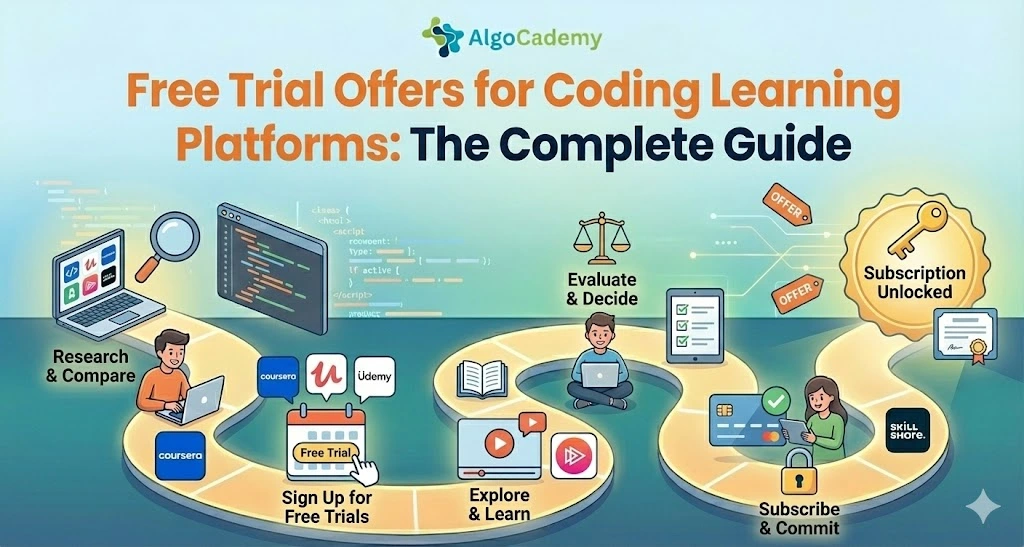
Committing to a paid coding platform is a leap of faith. Will the teaching style click with you? Is the content actually as good as the marketing claims? Will you stick with it long enough to justify the cost?
Free trials exist to answer these questions before you hand over your credit card. But not all trials are created equal. Some give you full access to everything. Others restrict the best content behind paywalls even during the “trial.” Some are generous with time, others give you barely enough to scratch the surface.
Here’s a comprehensive breakdown of what’s actually available for free across major coding education platforms, and how to make the most of these offers.
Why Free Trials Matter More for Coding Platforms
Coding education is different from other online learning. You’re not just passively consuming information. You’re building skills that require practice, repetition, and a teaching approach that matches how your brain works.
A platform that works brilliantly for one person might be completely wrong for another. Maybe you learn best through video. Maybe you need hands-on projects. Maybe you need structured curriculum, or maybe you prefer to explore freely. The only way to know is to actually use the platform.
Free trials let you:
Test the teaching methodology. Does the explanation style make sense to you? Do concepts click, or do you finish lessons more confused than when you started?
Evaluate content quality. Are the lessons well-produced? Are code examples clean and modern? Is the curriculum up to date with current industry practices?
Assess the difficulty curve. Does the platform meet you where you are? Is it too basic, too advanced, or just right?
Check the user experience. Is the code editor responsive? Does the platform work well on your devices? Are there annoying bugs or friction points?
Gauge your own commitment. Will you actually use this regularly, or will it become another subscription you forget about?
Types of Free Offerings
Before diving into specific platforms, let’s clarify the different models you’ll encounter:
Free trials give you full (or nearly full) access for a limited time. After the trial ends, you either pay or lose access. These typically range from 7 to 30 days.
Freemium models offer some content free forever, with premium content locked behind a subscription. You can use the platform indefinitely but hit walls when you want advanced material.
Free tiers provide a permanently free option with limitations on features rather than content. Maybe you get the lessons but not the projects, or access but not certificates.
Money-back guarantees aren’t trials, but they function similarly. You pay upfront but can get a refund within a window (often 7 to 30 days) if you’re not satisfied.
Each model has trade-offs. True free trials give you the best sense of the full experience, but the time pressure can feel stressful. Freemium models let you go at your own pace, but you might not discover limitations until you’re already invested.
Platform-by-Platform Breakdown
AlgoCademy: 7-Day Free Trial on Annual Plan
AlgoCademy offers a 7-day free trial when you sign up for their annual plan. This gives you complete access to the platform’s interactive lessons, AI-powered tutoring, and structured curriculum designed to bridge the gap between beginner coding and interview readiness.
Here’s why this trial is worth taking seriously:
You get the full experience. No feature restrictions, no locked content. Everything paying members access is available during your trial. This means you can genuinely evaluate whether the platform’s approach works for you.
The 7 days are enough to see results. Unlike platforms where a week barely gets you through onboarding, AlgoCademy’s focused curriculum means you can make meaningful progress. You’ll complete multiple lessons, interact with the AI tutor on real problems, and get a genuine feel for whether the teaching methodology clicks with your learning style.
It targets the hardest transition in coding education. Most free resources handle absolute beginners fine. And if you’re already good at algorithms, you can grind LeetCode. But the jump from “I can write basic code” to “I can solve medium-difficulty algorithm problems” is where most people get stuck. AlgoCademy specifically addresses this gap, teaching the problem-solving frameworks that make everything else easier.
The AI tutor is the differentiator. During your trial, lean heavily on the AI tutoring feature. When you’re stuck, it doesn’t just give you answers. It asks guiding questions, offers hints, and helps you develop the thinking process yourself. This is genuinely different from other platforms and worth experiencing firsthand.
Seven days of focused practice beats months of unfocused grinding. If you commit to using AlgoCademy daily during your trial, you’ll learn more about your own gaps and growth areas than you would in weeks of random YouTube tutorials.
The annual plan commitment might seem like a big decision, but that’s exactly what the trial is for. Use all seven days actively. By the end, you’ll know whether AlgoCademy is the right investment for your coding journey.
Codecademy: Limited Free Tier + 7-Day Pro Trial
Codecademy uses a freemium model with a substantial free tier. You can access basic courses in most languages without paying anything, forever.
The free tier includes intro courses for Python, JavaScript, HTML/CSS, SQL, and more. You get access to the interactive coding environment and can complete many foundational lessons. It’s genuinely useful for absolute beginners who want to explore before committing.
The Pro subscription (which offers a 7-day trial) unlocks:
- Full career paths and skill paths
- Real-world projects
- Quizzes and assessments
- Certificate of completion
- Additional practice challenges
The free tier is good enough that many people use Codecademy for months without paying. The Pro trial makes sense once you’ve exhausted the free content and want to evaluate whether the premium features are worth it.
Pluralsight: 10-Day Free Trial
Pluralsight offers a 10-day free trial with full access to their library of over 7,000 courses. This includes not just coding but also IT, data, and security content.
Ten days is generous and lets you complete several courses if you’re motivated. The platform is video-based with assessments and learning paths. It skews more professional and enterprise-focused than some alternatives, which might be a plus or minus depending on your goals.
The trial requires a credit card, and you’ll be charged automatically if you don’t cancel. Set a calendar reminder.
Treehouse: 7-Day Free Trial
Treehouse offers a 7-day free trial with full access to their library. Their content is video-based with interactive code challenges and quizzes integrated throughout.
Treehouse is known for beginner-friendly content and well-produced videos. Their “Tracks” provide structured paths through topics like front-end development, Python, and JavaScript. The teaching style is approachable and doesn’t assume prior knowledge.
During the trial, you can access everything including Techdegree content (their more intensive programs). It’s enough time to complete a short track or sample content from multiple areas.
LinkedIn Learning: 1-Month Free Trial
LinkedIn Learning (formerly Lynda.com) offers a full month free, which is one of the more generous trials available. The platform has thousands of courses covering programming, business, creative skills, and more.
The coding content is solid but tends toward practical, professional skills rather than deep computer science. You’ll find courses on specific languages, frameworks, tools, and workflows. The LinkedIn integration means completed courses show up on your profile, which has some professional value.
One month is enough time to complete multiple courses and genuinely evaluate whether the platform fits your learning style.
Educative: Limited Free Courses
Educative doesn’t offer a traditional free trial, but they have a selection of free courses you can access without payment. Their paid content uses a text-based, interactive format rather than video, which some learners prefer.
Their “Grokking” series (Grokking the Coding Interview, Grokking System Design) is popular for interview prep. You can preview course content before purchasing to get a sense of the format.
They occasionally run promotions with extended trials or discounted subscriptions. Worth checking if you’re specifically interested in their interview prep content.
Udemy: No Trial, But Heavy Discounts and Guarantees
Udemy doesn’t do subscriptions or trials. Instead, they sell individual courses with frequent sales that drop prices from $100+ to $10-15. They also offer a 30-day money-back guarantee on all courses.
The guarantee functions like an extended trial. You can buy a course, work through a significant portion, and get a refund if it’s not what you expected. People definitely abuse this, but it’s there if you legitimately find a course isn’t meeting your needs.
The challenge with Udemy is quality variance. Some courses are excellent, others are terrible. Check reviews, look at the curriculum, and preview free content before purchasing.
Coursera: Audit for Free, 7-Day Trial for Certificates
Coursera has a unique model. You can audit most courses for free, which means watching all videos and reading all materials. You just don’t get graded assignments or certificates.
If you want the full experience with certificates (useful for some job applications), their subscriptions offer 7-day trials. Individual course purchases also have a refund window.
For pure learning, the free audit option is incredibly valuable. You can take courses from Stanford, Google, and other prestigious institutions without paying anything.
freeCodeCamp: Completely Free
freeCodeCamp deserves mention because it’s entirely free. No trial needed. No premium tier. Everything is available to everyone, funded by donations.
The curriculum covers responsive web design, JavaScript algorithms, front-end libraries, data visualization, APIs, and more. You earn certifications by completing projects. The forum community is active and helpful.
The trade-off is that content is less polished than paid platforms, and you don’t get the hand-holding of more structured programs. But for self-motivated learners, it’s an incredible resource.
The Odin Project: Completely Free
The Odin Project is another entirely free option. Their full-stack curriculum (JavaScript or Ruby paths) takes you from zero to job-ready through project-based learning.
No trial needed because there’s nothing to pay for. The curriculum is open source and community-maintained. It’s more challenging than some alternatives because they deliberately don’t hand you answers, but this builds stronger developers.
DataCamp: Limited Free Tier + Free Trial
DataCamp focuses on data science, analytics, and related programming. They offer a free tier with limited access to courses, plus free trials for their premium subscription.
The free content is enough to explore whether their teaching style works for you. Premium unlocks all courses, projects, assessments, and certificates.
Codecademy vs. AlgoCademy: Different Tools for Different Jobs
A common question is how these platforms compare. They serve different purposes:
Codecademy is great for learning programming languages from scratch. If you’ve never written code before, their interactive lessons introduce syntax and basic concepts effectively. The free tier covers fundamentals well.
AlgoCademy picks up where basic syntax learning ends. If you can write code but struggle with problem-solving, algorithms, and technical interview preparation, that’s where AlgoCademy’s approach shines. The AI tutor and structured progression address the specific challenge of developing algorithmic thinking.
Many learners use both: Codecademy (or similar) to learn a language, then AlgoCademy to develop the problem-solving skills that lead to job offers.
How to Maximize Your Free Trial
Free trials are limited. Here’s how to extract maximum value:
Before the Trial
Clear your schedule. Don’t start a 7-day trial during a busy week. You want dedicated time to explore the platform properly.
Know what you’re evaluating. Write down specific questions you want answered. Does this platform teach X? Will it prepare me for Y? Is the difficulty level right for me?
Have a baseline. Know your current skill level so you can assess whether the platform helps you improve.
Check the cancellation process. Know exactly how to cancel and when you need to do it. Some platforms make this intentionally difficult.
During the Trial
Use the platform daily. Even 30 minutes a day beats one long session. You’ll get a better sense of what regular use feels like.
Try different content types. Don’t just stick with one course or topic. Explore the variety to see what’s available.
Test the support. If the platform has tutoring, forums, or help features, try them. These matter when you’re stuck.
Take notes on friction. What annoys you? What delights you? These small things matter over months of use.
Track your progress. Are you actually learning? Can you do things at the end of the week you couldn’t do at the beginning?
At the End
Make a deliberate decision. Don’t let the trial auto-convert because you forgot. Actively choose to continue or cancel.
Consider the annual vs. monthly trade-off. Annual plans are usually cheaper per month but require more commitment. The trial should help you decide if that commitment makes sense.
Factor in alternatives. Maybe the platform is good but not the best option for your specific goals. Compare what you learned against other options.
Red Flags During Trials
Watch for these warning signs:
Content feels outdated. Are code examples using deprecated syntax? Are frameworks from three versions ago? Outdated content suggests the platform isn’t actively maintained.
Too much hand-holding. If you’re just copying code without understanding it, you’re not learning. Good platforms challenge you appropriately.
Buggy code environments. If the IDE crashes, tests are flaky, or you can’t trust whether your code is wrong or the platform is wrong, that’s a problem.
Upselling during the trial. Some platforms lock key features even during trials to push upgrades. This suggests the “trial” isn’t really showing you the full product.
Generic content. If lessons feel like they could have been written by anyone, with no distinctive approach or insight, you might as well use free resources.
No clear progression. If you finish lessons without knowing what to do next or how this connects to your goals, the curriculum design is weak.
The Real Cost Calculation
When evaluating whether to convert from trial to paid, consider the full picture:
Monthly cost vs. value of your time. A $30/month platform that saves you 10 hours of confused Googling is worth it if your time has any value.
Opportunity cost of free alternatives. Free resources exist, but they often require more self-direction and curation. Is your time worth the savings?
Completion probability. Be honest. Will you actually use this? A $200 annual subscription you abandon after a month is worse than a $30 monthly subscription you cancel after a month.
Career ROI. If a platform helps you get a job (or a better job) even slightly faster, the subscription cost is negligible compared to salary gains.
Stacking Free Trials Strategically
There’s nothing wrong with using multiple platforms’ trials sequentially. A strategic approach:
Month 1: Use completely free resources (freeCodeCamp, The Odin Project) to establish baseline skills and learning habits.
Month 2: Take AlgoCademy’s 7-day trial to evaluate their problem-solving approach. If it clicks, commit to building your algorithmic foundations.
Month 3: Try Pluralsight or LinkedIn Learning trials to supplement with specific technical skills or frameworks.
Ongoing: Use Codecademy’s free tier for picking up new languages as needed.
This approach lets you find the right combination of platforms for your specific needs without wasting money on subscriptions that don’t fit.
Making the Decision
After your trial ends, you should be able to answer:
- Did I actually enjoy using this platform?
- Did I learn things I couldn’t have learned elsewhere?
- Do I trust the curriculum to take me where I want to go?
- Will I realistically use this regularly?
- Is this the best use of my learning budget?
If you’re answering yes to all five, convert to paid. If you’re uncertain, there’s no shame in trying alternatives first. The goal is finding the platform that actually helps you grow, not just the one with the best marketing.
For most people making the leap from basic coding knowledge to interview readiness, AlgoCademy’s 7-day trial is worth prioritizing early in your exploration. The problem-solving skills it develops are foundational to everything else, and the AI-tutored approach is different enough from other platforms that you need to experience it to evaluate it.
Whatever you choose, remember that the platform is just a tool. Your commitment to showing up and doing the work matters more than which subscription you’re paying for. The best platform is the one you’ll actually use.