
Which Services Offer Coding Bootcamps That Include Career Coaching and Resume Reviews?
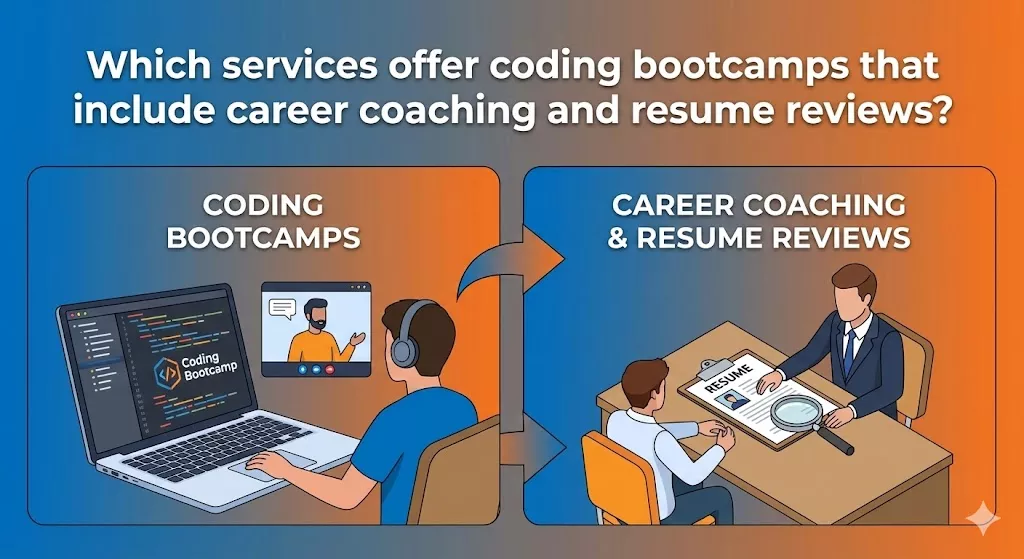
Here’s a truth that will save you thousands of dollars: “career coaching” and “resume reviews” are the most oversold, under-delivered promises in the bootcamp industry.
After years watching people navigate bootcamp outcomes, I’ve seen the pattern clearly. Someone pays $15,000 for a bootcamp that advertises “comprehensive career support.” They finish the program. The “career coaching” turns out to be one 30-minute call with someone reading from a script. The “resume review” is generic feedback like “add more action verbs.” No job connections. No real guidance. Just marketing promises that evaporate after you’ve paid.
Real career support exists at some bootcamps. But it’s rarer than the marketing suggests, and the quality varies wildly even within the same company depending on which career coach you get assigned. Let me show you which bootcamps actually deliver meaningful career support versus which ones are selling you a fantasy.
What “Career Coaching” Actually Means (Versus Marketing Claims)
Before we look at specific bootcamps, let’s define what career support should include versus what gets advertised:
Real Career Coaching Should Include:
Resume and LinkedIn optimization: Multiple rounds of detailed feedback on your resume and LinkedIn profile. Not just “looks good,” but specific suggestions on how to position your projects, quantify achievements, and optimize for ATS (applicant tracking systems).
Interview preparation: Mock technical interviews with real feedback. Behavioral interview practice. Whiteboarding practice. Specific guidance on answering common questions.
Job search strategy: Guidance on which companies to target based on your background. How to network effectively. When and how to negotiate offers.
Application support: Help identifying job openings that match your level. Sometimes direct introductions to hiring managers through bootcamp partnerships.
Ongoing accountability: Regular check-ins during your job search. Someone tracking your applications, following up on your progress, keeping you motivated.
Networking opportunities: Access to alumni network. Demo days where you present projects to employers. Connections to hiring partners.
What Bootcamps Call “Career Coaching” But Often Isn’t:
One-off resume review: A coach glances at your resume once, gives surface-level feedback, considers it “reviewed.”
Pre-recorded career videos: “Here’s how to write a resume” videos that anyone could find on YouTube.
Optional office hours: Career coach available if you schedule time, but no proactive outreach or accountability.
Access to job board: A list of job postings with no application support or coaching.
Alumni Slack channel: Other graduates available to chat, but no structured support.
“Lifetime access”: Support technically available forever, but so low-quality you’ll never use it after realizing it’s useless.
The gap between these two realities is where people feel scammed after spending $15,000.
The Bootcamps With Actually Good Career Support
Let me break down which bootcamps deliver real career coaching versus which are selling illusions:
General Assembly: Structured Career Support Built Into Curriculum
General Assembly includes career coaching as a core part of their bootcamp experience, not an afterthought.
What their career support actually includes:
Dedicated career coach assigned from day one: You don’t wait until after graduation to think about careers. Career development starts week one alongside technical curriculum.
Resume and portfolio development: Multiple rounds of feedback on your resume. Guidance on how to present projects you’re building during the bootcamp. LinkedIn profile optimization.
Interview preparation: Mock technical interviews with instructors. Behavioral interview practice. Specific frameworks for answering “tell me about yourself” and similar questions.
Outcomes team: Separate team whose only job is helping graduates get hired. They track your job search, follow up on applications, provide accountability.
Hiring partner network: GA has relationships with hundreds of companies. They make introductions to hiring managers, not just send you to apply on company websites.
The reality check:
GA’s career support is genuinely comprehensive, but it’s not magic. You still need to put in the work: applying to jobs, doing interviews, following up on connections.
The support is structured and consistent. You’re not hoping to get a good career coach. The program includes specific deliverables and milestones.
Cost: $15,000-$16,000 for full-time programs. Part-time costs similar over longer duration.
Job placement rates: GA publishes CIRR reports showing outcomes. Recent data shows 70-80% of graduates employed in field within 6 months.
Best for: People who can afford the cost and want structured career support integrated with technical training.
Springboard: Guaranteed Job or Tuition Refund
Springboard offers a job guarantee backed by tuition refund if you don’t get hired.
What their career support includes:
1-on-1 career coach: Weekly calls with dedicated career coach. Not group sessions, actual individual attention.
Resume and LinkedIn reviews: Detailed feedback until your materials are polished. Multiple rounds, not one-and-done.
Interview prep: Mock interviews with technical mentors and career coaches. Feedback on your performance.
Job search strategy: Personalized plan based on your background, goals, and target market. Not generic advice.
The job guarantee:
If you complete the program, participate in career services, apply to 30+ jobs monthly, and don’t get a job offer within 6 months of graduation, you get a full refund.
The fine print:
The guarantee has requirements. You must actively job search (30+ applications monthly). You must participate in career coaching. You can’t just complete the program and wait for jobs to come to you.
But the guarantee indicates Springboard is invested in your outcomes. They lose money if you don’t get hired.
Cost: $8,500-$16,000 depending on program and payment plan.
Best for: People who want accountability and financial protection. The guarantee reduces risk if you’re uncertain about outcomes.
App Academy: Deferred Tuition Aligned With Outcomes
App Academy historically operated on deferred tuition (pay after you get a job), though they now offer upfront payment too. The deferred model aligns their incentives with your outcomes.
Career support structure:
Job search curriculum: Formal curriculum covering resume writing, LinkedIn optimization, networking strategy, interview skills. It’s taught like technical content, not afterthought.
Application support: Guidance on which jobs to apply for. Help customizing applications for specific companies.
Interview preparation: Extensive mock interview practice. Both technical and behavioral.
Alumni network: Active network of graduates who help current students with referrals and connections.
The deferred tuition connection:
When App Academy only gets paid if you get a job making $50k+, they’re highly motivated to provide effective career support. Though now that they offer upfront payment too, the incentive alignment is weaker for those students.
Cost: $17,000 upfront or $31,000 via income share agreement (15% of income for 24 months after getting a job making $50k+).
Best for: People who prefer income-aligned payment or want career support backed by financial incentives.
Hack Reactor: Comprehensive Support With Proven Network
Hack Reactor has extensive career support and a strong alumni network.
Career support includes:
Career Services team: Dedicated team that works with you from day one. Resume reviews, LinkedIn optimization, interview prep.
Technical interview practice: Extensive practice with algorithm problems, system design discussions, and whiteboarding.
Behavioral interview coaching: Frameworks for answering common questions. Mock interviews with feedback.
Employer connections: Hiring partner network with direct introductions. Demo days where you present projects to employers.
Post-graduation support: Support continues after graduation until you’re hired. Not cut off the day the program ends.
The alumni network advantage:
Hack Reactor has been around since 2012. Large alumni network at major tech companies. This provides referral opportunities that newer bootcamps can’t match.
Cost: $17,980 for full-time program.
Best for: People targeting competitive tech companies and willing to pay premium for established network.
Flatiron School: Career Coaching With WeWork Backing
Flatiron School (owned by WeWork) offers job guarantee programs with comprehensive career support.
Career support structure:
Career coach from day one: Assigned career coach who works with you throughout the program and after graduation.
Job search preparation: Resume building, portfolio development, LinkedIn optimization, GitHub cleanup. All covered systematically.
Interview skills: Mock interviews (both technical and behavioral). Company-specific interview preparation for companies you’re targeting.
Career Karma integration: Tools for tracking applications, interviews, and offers. Accountability through metrics.
Job guarantee option:
Money-back guarantee if you don’t get a job within 6 months (with participation requirements similar to Springboard).
Cost: $16,900 for full-time programs.
Best for: People who want structured support and prefer the safety net of a job guarantee.
The Bootcamps With Mediocre Career Support
Some bootcamps include career support in marketing but deliver minimal actual help:
Lambda School / Bloom Institute of Technology: Overpromised, Underdelivered
Bloom Institute (formerly Lambda School) heavily marketed career support but has faced criticism for outcomes.
What they advertise: Comprehensive career coaching, job placement support, outcomes-based model.
The reality from student reports:
Career coaching quality varies wildly. Some students report helpful coaches. Others report coaches who don’t respond to messages or provide generic advice.
The income share agreement (pay 17% of income for 2 years if you get a job making $50k+) creates financial incentive for placement, but student reports suggest the support doesn’t match the marketing.
Why the disconnect:
Lambda scaled rapidly, hiring many career coaches quickly. Quality control suffered. Some coaches are excellent. Others are undertrained and overwhelmed.
Current status:
The company has faced lawsuits and regulatory issues. While they’re still operating, approach with significant caution and read recent student reviews carefully.
Best approach:
Research heavily before committing. Talk to recent graduates (not just ones the company connects you with). Check CIRR reports for verifiable outcomes data.
Most Online-Only Bootcamps: Minimal Real Support
Many online-only bootcamps advertise career support but provide minimal actual coaching:
What you typically get:
- Access to career resources (videos, templates)
- Resume review (one-time, generic feedback)
- Optional office hours (if you schedule them)
- Job board (list of openings)
What you don’t get:
- Proactive coaching and accountability
- Regular check-ins and progress tracking
- Direct employer connections
- Meaningful interview preparation
The tell-tale signs:
If the bootcamp doesn’t mention dedicated career coaches, specific support deliverables, or accountability structure, assume minimal support.
“Access to career services” is marketing speak for “here are some resources, good luck.”
The Hidden Option: Free Resources With Community Support
Before spending $15,000 on a bootcamp primarily for career support, consider that many aspects can be accessed separately:
Resume and Portfolio Building
Free resources that rival paid coaching:
Resume templates from Creddle or FlowCV specifically for developers.
LinkedIn optimization guides from Danny Thompson (tech influencer who shares free career advice).
Portfolio inspiration from GitHub, Dribbble, and other developers’ sites.
The Odin Project has comprehensive career preparation curriculum built into their free program.
Interview Preparation
Free practice resources:
LeetCode for technical interview practice (free tier sufficient for most preparation).
Pramp for free mock interviews with other developers.
Interviewing.io for anonymous technical interviews with real engineers (some free options).
YouTube has countless behavioral interview guides.
Networking and Job Connections
Free networking opportunities:
Local meetups and tech events (many virtual now).
Twitter tech community (#100DaysOfCode, #CodeNewbie).
LinkedIn networking (direct messages to developers, asking for informational interviews).
Reddit communities (r/cscareerquestions, r/learnprogramming).
Discord servers (The Odin Project, freeCodeCamp, 100Devs).
The 100Devs Alternative
100Devs is a free bootcamp that includes substantial career support:
What Leon provides:
Resume and portfolio building workshops.
Mock interview practice within the cohort.
Networking events and employer introductions.
Job search accountability through the community.
The catch:
It’s cohort-based, so you need to join when a cohort starts. The support is community-driven more than 1-on-1 coaching.
But it’s completely free and has produced successful outcomes for many graduates.
Best for: Self-motivated people who want bootcamp-style support without the cost.
What Career Support Actually Looks Like (Reality Check)
Let me describe what “good” career support actually provides versus what people expect:
What Good Career Support Provides:
Resume review: 2-3 rounds of detailed feedback. Specific suggestions like “quantify this achievement – instead of ‘built a web app,’ say ‘built e-commerce app serving 1000+ users with 99.9% uptime.'”
Interview prep: 5-10 mock interviews over several weeks. Feedback on technical problem-solving approach and communication. Practice with behavioral questions.
Job search strategy: Discussion of realistic targets based on your background. Maybe you won’t get Google immediately, but here are 20 companies likely to hire bootcamp graduates in your city.
Accountability: Weekly check-ins asking “how many applications this week? Any interviews? How did they go? What do you need help with?”
Some employer connections: Introduction to 5-10 hiring managers through bootcamp partnerships. Maybe demo day presentation to 50+ companies. Not job guarantees, but warm introductions.
What Career Support Doesn’t Do (But People Expect):
Get you a job directly: Career coaches don’t hire you. They help you become more hirable and navigate the process. You still do interviews and get hired on your own merit.
Guarantee specific companies: Even great career support can’t guarantee you’ll get hired at Google, Facebook, or wherever you want. They help you maximize chances, not guarantee outcomes.
Replace your effort: You can’t pay $15,000, sit back, and wait for a career coach to hand you a job. You still apply to hundreds of jobs, do dozens of interviews, and hustle.
Fix fundamental skill gaps: If you didn’t really learn to code during the bootcamp, career coaching won’t compensate. You need actual technical skills to get hired.
The biggest misconception is that paying for career support means outsourcing your job search. It doesn’t. It means getting guidance and accountability while you do the hard work yourself.
How to Evaluate Career Support Before Enrolling
Before committing $15,000+ based on career support promises:
Question 1: What’s Included, Specifically?
Good answers: “Assigned career coach with weekly 30-minute calls. Minimum 3 resume review rounds. 10 mock interviews. Introduction to 20+ hiring partners.”
Red flag answers: “Comprehensive career support.” “Access to career resources.” “Career coaching available.”
Vague promises mean minimal delivery.
Question 2: When Does Support Start and End?
Good answers: “Career curriculum starts week 1. Support continues until you’re hired, with weekly check-ins for first 6 months post-graduation.”
Red flag answers: “Support available after graduation.” “Lifetime access to career services.”
“Available” doesn’t mean proactive. “Lifetime” usually means you can watch videos forever, not that someone actively helps you.
Question 3: What Are Published Outcomes?
Good answers: “Here’s our CIRR report showing 75% of graduates employed within 6 months at median salary of $65,000.”
Red flag answers: “Our graduates work at Google, Facebook, etc.” (selective examples, not data). “98% job placement!” (probably counting any job, including unrelated fields).
CIRR (Council on Integrity in Results Reporting) provides standardized outcomes reporting. If a bootcamp doesn’t publish CIRR reports, be skeptical.
Question 4: Can I Talk to Recent Graduates?
Good bootcamps: Connect you with graduates (good and bad experiences). Let you ask candid questions without sales pressure.
Red flag bootcamps: Only connect you with hand-picked success stories. Don’t allow direct contact with alumni.
Question 5: What Happens If I Don’t Get a Job?
Good answers: “We offer a job guarantee. If you complete the program, participate in career services, apply to 30+ jobs monthly, and don’t get hired in 6 months, full refund.”
Red flag answers: “Most students get jobs, so don’t worry.” (No actual guarantee or accountability.)
The Cost-Benefit Analysis
Career support is a major selling point for expensive bootcamps, but is it worth the premium?
Bootcamp With Career Support: $15,000
What you get:
- Technical curriculum
- Career coaching
- Resume reviews
- Interview prep
- Employer connections
Self-Study With Hired Career Coach: $500-$2,000
What you get:
- Technical learning (freeCodeCamp, The Odin Project, etc.): Free
- Career coach (hired separately): $50-100/hour for 10-20 hours = $500-$2,000
- Resume services: $200-500
- Mock interviews: Free (Pramp) or paid services $100-300
Total: $800-$2,800 for à la carte career support.
The Value Question:
Is bootcamp career support worth the $12,000+ premium over DIY?
When yes:
- Bootcamp has proven hiring partnerships and can make warm introductions
- You need external accountability and structure
- The alumni network provides significant referral opportunities
- You’re career-switching and need comprehensive support
When no:
- Career support is minimal despite marketing (many bootcamps)
- You’re self-motivated and can manage job search independently
- You can’t afford the premium cost
- You already have professional network in tech
My Honest Recommendations
If you need comprehensive career support and can afford it:
General Assembly or Hack Reactor provide structured, proven career support. Yes, they’re expensive ($15,000-$18,000), but the support is genuine.
Don’t choose based on career support alone. Evaluate the technical curriculum too. Great career coaching can’t compensate for poor technical training.
If you want safety net with job guarantee:
Springboard or Flatiron School offer money-back guarantees if you don’t get hired (with participation requirements).
Read the guarantee terms carefully. Understand what you must do to qualify for refund.
If you can’t afford expensive bootcamps:
100Devs (free) provides community support and career guidance. The outcomes are comparable to paid bootcamps for motivated students.
Self-study (freeCodeCamp, The Odin Project) combined with hired career coach for specific support ($500-$1,000) is viable alternative.
If you’re considering bootcamps primarily for career support:
Reconsider. Career support helps, but it’s not magic. Most job search success comes from your skills, portfolio, and hustle, not from resume reviews.
Free resources (The Odin Project’s career curriculum, YouTube guides, community support) provide 70-80% of what expensive career coaching offers.
The premium you pay for bootcamp career support might not be worth it unless the bootcamp also provides:
- Strong technical curriculum you can’t replicate free
- Valuable alumni network with referral opportunities
- Direct hiring partner relationships
The Bottom Line on Career Support
Most bootcamps overpromise and underdeliver on career support. The marketing says “comprehensive career coaching.” The reality is often one resume review and access to job boards.
Bootcamps with genuinely good career support:
- General Assembly (structured program)
- Hack Reactor (strong alumni network)
- Springboard (job guarantee)
- Flatiron School (job guarantee)
- 100Devs (free, community-driven)
What to verify before enrolling:
- Specific deliverables (how many resume reviews? mock interviews?)
- When support starts and ends
- Published outcomes data (CIRR reports)
- Alumni testimonials (unfiltered)
- Job guarantee terms (if offered)
The reality check: Career support helps, but it’s supplementary. Your actual skills, portfolio projects, and interviewing ability matter more than resume reviews.
You can get 70-80% of bootcamp career support through free resources and community support. The remaining 20-30% (employer connections, warm introductions) might justify premium cost for some people, but not everyone.
Don’t choose a bootcamp primarily for career support unless they have proven outcomes and specific deliverables. Choose for technical education quality, then consider career support as valuable bonus.
The best career support is building genuine skills, creating impressive portfolio projects, and being able to solve technical interview problems. No amount of resume polishing compensates for inability to code.