
The Best Online Communities and Forums for Beginner Coders in 2025
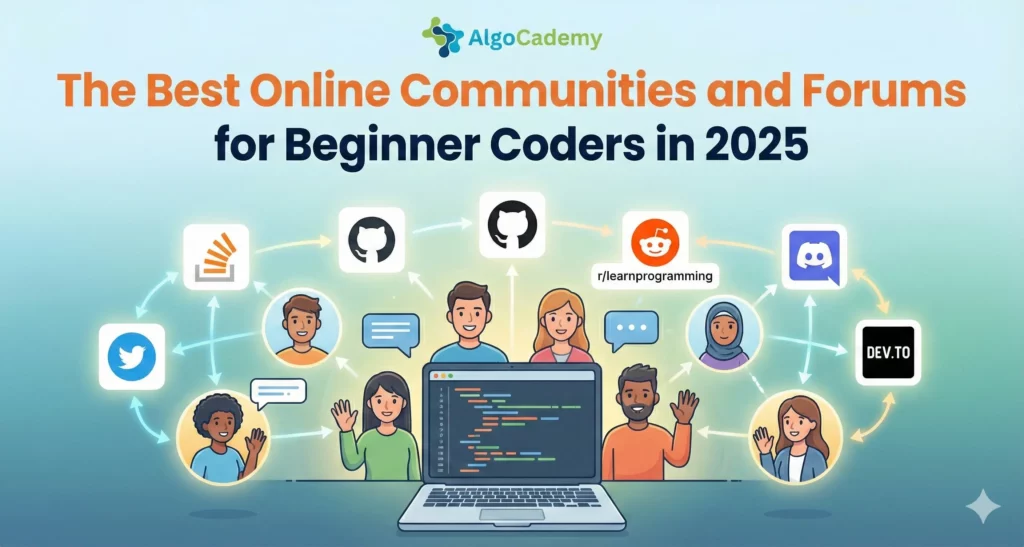
Learning to code can feel lonely sometimes. You’re staring at error messages at 2 AM, wondering if anyone else has ever been this confused by a semicolon. The good news? You’re definitely not alone, and there are thriving communities out there full of people who’ve been exactly where you are right now.
Here’s my comprehensive roundup of the best places to connect, ask questions, and grow as a new developer.
Reddit Communities
Reddit remains one of the best places to find coding help and camaraderie. The subreddit r/learnprogramming has over 4 million members and is incredibly welcoming to beginners. You can ask “stupid questions” without judgment (spoiler: they’re never actually stupid).
Other great subreddits include r/webdev for web development specifically, r/Python for Python enthusiasts, r/javascript for the JS crowd, and r/cscareerquestions if you’re thinking about turning your new skills into a job.
The culture on these subreddits tends to be supportive, though you’ll want to search before posting since many common questions have already been answered thoroughly.
Discord Servers
Discord has quietly become a hub for developer communities. The Coding Den and The Programmer’s Hangout both have thousands of active members chatting about everything from debugging help to career advice.
What makes Discord great is the real-time interaction. If you’re stuck on something, you can often get help within minutes rather than waiting for forum replies. Many programming YouTubers and course creators also run their own Discord servers, which can be a nice way to connect with fellow learners going through the same material.
Dev.to
Dev.to (also known as “The Practical Dev”) has become one of the most welcoming spaces for developers of all levels. It’s a blogging platform at its core, but the community aspect is what makes it special.
Beginners regularly post about their learning journeys, and the response is almost always encouraging. You’ll find articles like “What I Learned in My First Month of Coding” sitting alongside deep technical dives from senior engineers. The comment sections tend to be constructive rather than critical, and there’s a strong culture of celebrating small wins.
It’s also a great place to start writing about what you’re learning. Teaching others (even when you’re a beginner yourself) is one of the fastest ways to solidify your knowledge.
Twitter/X and the #100DaysOfCode Movement
The #100DaysOfCode hashtag started as a simple challenge: code for at least an hour every day for 100 days and tweet about your progress. It’s grown into a massive global community of learners holding each other accountable.
What makes this community powerful is the public commitment aspect. When you tweet your daily progress, people cheer you on. When you’re struggling on day 47, strangers who’ve been following your journey send encouragement. Many participants have built genuine friendships and even landed jobs through connections made during their 100 days.
Beyond the hashtag, Twitter/X has a vibrant “Tech Twitter” community. Following developers who share tips, resources, and their own journeys can make your feed feel like a constant stream of motivation and learning opportunities.
Stack Overflow
I’d be remiss not to mention Stack Overflow, even though it has a reputation for being harsh on beginners. The site has genuinely improved its culture over the past few years, and it remains the single largest repository of programming Q&A on the internet.
My advice: use it primarily as a research tool first. Search for your problem before asking, and when you do ask, include your code, what you expected to happen, and what actually happened. Following these basics will dramatically improve your experience.
GitHub Discussions and the Social Side of GitHub
GitHub isn’t just for hosting code anymore. Many popular repositories now have Discussions enabled, which function like focused forums for that particular project or technology. If you’re learning a specific framework or library, check if they have active Discussions.
GitHub has also added more social features over the years. You can follow developers you admire, star repositories to bookmark them, and see what projects are trending. It’s worth setting up a profile early and starting to push your practice projects, even simple ones. Your GitHub activity becomes part of your portfolio over time.
Interactive Learning Platforms with Built-in Communities
Some of the best communities aren’t standalone forums but are built into learning platforms themselves. AlgoCademy, for example, combines interactive coding lessons with AI-powered tutoring that can help you work through problems step by step. The platform focuses on building genuine problem-solving skills rather than just memorizing syntax, which is exactly the mindset you want to develop early on.
What I like about platform-integrated communities is that everyone is working on similar challenges. When you’re stuck on a particular algorithm problem or concept, you’re connecting with people who recently solved that same problem and remember exactly what was confusing about it.
Codecademy and freeCodeCamp also have active forums tied to their curricula, giving you that same benefit of learning alongside others tackling identical challenges.
freeCodeCamp Forums
freeCodeCamp deserves its own mention because their forum is one of the friendliest communities in the coding world. It’s full of people working through their curriculum, sharing projects, and helping each other debug issues. The moderators actively cultivate a supportive environment, and there’s a genuine sense that everyone wants to see each other succeed.
They also have an active presence on social media and a podcast worth checking out.
Hashnode
Hashnode is another developer blogging platform, similar to Dev.to but with some unique features. You can map your blog to a custom domain for free, which is nice for building your personal brand early.
The community tends to be supportive of beginners documenting their journeys. There are also writing challenges and hackathons that can give you structure and motivation when you’re not sure what to write about.
Language-Specific Communities
As you settle into a particular language or stack, you’ll find communities tailored to those technologies:
Python has an incredibly welcoming community. The Python Discord server is active and helpful, and r/learnpython on Reddit is patient with newcomers. The official Python forum (discuss.python.org) is also more beginner-friendly than you might expect.
JavaScript learners have tons of options. The Reactiflux Discord is great if you’re learning React, and there are similar servers for Vue, Angular, and Node.js.
Java has the r/learnjava subreddit and several Discord servers dedicated to helping newcomers navigate the ecosystem.
Web Development broadly has communities like The Odin Project’s Discord, which is tied to their popular free curriculum.
Whatever you’re learning, search for “[language] Discord” or “[framework] community” and you’ll likely find your people.
Communities for Underrepresented Groups in Tech
If you’re from a group that’s historically been underrepresented in tech, finding community with people who share your experience can be incredibly valuable:
Women Who Code has local chapters worldwide and an active online community with events, resources, and networking opportunities.
Black Girls CODE focuses on young women of color but has resources and community connections for adults too.
Lesbians Who Tech runs one of the largest LGBTQ+ tech events and has an active community year-round.
Techqueria is a community for Latinx professionals in tech.
Code2040 connects Black and Latinx talent with tech opportunities and community.
These spaces provide mentorship, networking, and sometimes just a place where you don’t have to explain certain aspects of your experience. Many participants find them invaluable for both support and career advancement.
Live Coding Streams on Twitch and YouTube
Watching someone code in real time (mistakes and all) can be surprisingly educational. Platforms like Twitch have entire categories dedicated to programming streams, and many YouTubers do live coding sessions.
What makes this format useful for beginners is seeing how experienced developers actually work. They Google things. They make typos. They get confused by error messages and have to debug. It demystifies the process and shows you that even pros don’t have everything memorized.
Many streamers also interact with chat, so you can ask questions and get responses in real time.
Local Meetups and Virtual Events
Don’t overlook the value of synchronous interaction. Meetup.com has coding groups in most cities, and many have stayed hybrid or fully virtual post-pandemic. There’s something different about talking through code problems in real time with actual humans, even over Zoom.
Hackathons are another great option, and many are now beginner-friendly with dedicated tracks for newcomers. Sites like MLH (Major League Hacking) list upcoming events, many of which are virtual and open to all skill levels.
Slack Workspaces
Many tech communities run on Slack. Some notable ones include:
- CodeNewbie has an active Slack community
- Many bootcamps and courses have alumni Slack groups
- Local tech communities often coordinate through Slack
- Various open source projects maintain Slack workspaces
The downside of Slack is that free workspaces lose message history, so they’re better for real-time conversation than searchable archives. But for making connections and getting quick help, they’re solid.
Red Flags: Communities to Avoid
Not every community is worth your time. Watch out for these warning signs:
Elitism and gatekeeping. If people mock beginners for not knowing things, or if there’s a culture of “you should already know this,” move on. Life’s too short.
Toxicity disguised as “tough love.” Some communities pride themselves on being “brutally honest” in ways that are really just brutal. Constructive criticism is valuable; cruelty is not.
Echo chambers. If a community insists their way is the only way, or that certain technologies are objectively bad without nuance, you’re not getting the full picture.
Heavy self-promotion with little substance. Some spaces are mostly people hawking courses and services rather than genuinely helping.
Trust your gut. If a community makes you feel bad about being a beginner, it’s not the right community.
Tips for Getting the Most Out of These Communities
Lurk first. Spend a week or two reading posts before you start contributing. You’ll learn the culture and avoid common faux pas.
Give back when you can. Even as a beginner, you can help people who are a few steps behind you. Teaching reinforces your own learning.
Don’t compare yourself to everyone. These communities are full of people at all levels. The person answering questions confidently was once exactly where you are.
Be specific when asking for help. “My code doesn’t work” gets you nowhere. “I expected this function to return 5 but it returns undefined, here’s my code” gets you answers.
Show your work. When asking questions, share what you’ve already tried. It helps people help you and shows you’ve put in effort.
Celebrate others’ wins. Congratulating someone on their first deployed project or solved problem creates the kind of community everyone wants to be part of.
Final Thoughts
The programming community is, on the whole, remarkably generous with knowledge and time. People remember how hard it was to learn, and most are genuinely happy to help newcomers find their footing.
You don’t need to join every community on this list. Pick two or three that feel like a good fit and commit to being an active member. The connections you make while learning to code can last your entire career, and the support you receive during those frustrating early days can make the difference between pushing through and giving up.
Now close this tab and go write some code. Then when you get stuck, you know where to find us.